This article contains affiliate links. If you buy through one, Hyggero earns a small commission at no cost to you. It never changes what we recommend.
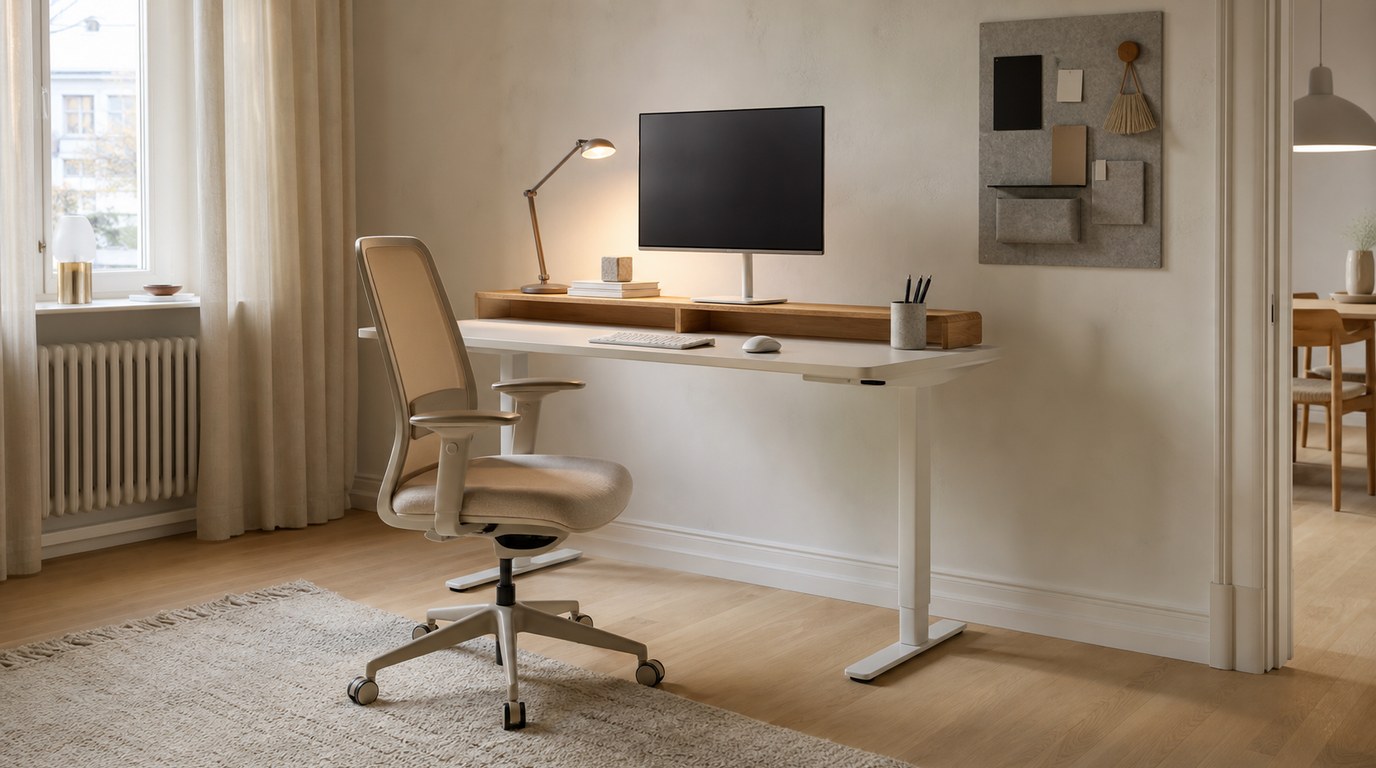
A good desk setup should make work easier without making the room feel like an office. Start with a desk that fits the available wall, add a genuinely supportive chair, lift the screen to eye level, give the work surface one warm source of light, and hide the cables before adding anything decorative. The result is calmer because the practical parts have been resolved—not because the desk has been styled within an inch of its life.
That distinction matters at home. A commercial office can disappear when you leave it. A desk in a bedroom, living room or spare corner remains visible long after the laptop closes. It has to work as equipment and live as furniture.
The short version: spend the room’s visual budget on three things—the desk, the chair and the lamp. Keep the technology simple, move storage off the work surface, and let one or two personal objects finish the space.
1. Begin with the footprint, not the accessories
The desk decides how the rest of the setup behaves. Before comparing finishes or drawer layouts, mark its full width and depth on the floor with painter’s tape. Pull the chair back as if you were standing up. Open the nearest door. Walk through the room.
This five-minute test catches the most common mistake in home offices: choosing a desk that fits the wall but not the life happening around it.
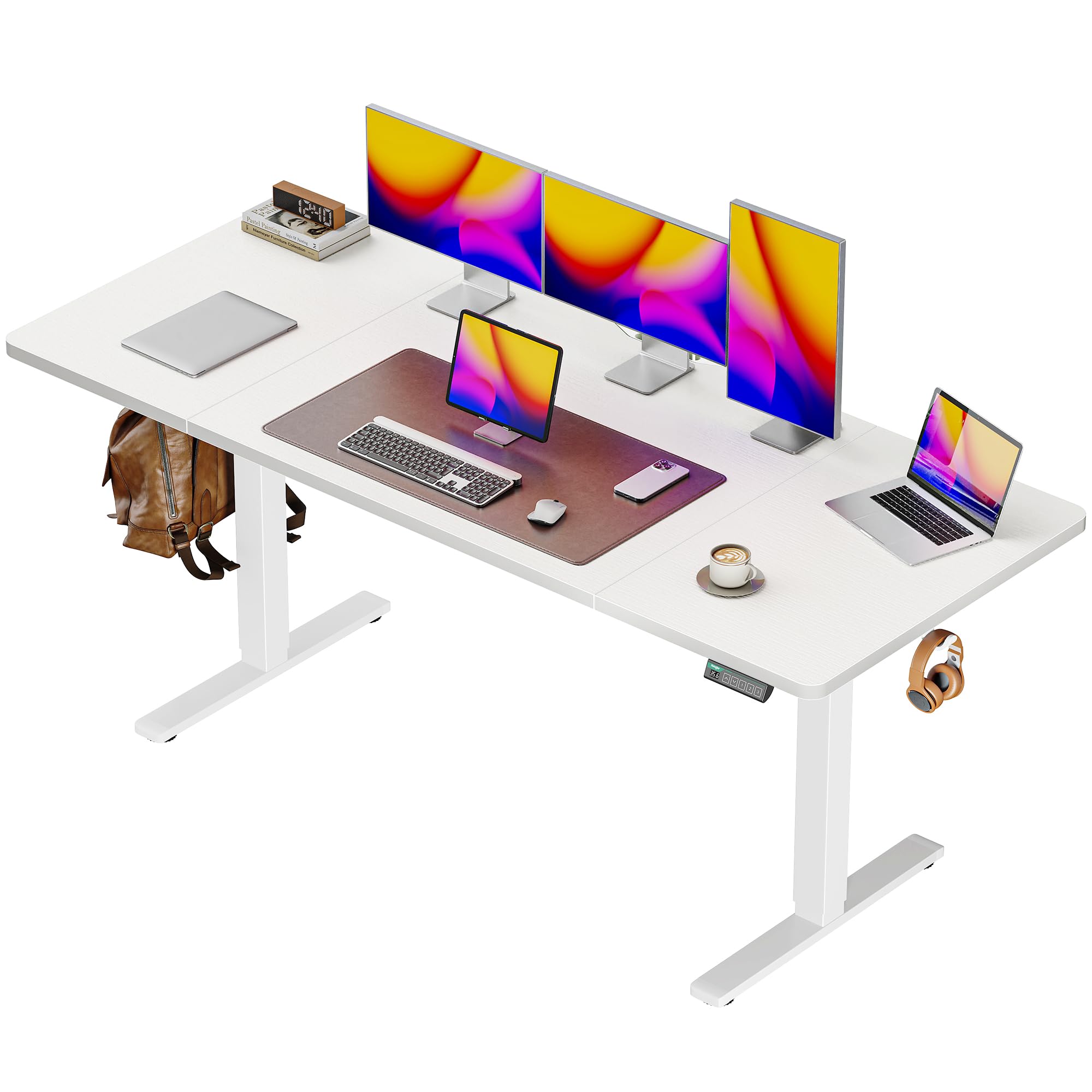
For a dedicated room, the Huuger 63 × 28-inch electric standing desk gives a single-monitor setup enough breathing room. Its white finish recedes rather than dominating the room, while the generous top leaves space for a lamp and a notebook without turning them into obstacles.
In a bedroom or shared living space, choose the smaller footprint deliberately. The Amazon Basics 47 × 24-inch white-and-oak standing desk preserves more of the room around it. The oak-toned surface also helps it read as furniture rather than a piece of workplace equipment.
Neither size is universally better. The right desk is the smallest one that comfortably supports the work you actually do. If you are making a larger investment, think in terms of a workspace built for the longer term, not a list of upgrades to replace next year.
2. Choose a chair for the hours, then soften its presence
There is no virtue in an elegant chair that becomes uncomfortable by lunch. If this is a working desk, start with support: a seat height that lets the feet rest flat, armrests that do not force the shoulders upward, and a back that allows you to change position.
The visual compromise is usually easier than it appears. A chair feels less corporate when its color belongs to the room, its silhouette is relatively light, and it is not surrounded by other black technical objects. The TRALT beige ergonomic mesh chair takes that approach: practical adjustability, but in a warmer finish than the usual all-black task chair.
Leave enough empty floor around it. A chair that can move freely looks intentional; one wedged between storage boxes and a bed always makes the room feel temporary.
3. Build the screen layer as one composition
A monitor, shelf, keyboard and lamp should read as one quiet arrangement, not four unrelated purchases.
For a generous single-screen setup, the Samsung 32-inch flat monitor creates a strong center. Place the top portion of the screen close to eye level and keep it roughly an arm’s length away, adjusting from there for comfort and text size.
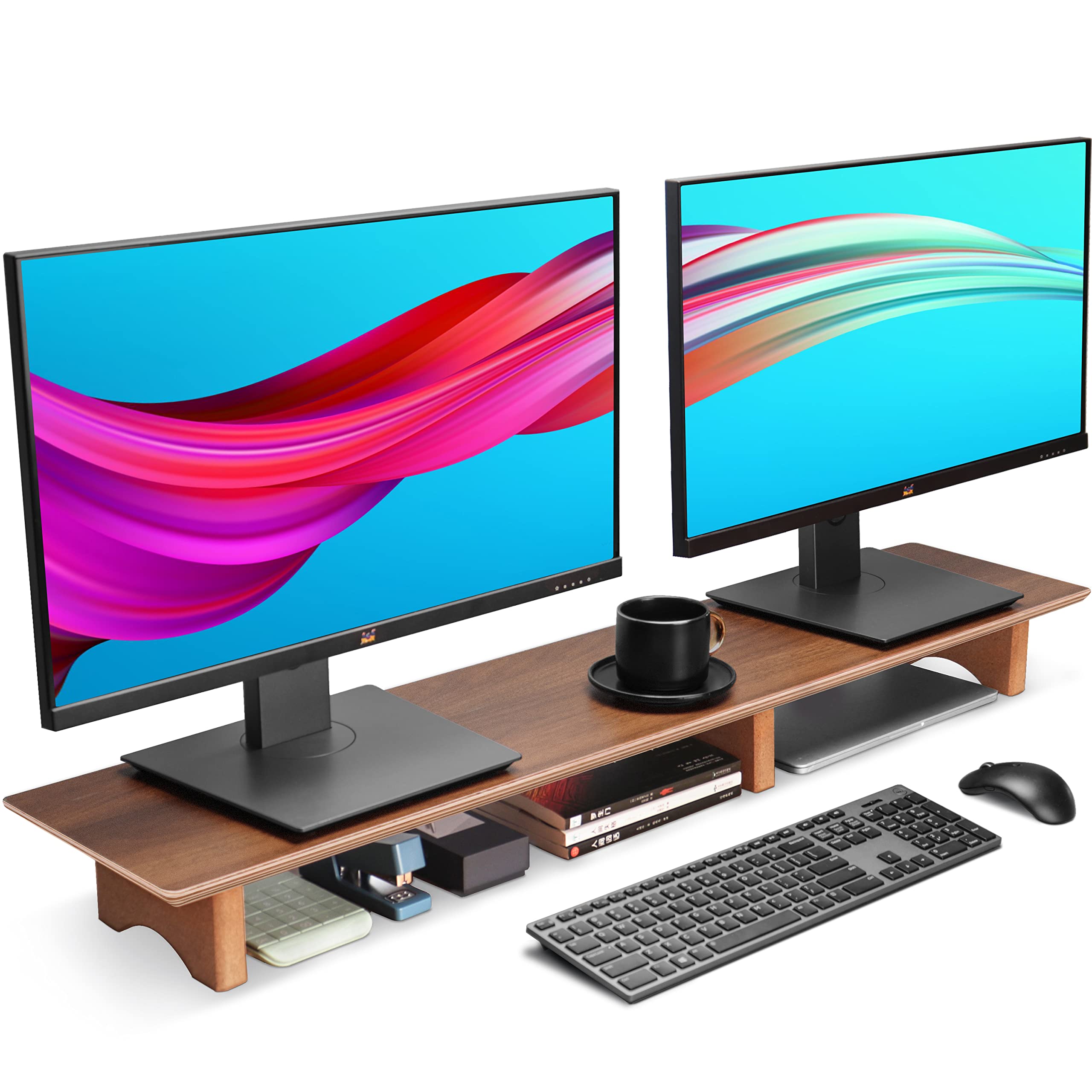
A riser helps with height, but its material also changes the character of the desk. The Aothia solid-wood monitor stand with cork legs is the warmer choice. It gives the screen an architectural base and creates a place to slide the keyboard away when the desk is being used for reading or writing.
If the desk is already small or visually busy, the AMT clear acrylic monitor riser is the lighter alternative. It performs the same basic job while allowing the surface behind it to remain visible.
Use one, not both. The wood shelf suits a room that needs warmth; the acrylic riser suits one that needs less visual weight.
4. Let the lamp make the desk feel domestic
Lighting is often the point at which a functional desk begins to belong to the home.
Overhead light makes the entire room equally bright. A task lamp creates a smaller pool of attention and gives the desk a softer presence in the evening. The OYEARS adjustable woodgrain desk lamp adds warmth beside a screen without requiring another large piece of furniture.
Place the lamp opposite your writing hand so your arm does not cast a shadow across the page. Keep the bulb warm enough to feel comfortable at night, but bright enough that the monitor is not the only illuminated surface in your field of vision.
The lamp should be visible when the laptop is closed. That is what allows the desk to remain part of the room after work.
5. Hide the infrastructure before styling the surface
Cable management is not a final detail. It is the layer that makes every later choice look more considered.
Mount the power strip beneath the desk and collect excess cable length there. The 36-inch beige under-desk cable tray keeps the adapter block, power strip and loose cable away from the floor while blending more quietly with a pale desk.
Then run as few lines as possible from the tray:
- One power cable down the back of the desk.
- One monitor cable to the screen.
- One accessible charging lead, if it is used daily.
Do not cable-tie everything into a permanent bundle immediately. Live with the arrangement for a week first. A tidy system that makes it difficult to unplug a laptop is not a good system.
6. Separate what stays visible from what should disappear
A calm desk is not an empty desk. It is a desk where objects have been sorted by frequency and visual value.
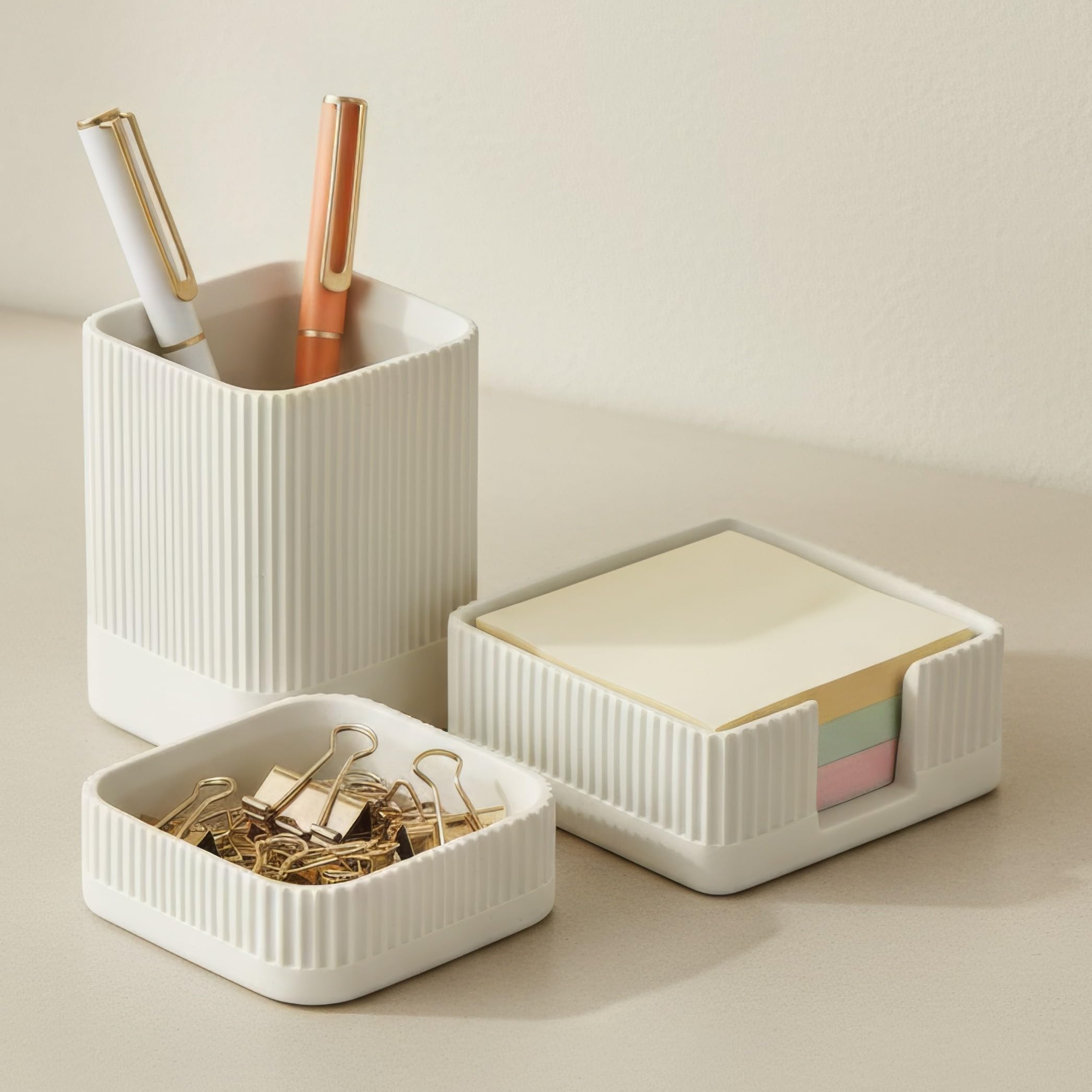
Keep daily tools within reach. The KIBAGA concrete three-piece desk organizer gives pens, clips and small notes a material presence without turning them into decoration. Concrete works particularly well beside pale wood because it adds weight without adding color.
Everything used less often should move into the drawer. The Voova six-piece clear drawer-organizer set includes three tray sizes, so cables, adapters, stationery and small gadgets can be separated rather than gathered into one miscellaneous box. The clear material matters less aesthetically inside a drawer; its advantage is that you can see what is there.
A useful rule is to leave one part of the drawer empty. Storage tends to become calmer when it has room to receive something new.
7. Keep the tools visually quiet
The keyboard and mouse occupy more of the desk than most decorative objects, so their color has a disproportionate effect on the finished setup.
The LIZRROT milk-tea wireless keyboard and mouse set replaces the usual black rectangle with a softer neutral. That does not make it invisible, but it lets the eye move toward the wood, lamp and objects around it.
Wireless tools are especially useful on a desk that serves more than one purpose. Slide them beneath the monitor shelf and the same surface can become a place for sketching, sorting paperwork or reading.
8. Treat the wall as part of the desk setup
The best home office ideas do not stop at the edge of the worktop. The wall, floor and nearby window determine whether the desk feels integrated or merely placed.
Begin with the wall immediately behind or beside the desk. Instead of leaning every reminder against the monitor, move active notes upward.
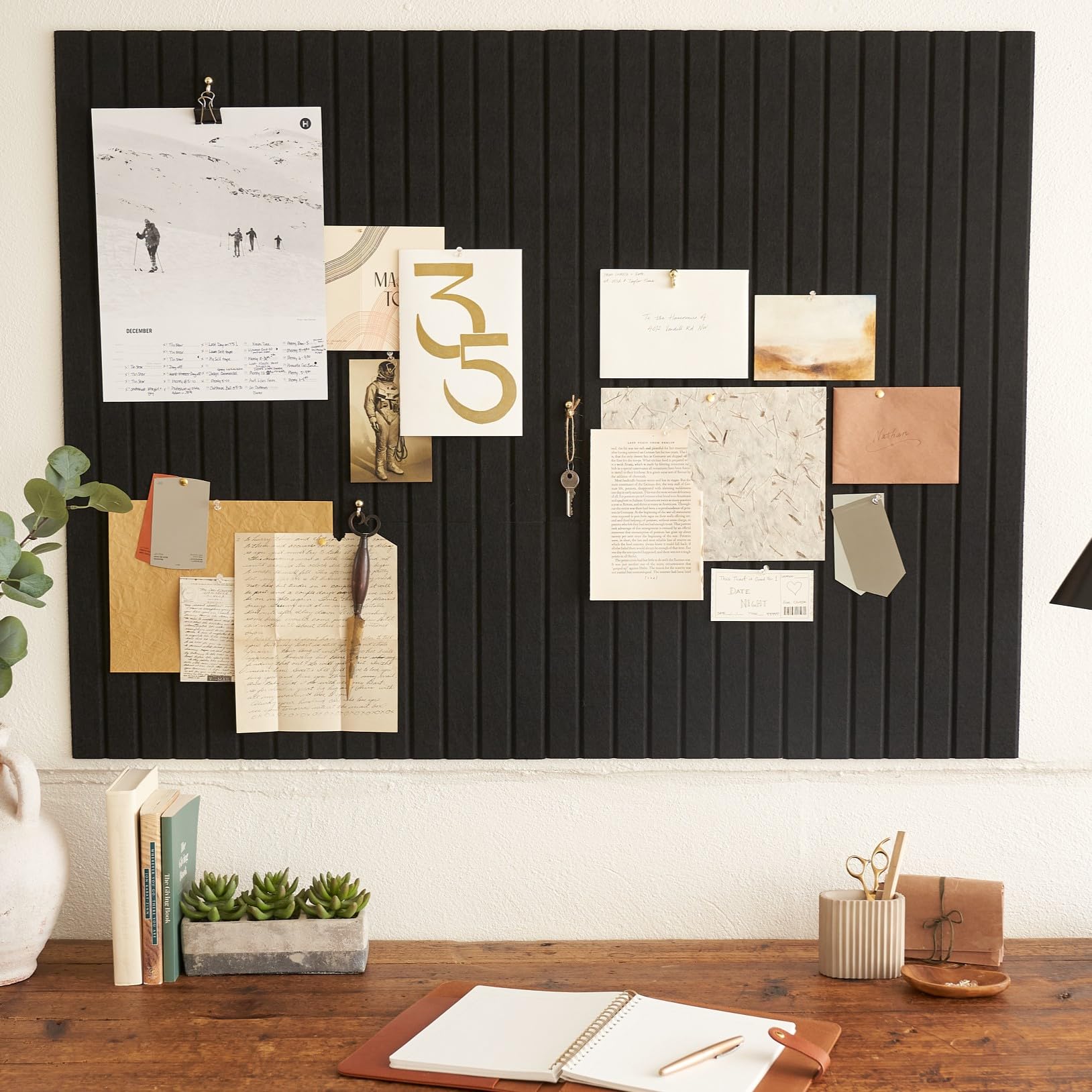
The ZICOTO 35 × 47-inch felt bulletin board is made from twelve customizable black felt tiles, which can be arranged to suit the available wall rather than forcing one fixed frame into the space.
Black felt creates contrast, so it needs restraint. Pin fewer things than the board can hold. Use it for the week’s active notes, one or two visual references and a calendar—not as permanent storage for every piece of paper.
Then look beyond the wall:
- Allow daylight to reach the side of the desk rather than sitting directly behind the monitor.
- Repeat one material elsewhere in the room: oak, warm white, concrete or black.
- Keep the floor beneath the desk clear.
- Give the chair space to turn without meeting a rug edge or side table.
- If the desk is in a bedroom, avoid facing it directly toward the bed where possible.
This is how a desk becomes a small room composition rather than a collection of office products.
9. Add one object that has nothing to do with productivity
Once the functional layers are resolved, the desk can take one personal object.
The mooas automatic mini flip clock is useful, but its real role is sculptural: a small analog movement beside the digital screen. A ceramic cup, a photograph in a narrow frame or a smooth stone from a familiar place could do the same job.
Stop after one or two. A desk feels personal because the objects are specific, not because there are many of them.
A complete small home office setup
Small home office ideas often fail by treating a compact desk as a reduced version of a large one. The better approach is to decide what the space will not hold.
For a complete setup in a bedroom corner or shared room:
- Use the compact 47 × 24-inch Amazon Basics desk.
- Choose the clear acrylic riser instead of a deeper wood shelf.
- Keep one monitor rather than building a dual-screen arrangement.
- Mount the cable tray below and move occasional supplies into the drawer.
- Use the wall board vertically so it occupies less width.
- Keep the flip clock or another accent, but not several decorative objects.
The small-space version is not lesser. It is simply more edited. Its strength comes from preserving empty wall, clear floor and enough room to move through the rest of the home.
The final edit
Before calling the desk finished, remove everything from the surface and return objects in this order:
- Monitor and riser.
- Keyboard and mouse.
- Lamp.
- One organizer.
- One personal object.
If the desk already feels complete, stop. The remaining objects belong in a drawer, on the wall or somewhere else in the room.
A desk setup looks good when its practical decisions are visible: the proportions make sense, the chair has room to move, the light is warm, the cables disappear and the work surface is allowed to breathe. The goal is not to disguise work. It is to give it a place that still feels like home.
Huuger 63 × 28-inch electric standing desk
A generous white standing desk that gives a single-monitor setup room for a lamp and notebook without letting the work surface dominate the room.
View at Amazon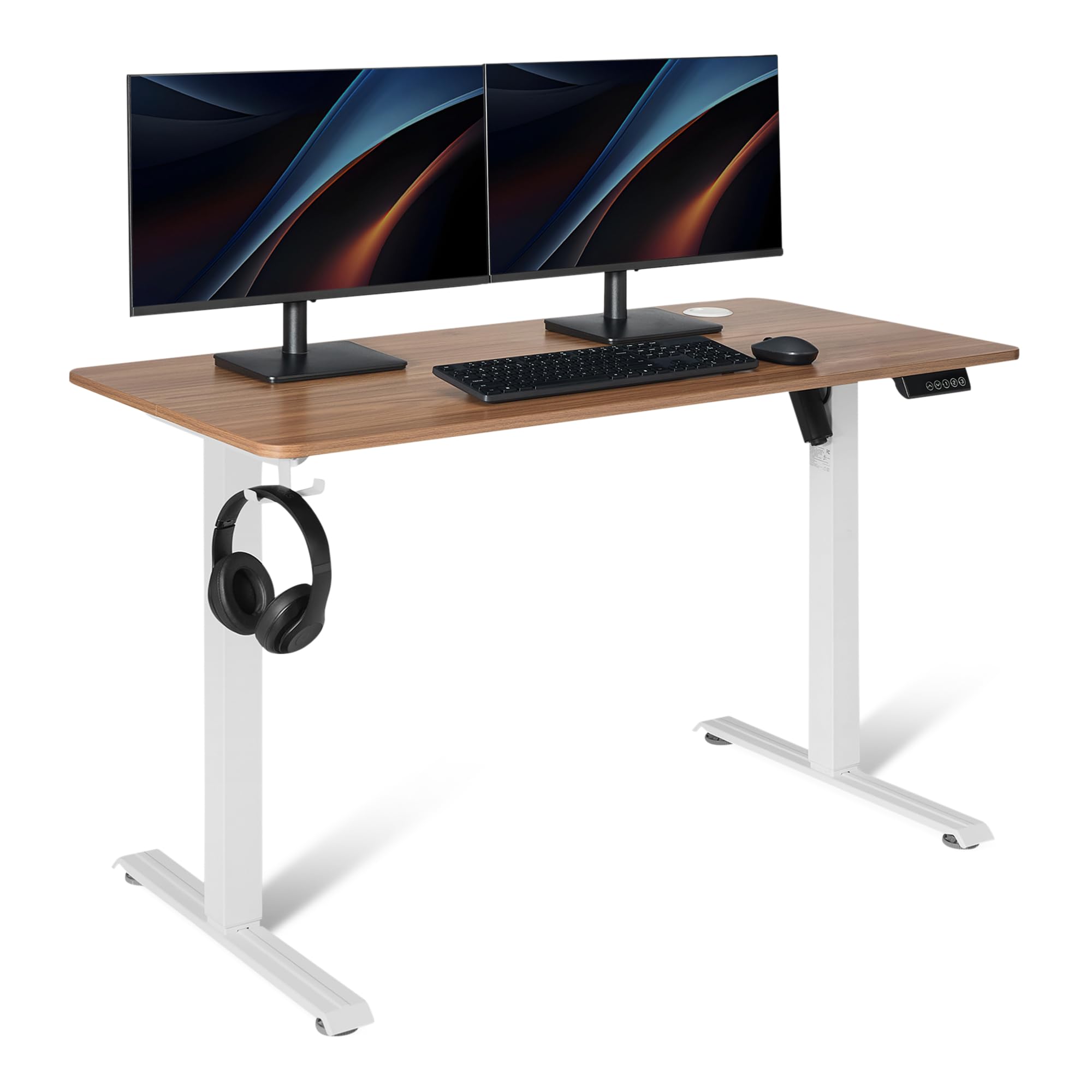
Amazon Basics 47 × 24-inch white-and-oak standing desk
A more compact standing desk whose oak-toned surface reads as furniture and preserves more space around a bedroom or shared living area.
View at Amazon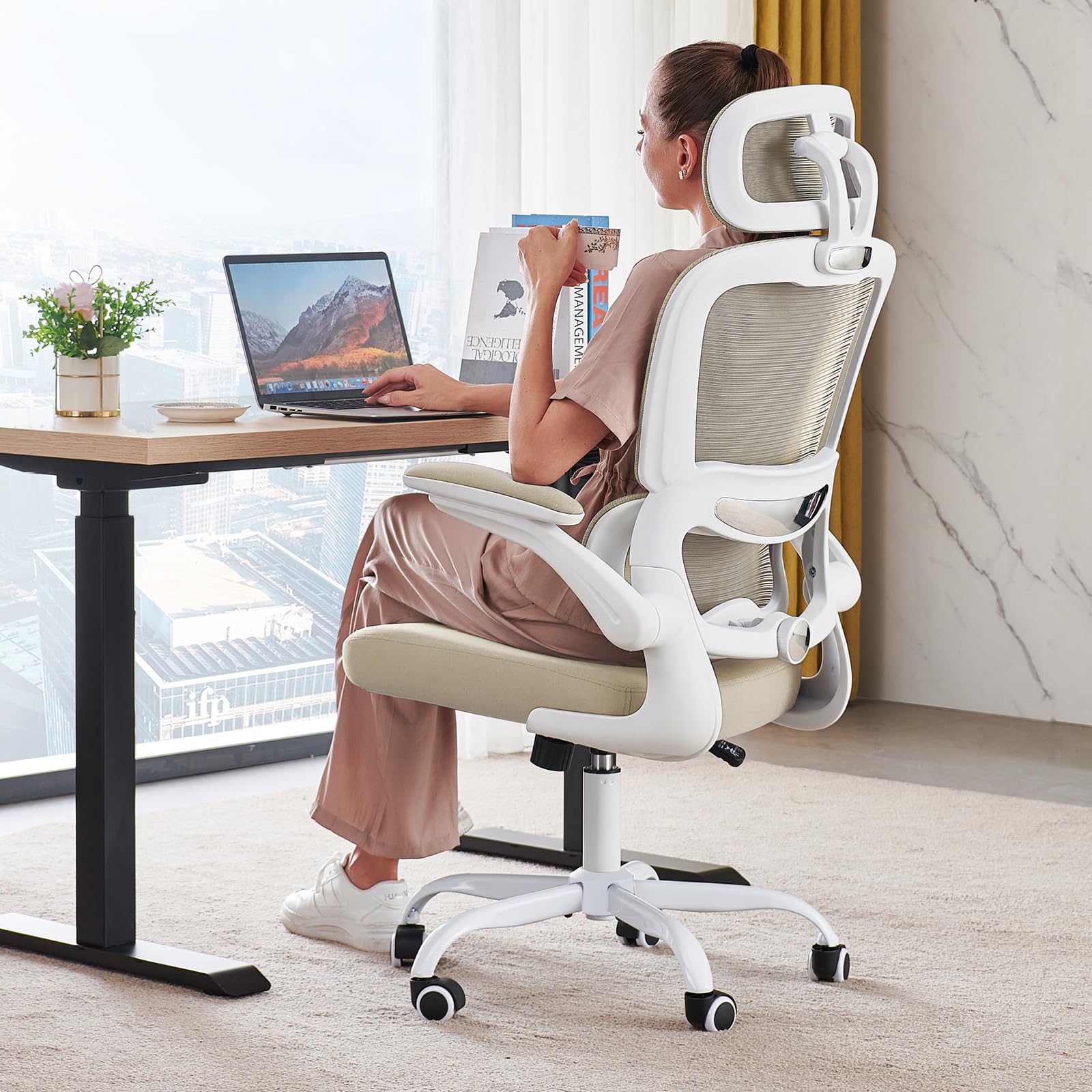
TRALT beige ergonomic mesh chair
A supportive adjustable task chair in a warm beige finish that feels less corporate than the usual all-black office silhouette.
View at Amazon
Samsung 32-inch flat monitor
A generous single screen that creates one clear visual center and reduces the temptation to build a busier multi-monitor arrangement.
View at Amazon Aothia solid-wood monitor stand with cork legs
A warm wood monitor shelf that lifts the screen, gives it an architectural base and creates space to slide the keyboard away.
View at Amazon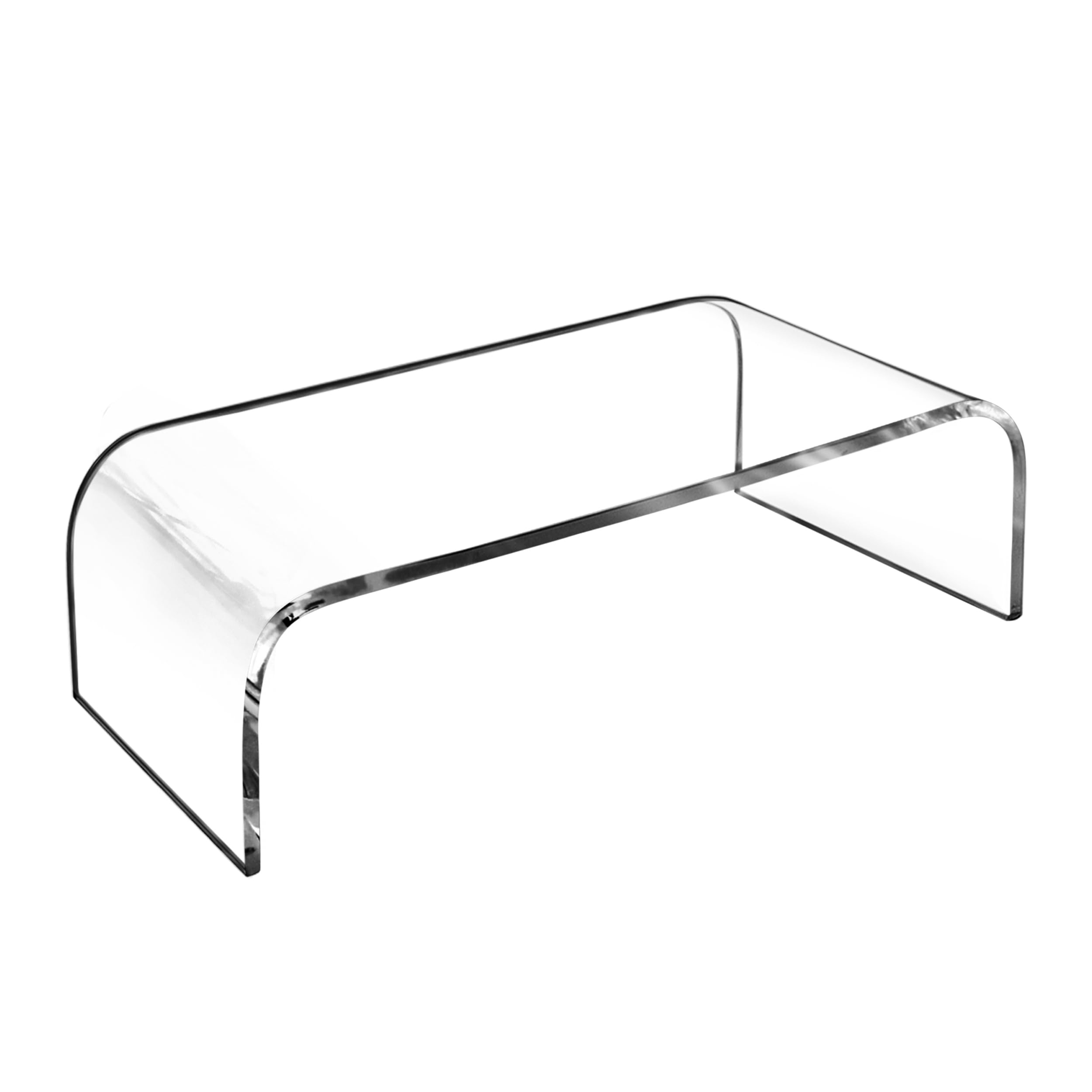
AMT clear acrylic monitor riser
A visually light monitor riser for smaller desks or rooms where another solid wooden element would make the surface feel crowded.
View at Amazon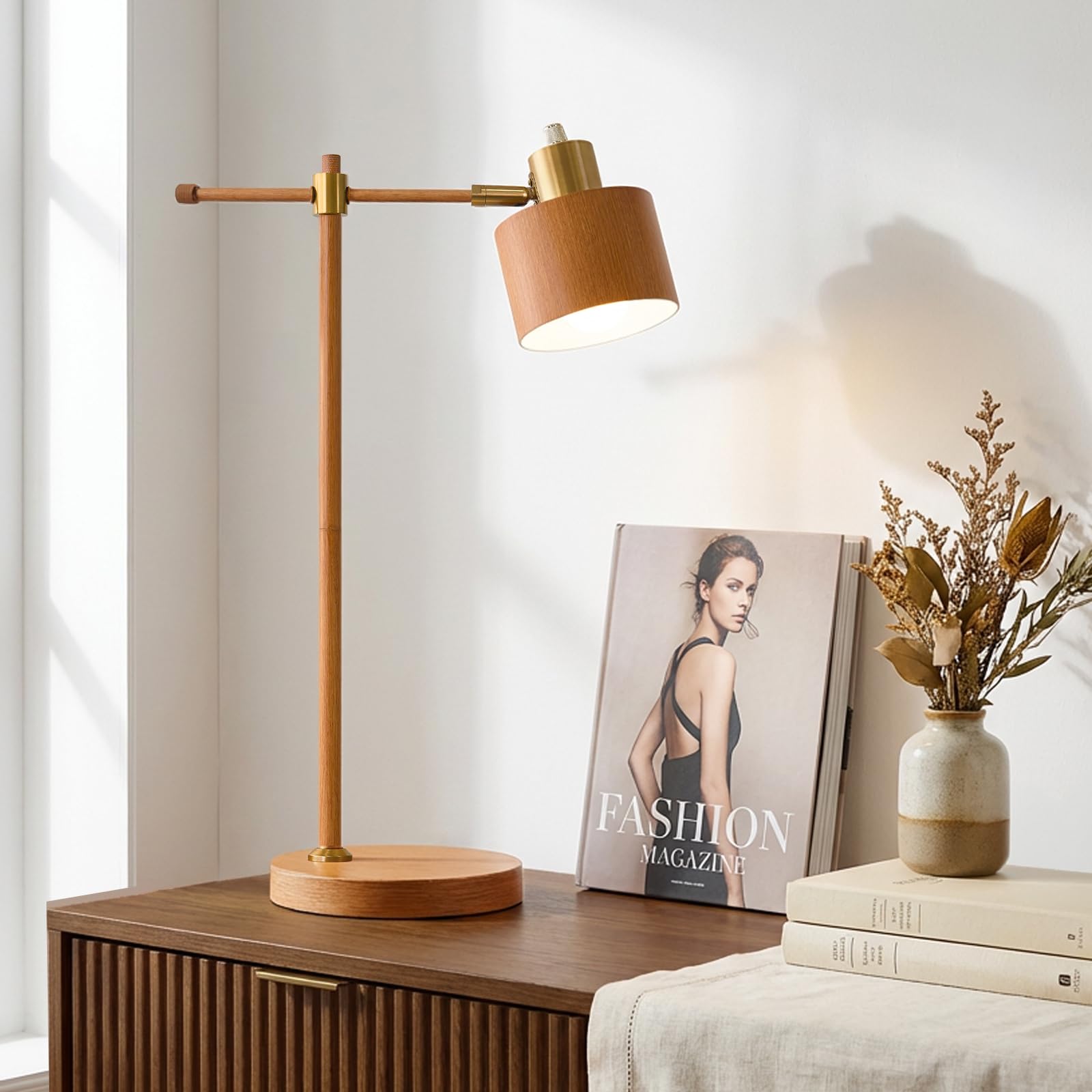
OYEARS adjustable woodgrain desk lamp
A warm adjustable task lamp that creates a domestic pool of evening light and keeps the monitor from becoming the only illuminated surface.
View at Amazon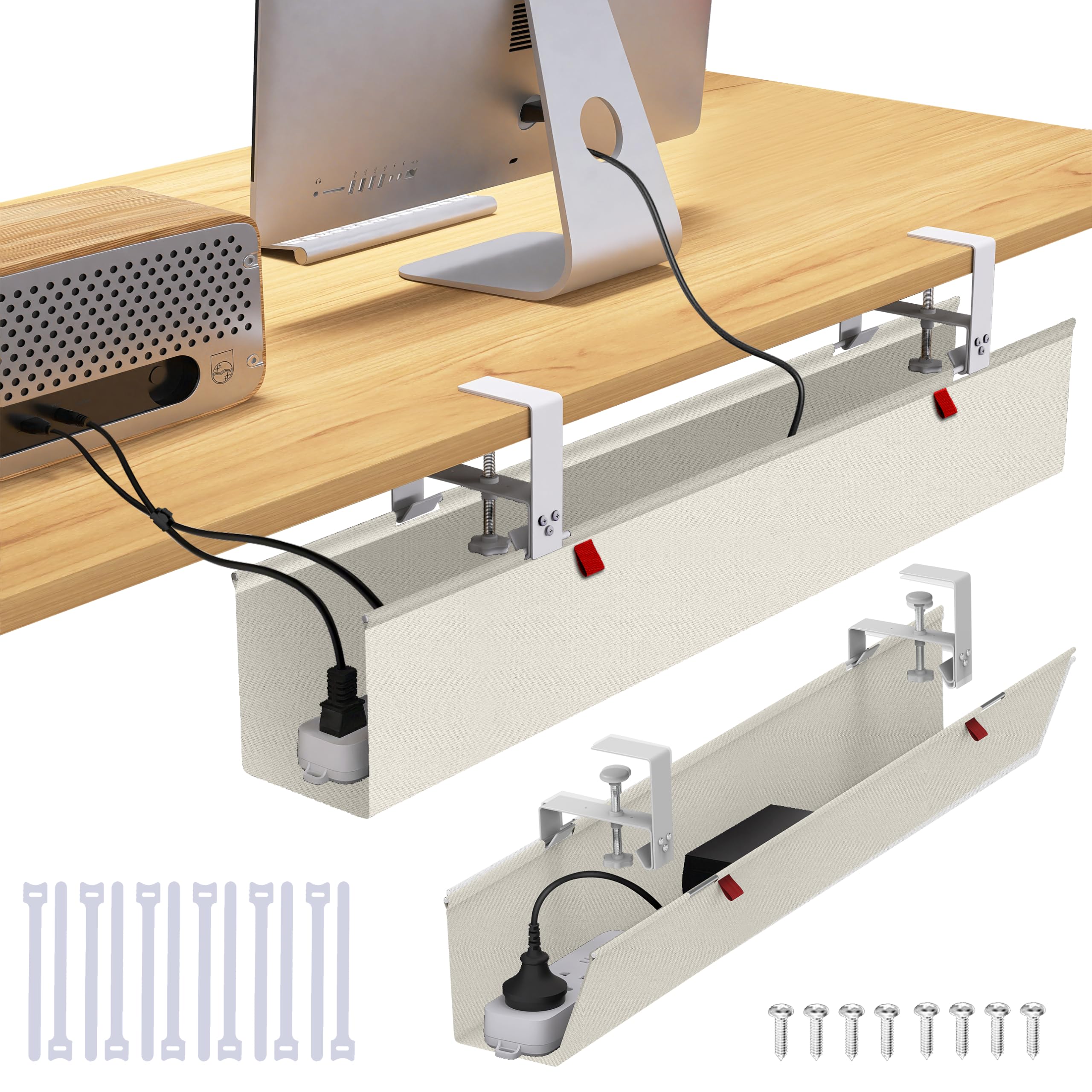
36-inch beige under-desk cable tray
A pale fabric cable tray that moves the power strip, adapters and excess cable length off the floor and out of the room’s sightline.
View at Amazon KIBAGA concrete three-piece desk organizer
A weighty concrete organizer set that keeps daily pens and small notes visible without turning them into decorative clutter.
View at Amazon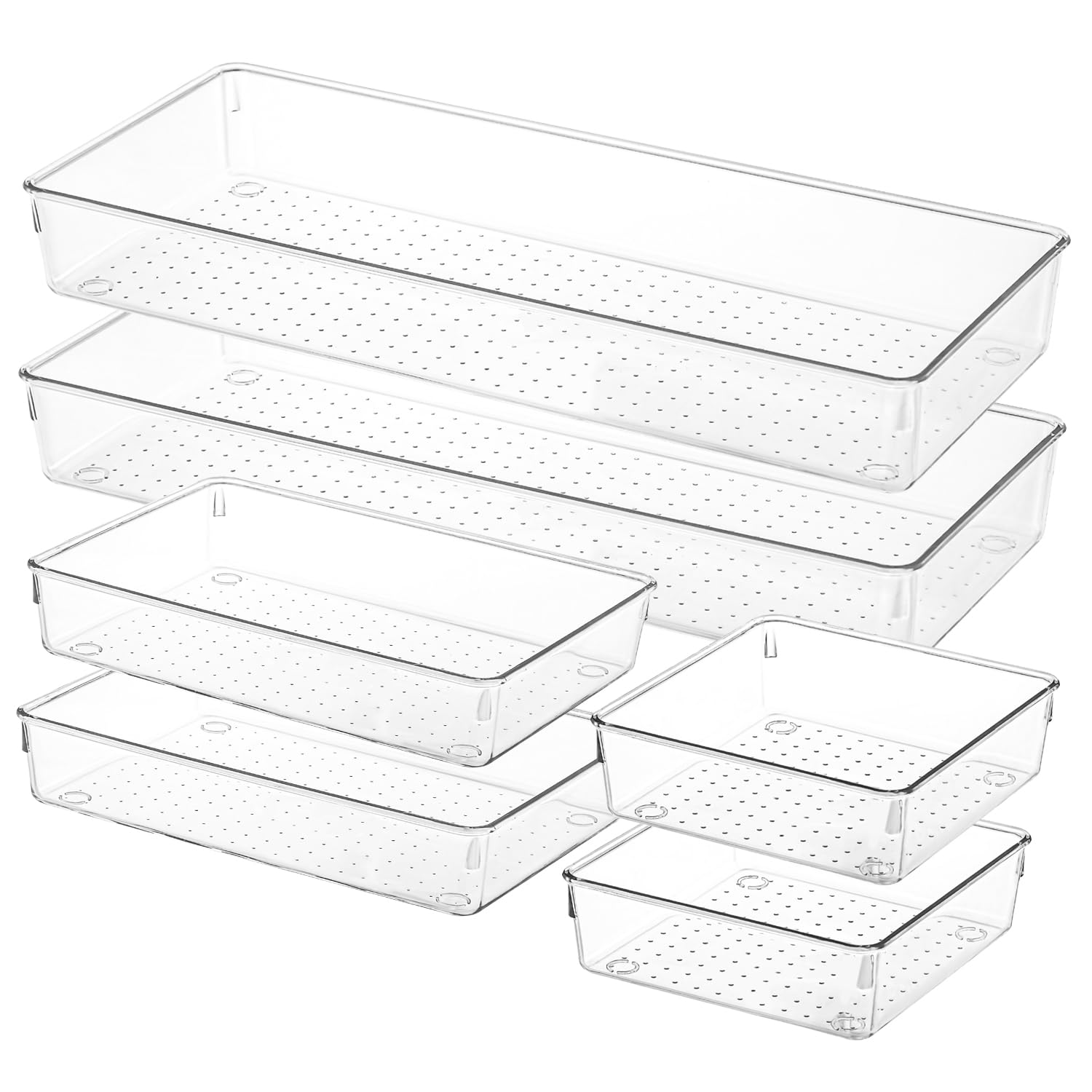
Voova six-piece clear drawer-organizer set
Three tray sizes separate cables, adapters and stationery inside the drawer, where visibility matters more than decorative material.
View at Amazon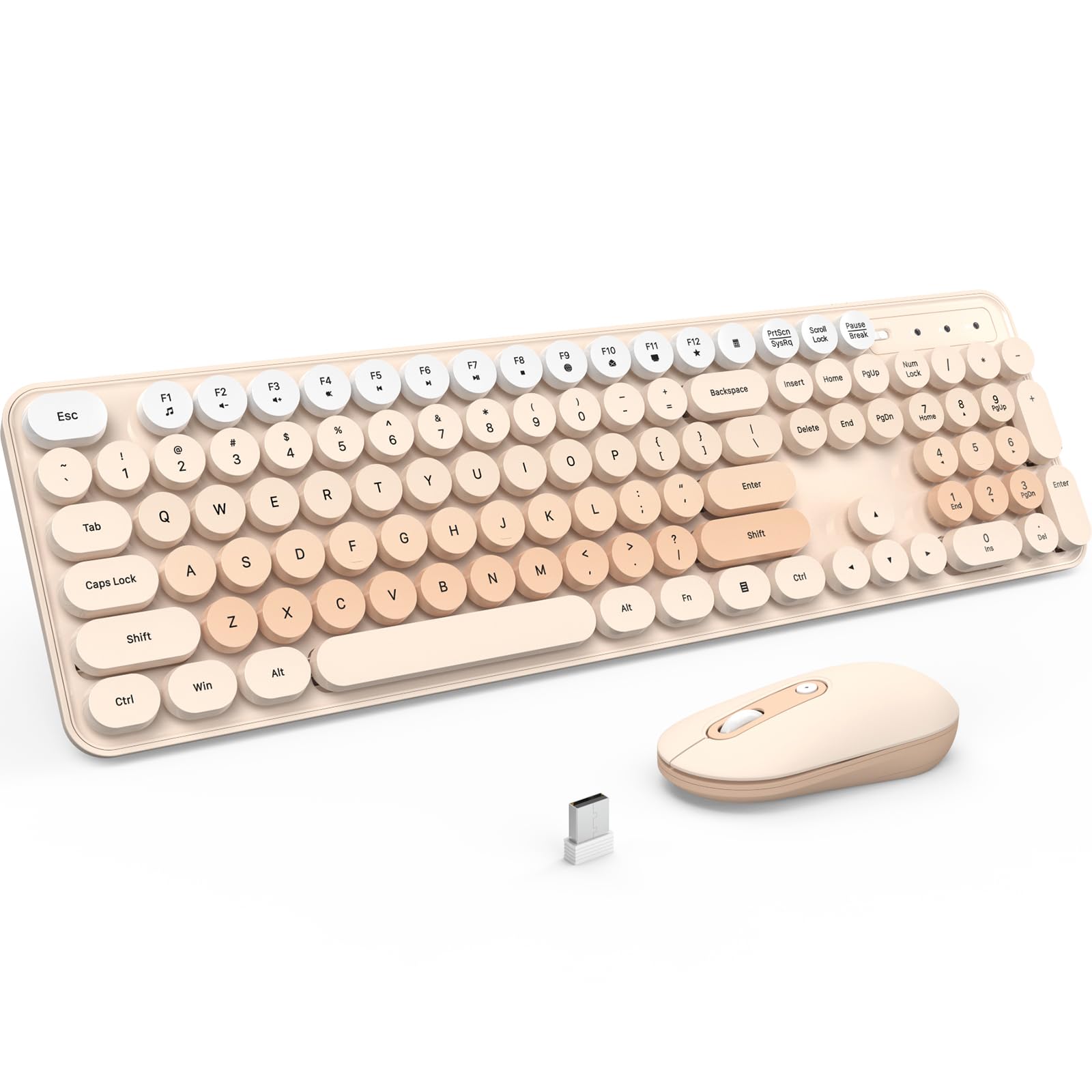
LIZRROT milk-tea wireless keyboard and mouse set
A soft neutral keyboard and mouse set that occupies less visual attention than the standard black technical rectangles.
View at Amazon ZICOTO 35 × 47-inch felt bulletin board
Customizable felt tiles move active notes off the desktop and make the wall part of the working arrangement.
View at Amazon
mooas automatic mini flip clock
A compact analog clock that brings one sculptural, non-screen movement to an otherwise practical desk setup.
View at Amazon