This article contains affiliate links. If you buy through one, Hyggero earns a small commission at no cost to you. It never changes what we recommend.
A small apartment rarely feels cluttered because it contains too many things. More often, it feels cluttered because ordinary things have nowhere calm to land. The remote sits on the coffee table, chargers gather beside the sofa, shoes form a second skirting board in the hallway and toiletries slowly occupy every edge of the bathroom.
The answer is not to turn every wall into open shelving. In a compact home, visible storage can become visual noise almost as quickly as the objects it is meant to organize. The most useful small apartment organization creates a place for daily life, then lets that place disappear into the room.
These ten ideas focus on closed, concealed and double-duty storage. Each one solves a specific source of clutter while keeping the apartment warm, simple and easy to live in.
1. Choose a coffee table with storage inside
The coffee table is where small living-room clutter tends to accumulate: remotes, chargers, notebooks, coasters and the book you are halfway through. Replacing an open table with one that hides these things is one of the highest-impact swaps you can make.
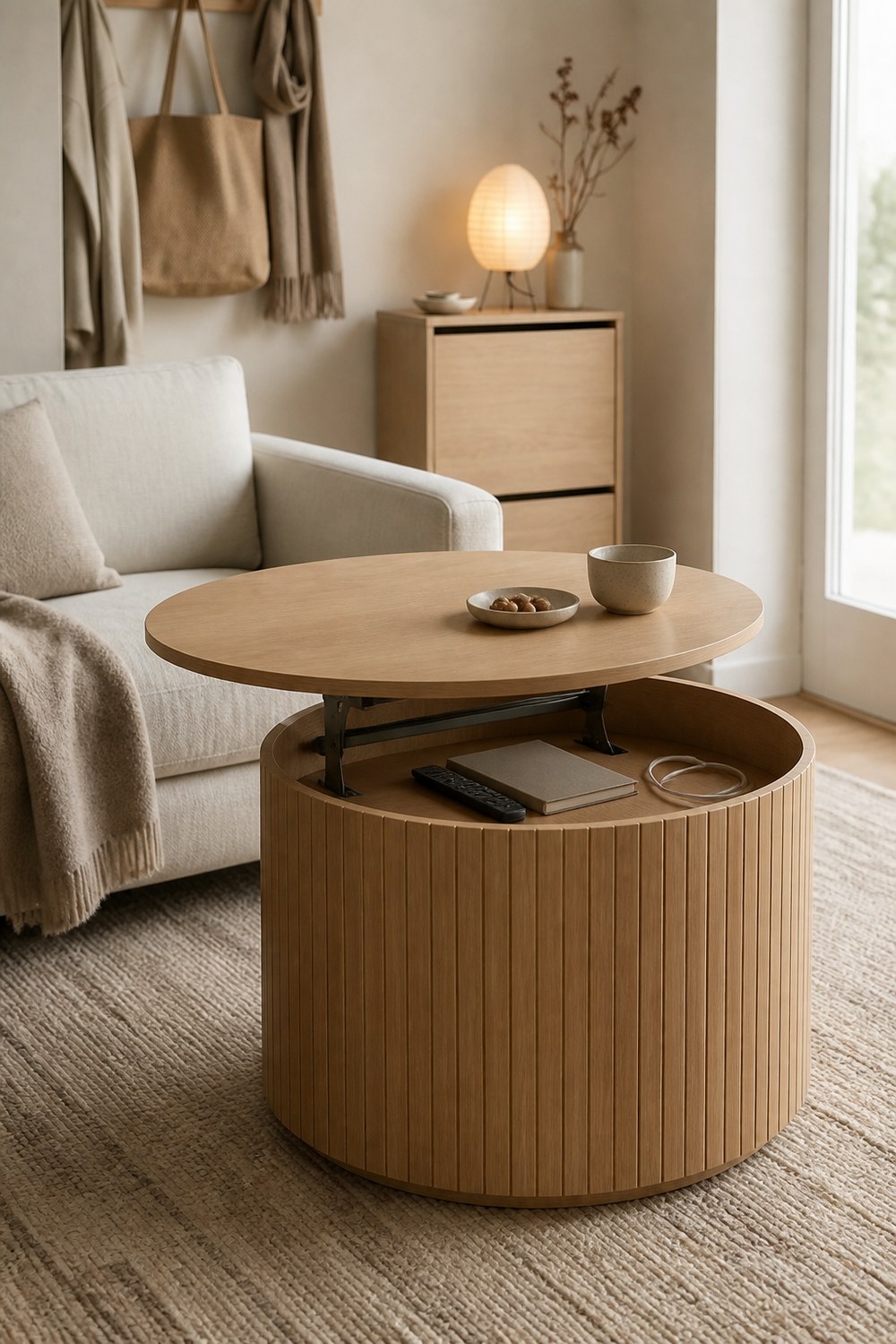
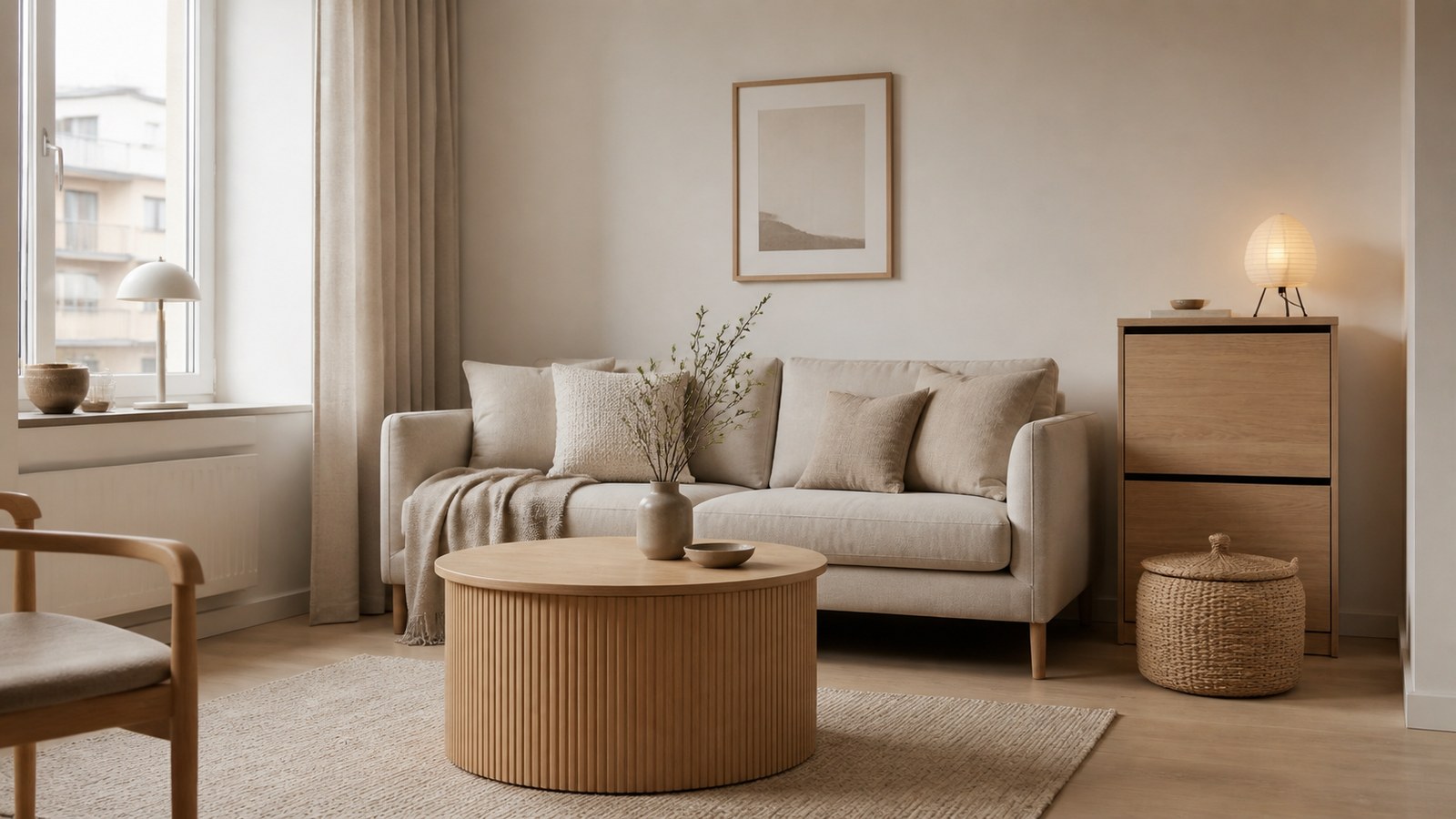
The Vanvuson round oak coffee table has a lift-up top and a concealed compartment beneath it. The fluted cylindrical base reads as a deliberate piece of furniture rather than an organizer, while the round shape is easier to move around in a tight seating area.
Keep only the objects you use from the sofa inside it. Hidden storage works best when it removes daily friction—not when it becomes another place to forget things.
2. Let the side table swallow the small things
A compact side table can replace both a surface and a loose storage basket. Look for a simple drum or box shape with a removable top, rather than an open lower shelf that still leaves everything on display.
The AVZEAR fluted round side table is just under 16 inches wide and includes a hidden compartment beneath the lid. Use it for chargers, headphones, a tablet or whatever normally migrates across the sofa.
The styling rule is simple: one lamp or one small object on top. The moment the surface becomes another display shelf, you lose the calm you gained underneath.
3. Use one lidded basket for soft clutter
Throws, spare cushions and children’s toys need storage that is easy to reach and forgiving to use. A lidded basket is better than an open one here because the room still looks finished when the contents are less than perfectly folded.
The MOORLITER woven storage basket has a removable liner and a rigid frame, so it keeps its shape instead of collapsing into the corner. Its generous size makes it useful for bulky textiles, but give it one job only.
That last point matters. A beautiful basket stops being useful when it holds blankets, cables, paperwork and six unrelated objects. Choose the category before you choose the container.
4. Replace the hallway shoe rack with a closed cabinet
An open shoe rack saves shoes from the floor but does not remove the visual clutter. In a narrow entrance, a shallow flip-door cabinet is usually the cleaner solution because it uses very little depth and presents one continuous furniture front.
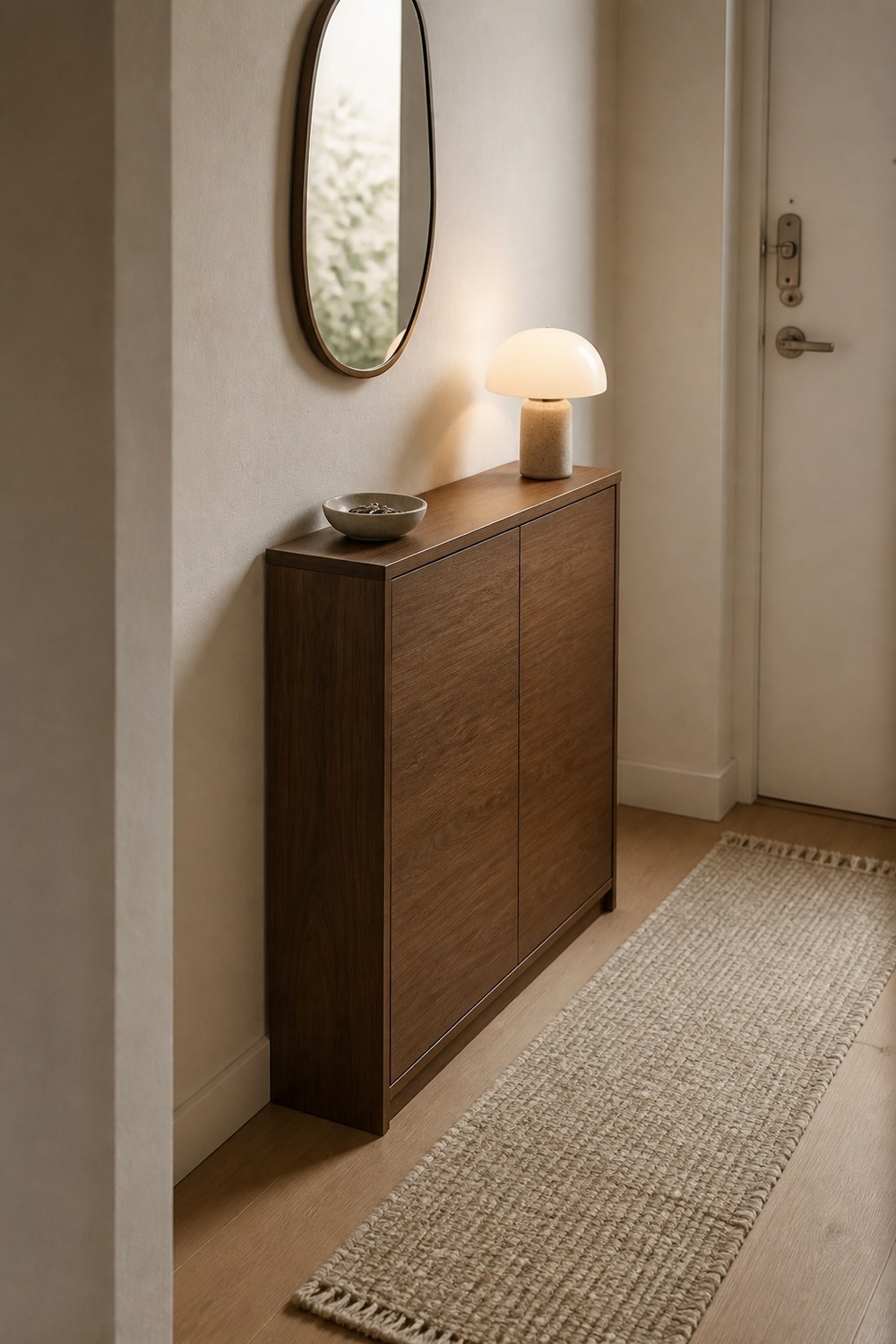
The QIVOMIX walnut shoe cabinet is only about 9.4 inches deep, so it conceals shoes without turning the entryway into a corridor of furniture.
Resist styling the top with several small objects. A tray for keys and perhaps one lamp is enough. The cabinet should quiet the entrance, not create a new surface to manage.
5. Claim the space under the bed
The area beneath a bed is too valuable to waste, especially when a small apartment has no linen closet. Use it for low-frequency categories—off-season clothes, spare bedding or travel equipment—rather than things you need every morning.
The Budding Joy under-bed storage bags are soft-sided, zipped and collapsible when empty. Because they disappear completely, they do not need to be decorative; they need to be labelled and easy to pull out.
Measure the clearance under your bed before ordering. Then divide the space by category instead of filling every bag at random. Concealed storage only feels spacious when you can retrieve something without opening four containers.
6. Float a closed cabinet in the bathroom
Small bathrooms often have unused wall space but very little usable floor space. A floating cabinet takes advantage of that imbalance: toiletries disappear behind a door, while the visible floor continues underneath and keeps the room feeling lighter.
The CITTANEO rough-oak floating cabinet is 12 inches wide, with a closed soft-close compartment and one open shelf. Put the visually untidy things—refills, medicine and spare toiletries—behind the door, and reserve the shelf for the two or three items you reach for every day.
This closed-versus-open division is useful throughout a small home: hide the inventory; display only what makes a routine easier.
7. Make the cupboard work harder inside
Sometimes the apartment already has enough storage volume; it simply uses that volume badly. Deep sink cupboards are a good example. Bottles collect in one layer at the front while the height and back of the cabinet go unused.
A Basicwise pull-out under-sink organizer turns the cabinet into two accessible levels. The sliding mechanism matters more than the appearance because the entire unit vanishes when the door closes.
Group products by task—dishwashing, cleaning, laundry—instead of by bottle size. You should be able to pull out one section and find everything needed for that job. Good hidden storage ideas make routines shorter as well as rooms calmer.
8. Hide the power strip, not just the loose cable
Cable clips can straighten a wire, but they do not solve the larger knot of plugs, adapters and excess cord around a power strip. Conceal that source first, then route the few visible cables towards it.
The Naeety two-pack cable-management boxes cover power strips in two useful sizes and include openings for cables at either end. Their wood-look lids are quiet enough to sit beside a desk or media unit without reading as office equipment.
Measure your power strip before buying—the interior size is limited. Avoid sealing chargers inside a container not designed for cable management, and keep ventilation openings clear.
9. Fold the home office back into the wall
In a studio or one-bedroom apartment, a permanently visible desk can make the entire room feel like a workplace. A fold-down wall unit gives stationery and small electronics a closed home, then removes the work surface when the day is over.
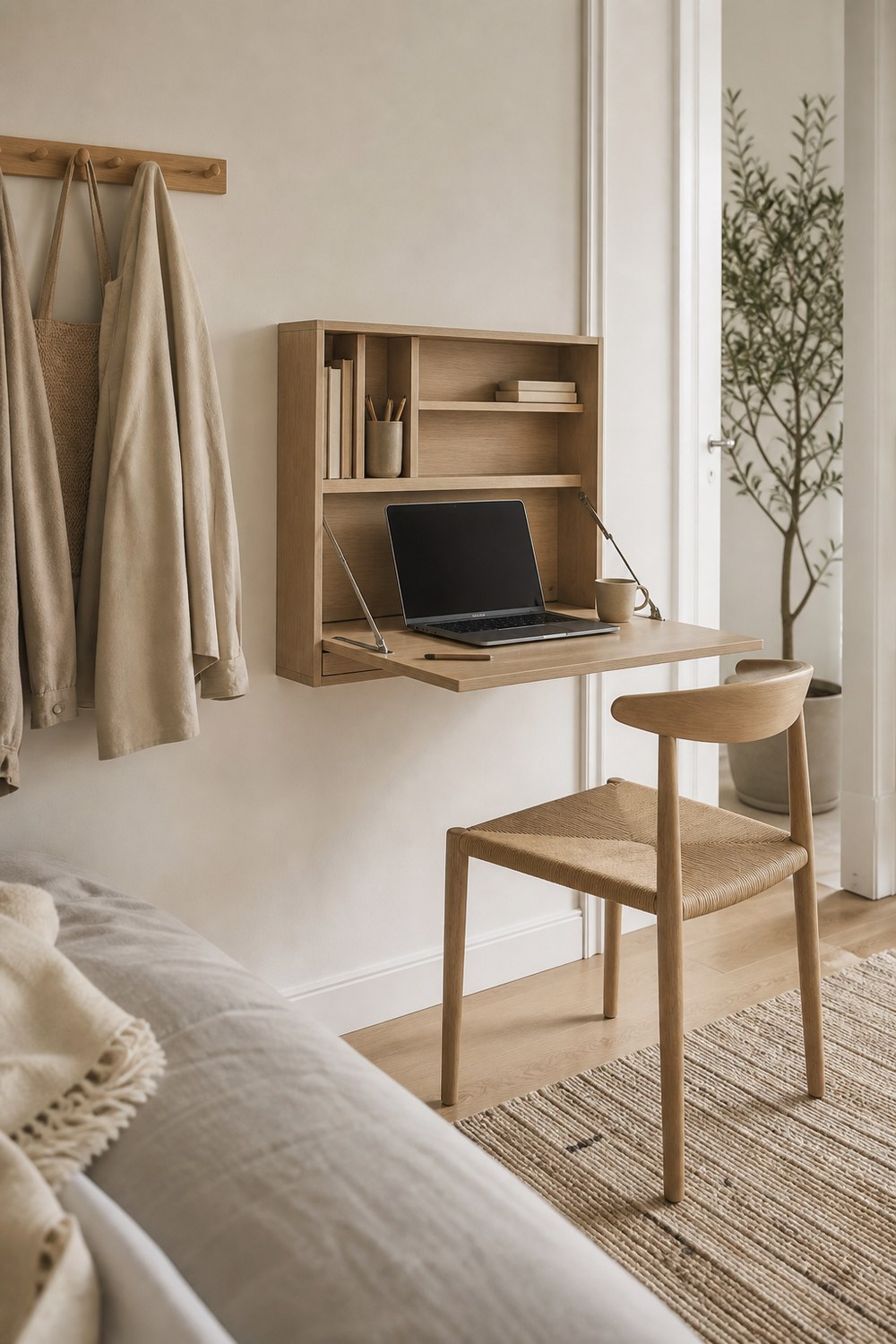
The HOMCOM wall-mounted folding desk closes to a depth of roughly 7.7 inches and includes internal shelving. It is best for a laptop-based setup rather than a heavy desktop system.
Before mounting any fold-down furniture, confirm the wall construction and use appropriate fixings. The visual payoff is substantial: when the front closes, the workday—and its clutter—leaves the room.
10. Use the inside of cabinet doors
The last useful storage surface is often already in the room: the back of a cupboard door. Shallow organizers can hold container lids, cloths, dishwasher tablets or grooming tools without taking another inch of counter or floor space.
The EINFAGOOD adhesive cabinet-door organizers are shallow enough for small items and install without drilling. Check the clearance against shelves, hinges and anything already stored inside before fixing them in place.
Use this space for awkward objects that otherwise wander—not as permission to buy more organizers. The best small-apartment storage is almost invisible because every solution has a precise purpose.
The small-apartment rule that makes all ten work
Do not begin by buying containers. Begin by naming the clutter: shoes by the door, chargers beside the sofa, cleaning products under the sink. Then give each category one closed home as close as possible to where it is used.
That is the difference between storage and organization. Storage can hold more things; organization makes the room easier to reset. When the coffee table, hallway, bathroom and desk can each return to calm in a minute, a small home feels generous rather than crowded.
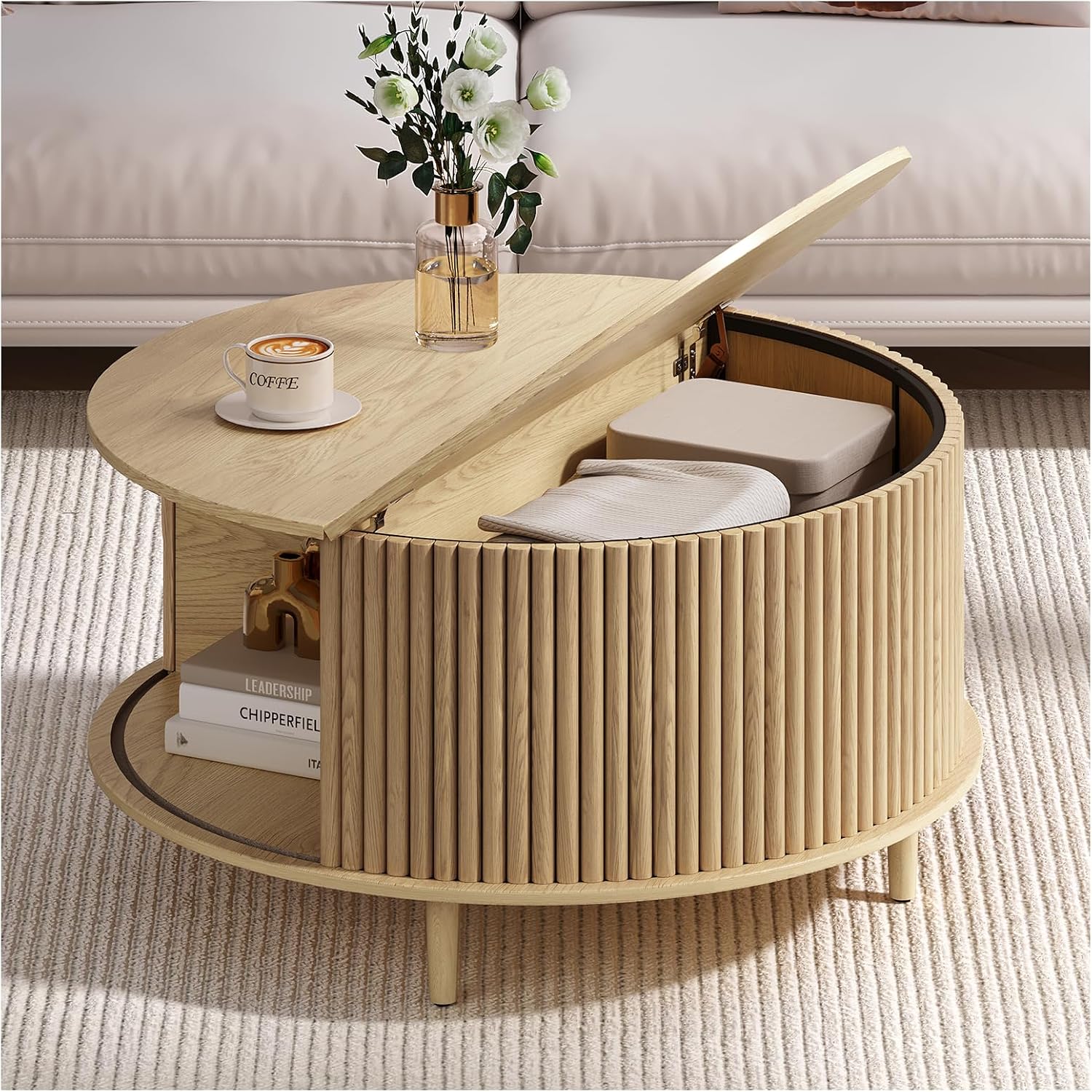
Vanvuson round oak coffee table
A round, fluted table with concealed storage for the remotes, chargers and notebooks used around the sofa.
View at Amazon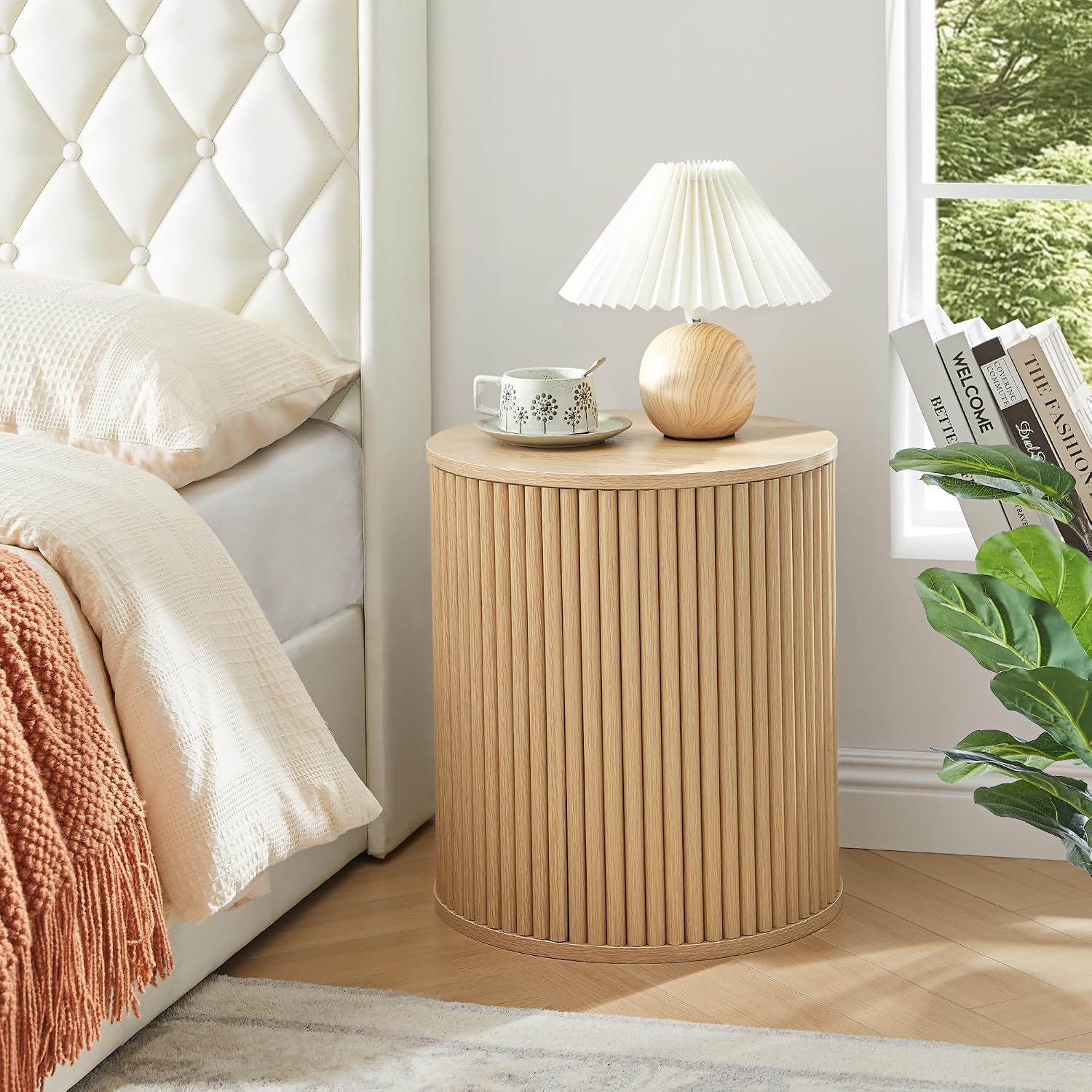
AVZEAR fluted round side table
A compact surface with a hidden compartment beneath the lid for chargers, headphones and other small essentials.
View at Amazon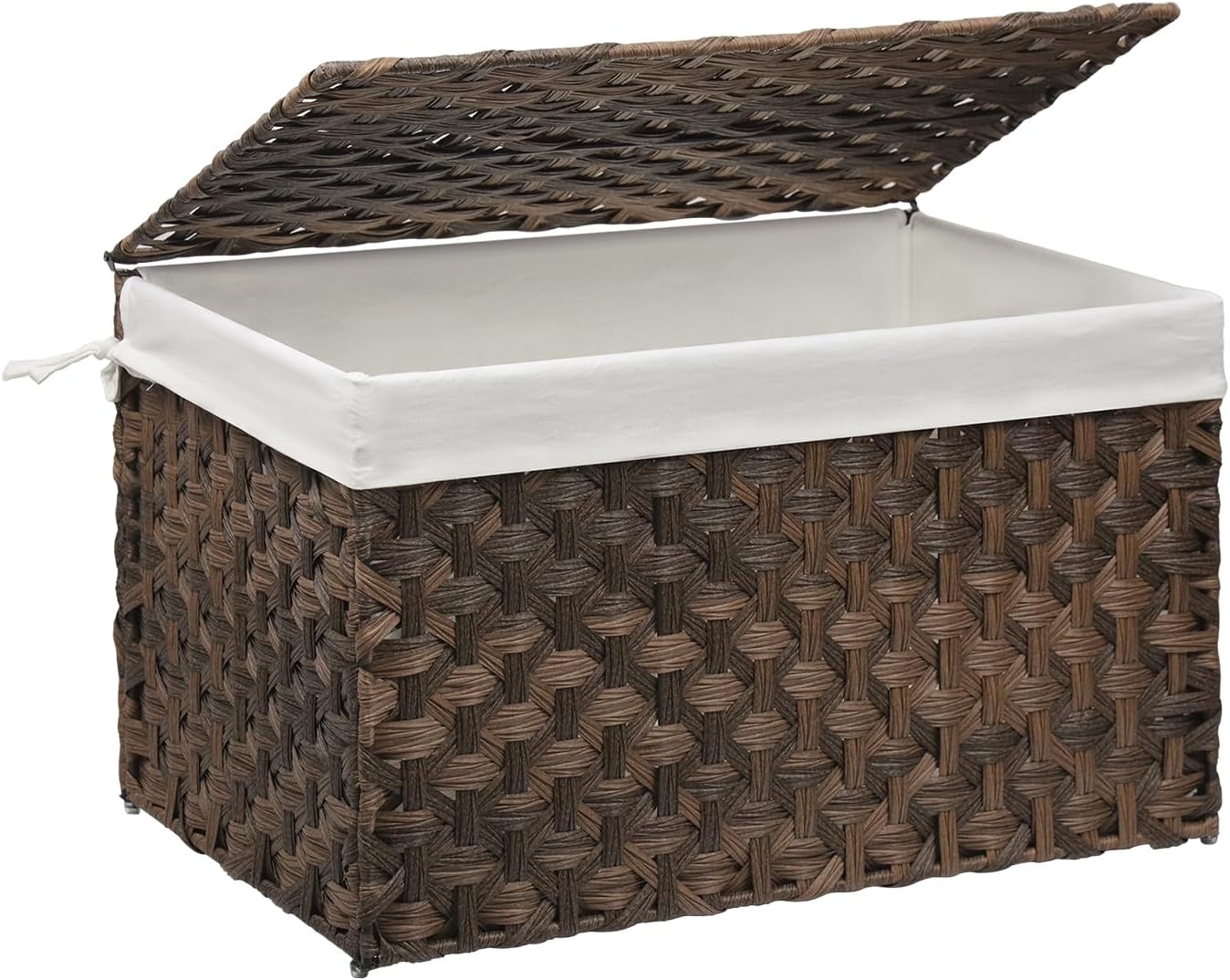
MOORLITER woven storage basket
A lidded, rigid-frame basket that gives throws, spare cushions or toys one forgiving closed home.
View at Amazon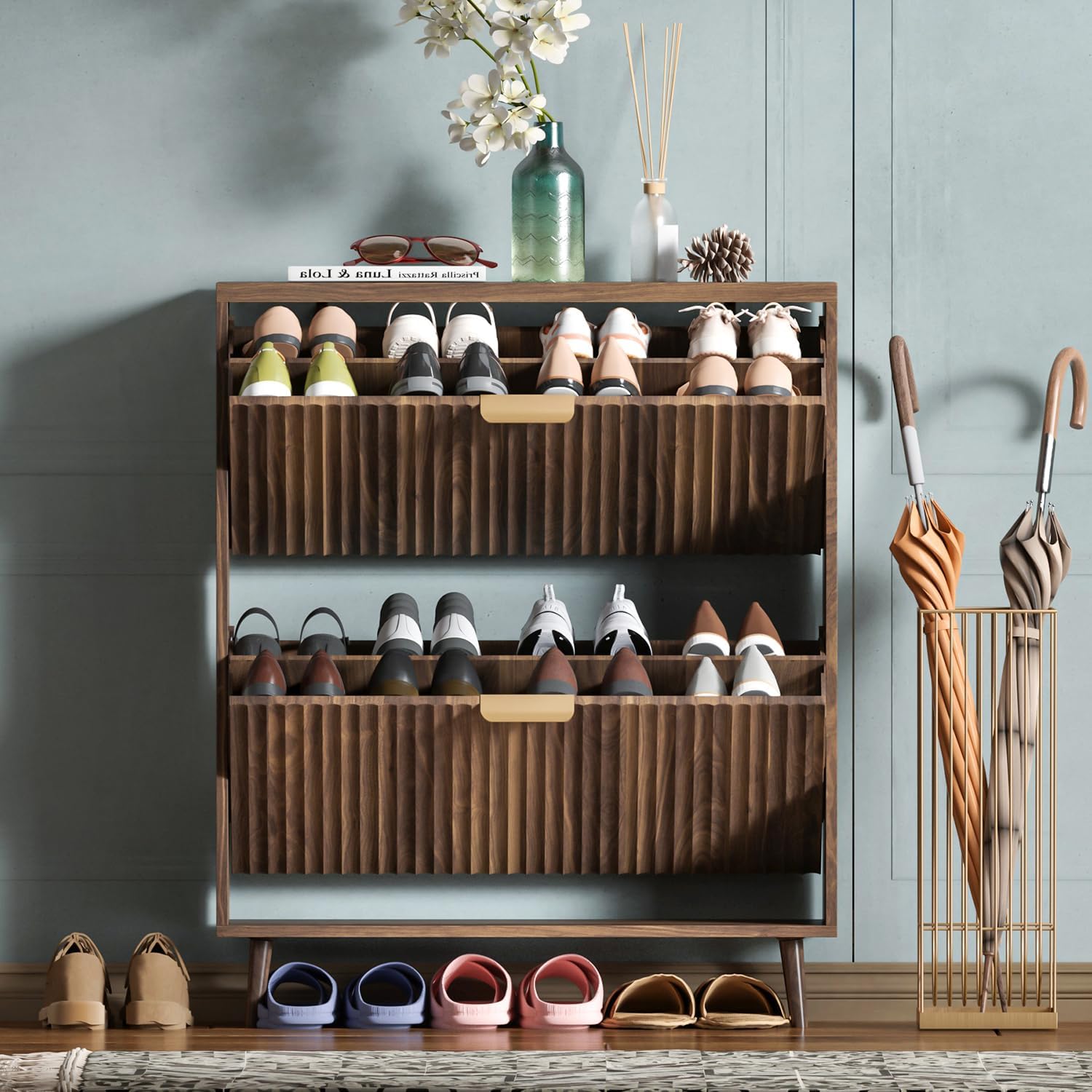
QIVOMIX walnut shoe cabinet
A shallow flip-door cabinet that conceals everyday shoes without narrowing the entryway unnecessarily.
View at Amazon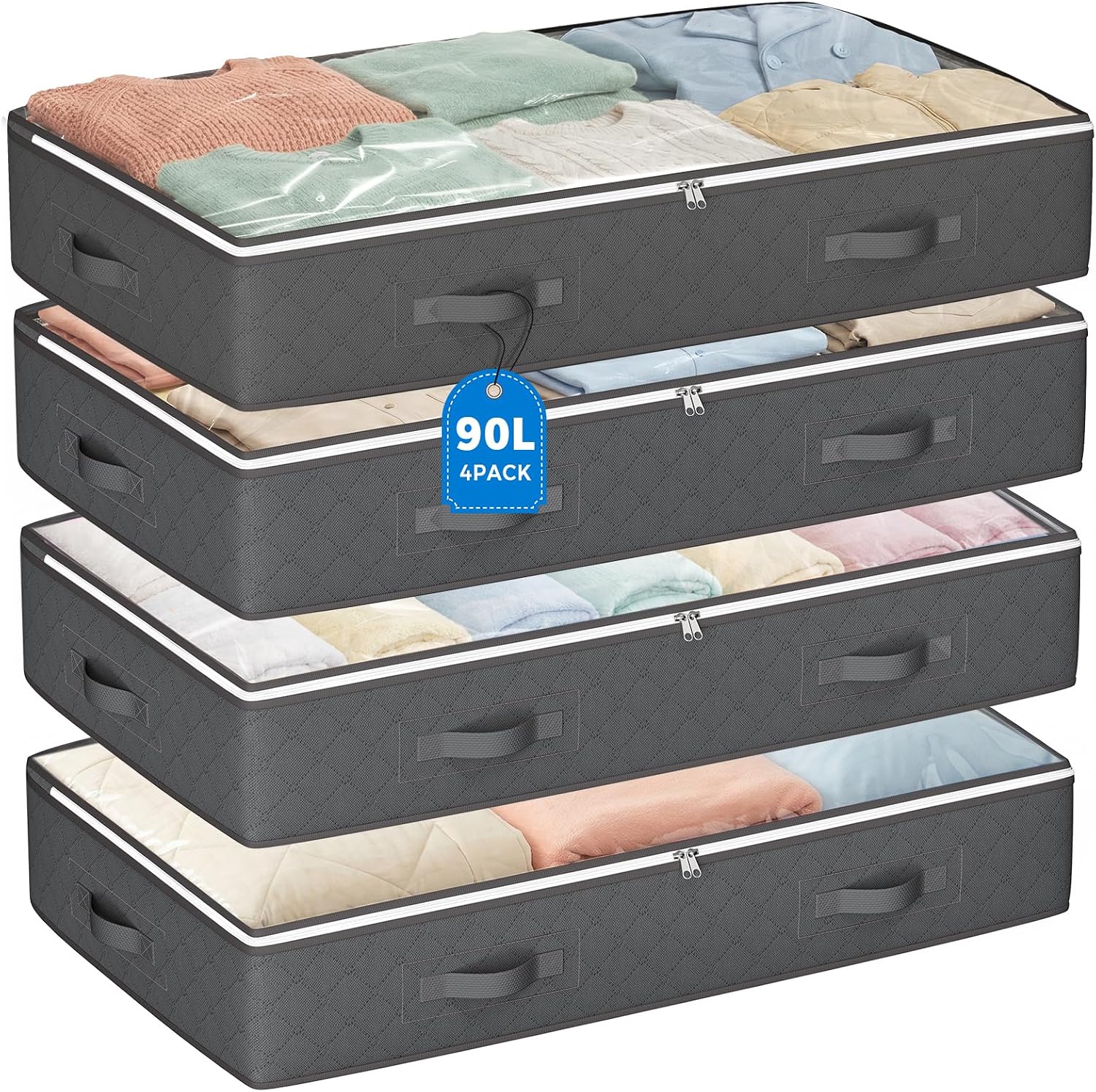
Budding Joy under-bed storage bags
Soft-sided, zipped bags for off-season clothes, spare bedding and other low-frequency categories beneath the bed.
View at Amazon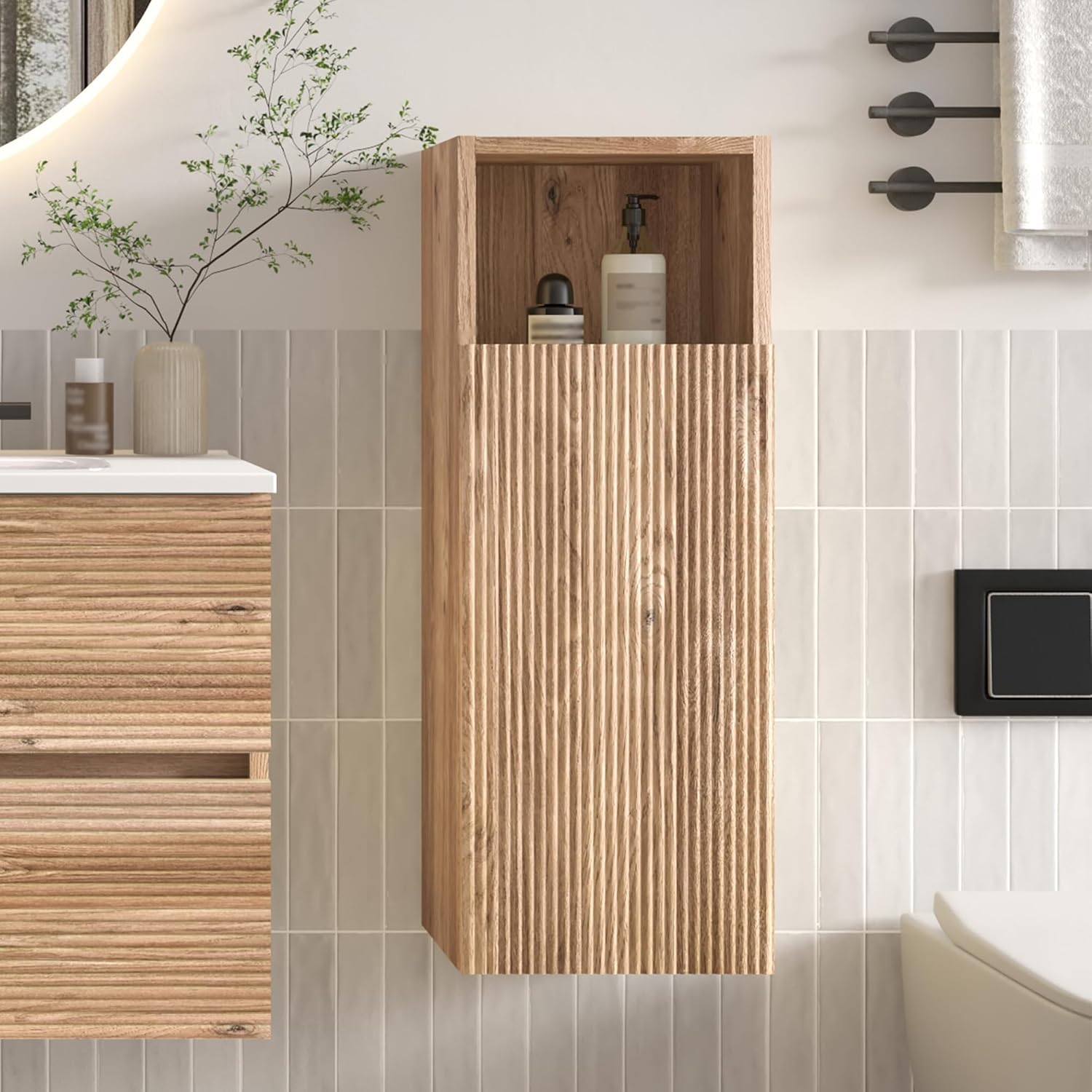
CITTANEO rough-oak floating cabinet
Closed wall-mounted bathroom storage that keeps refills and toiletries off the floor and out of view.
View at Amazon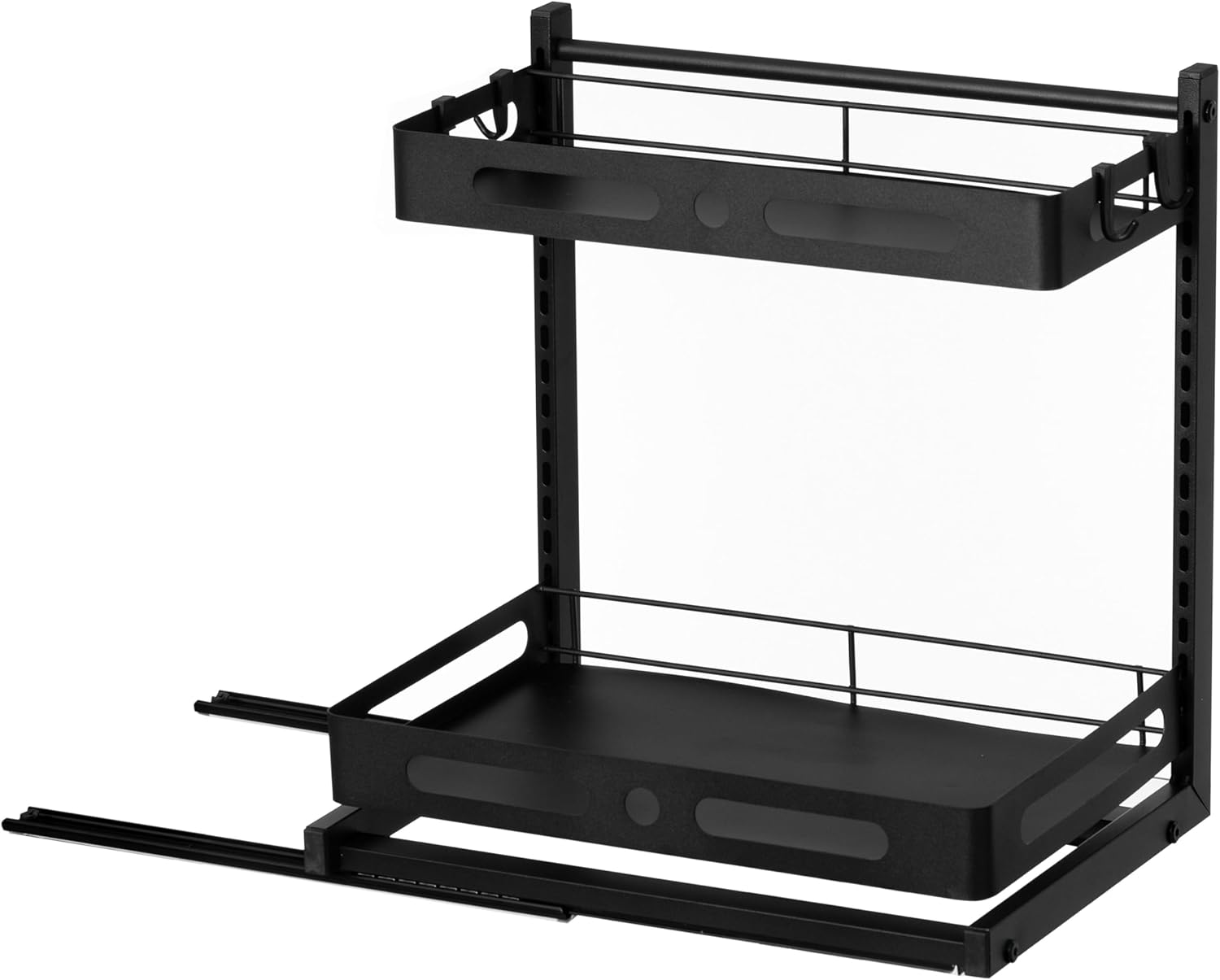
Basicwise pull-out under-sink organizer
Two accessible levels that use the height and back of a deep sink cupboard more effectively.
View at Amazon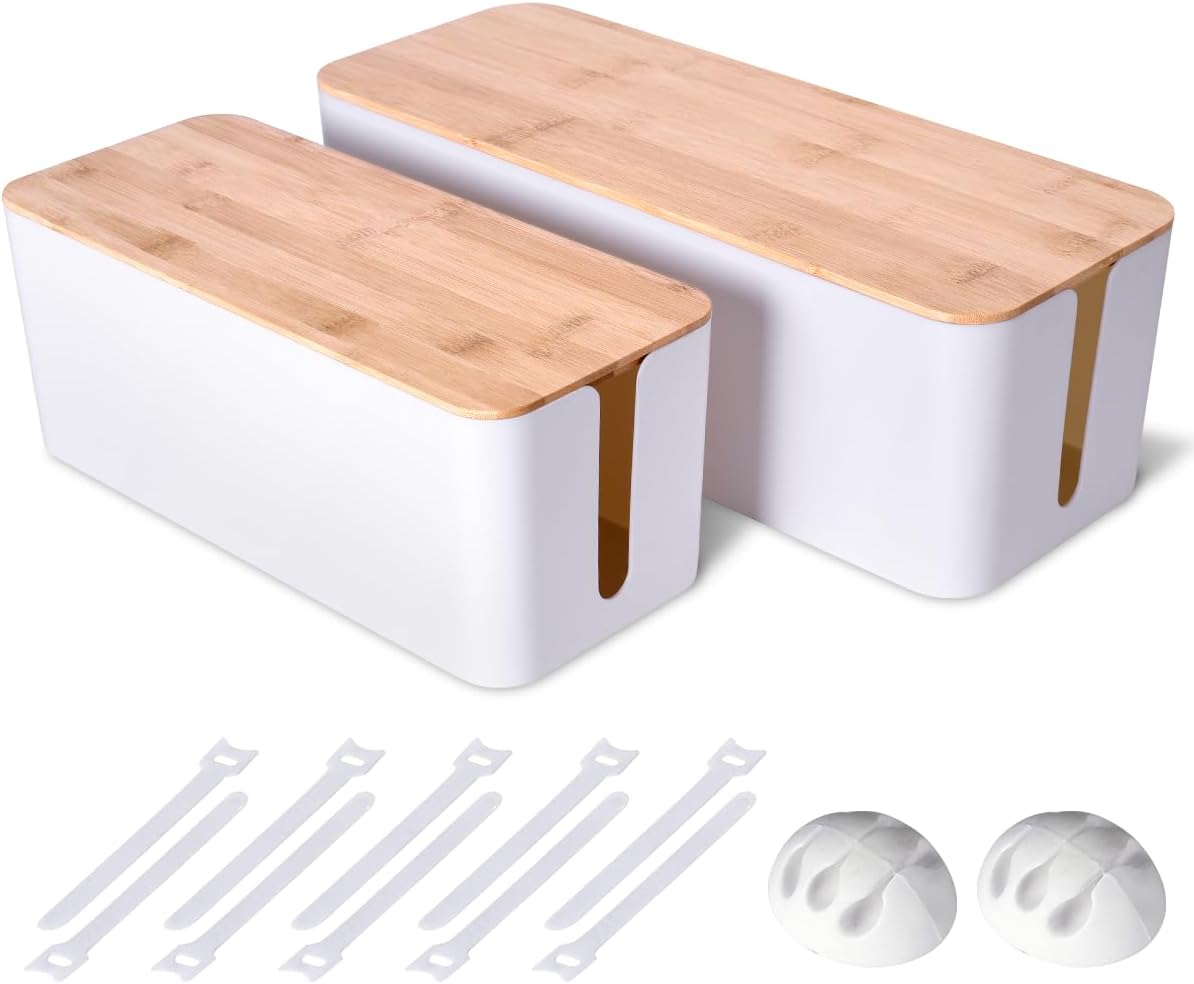
Naeety two-pack cable-management boxes
Two ventilated boxes in useful sizes that conceal power strips, adapters and excess cable beneath wood-look lids.
View at Amazon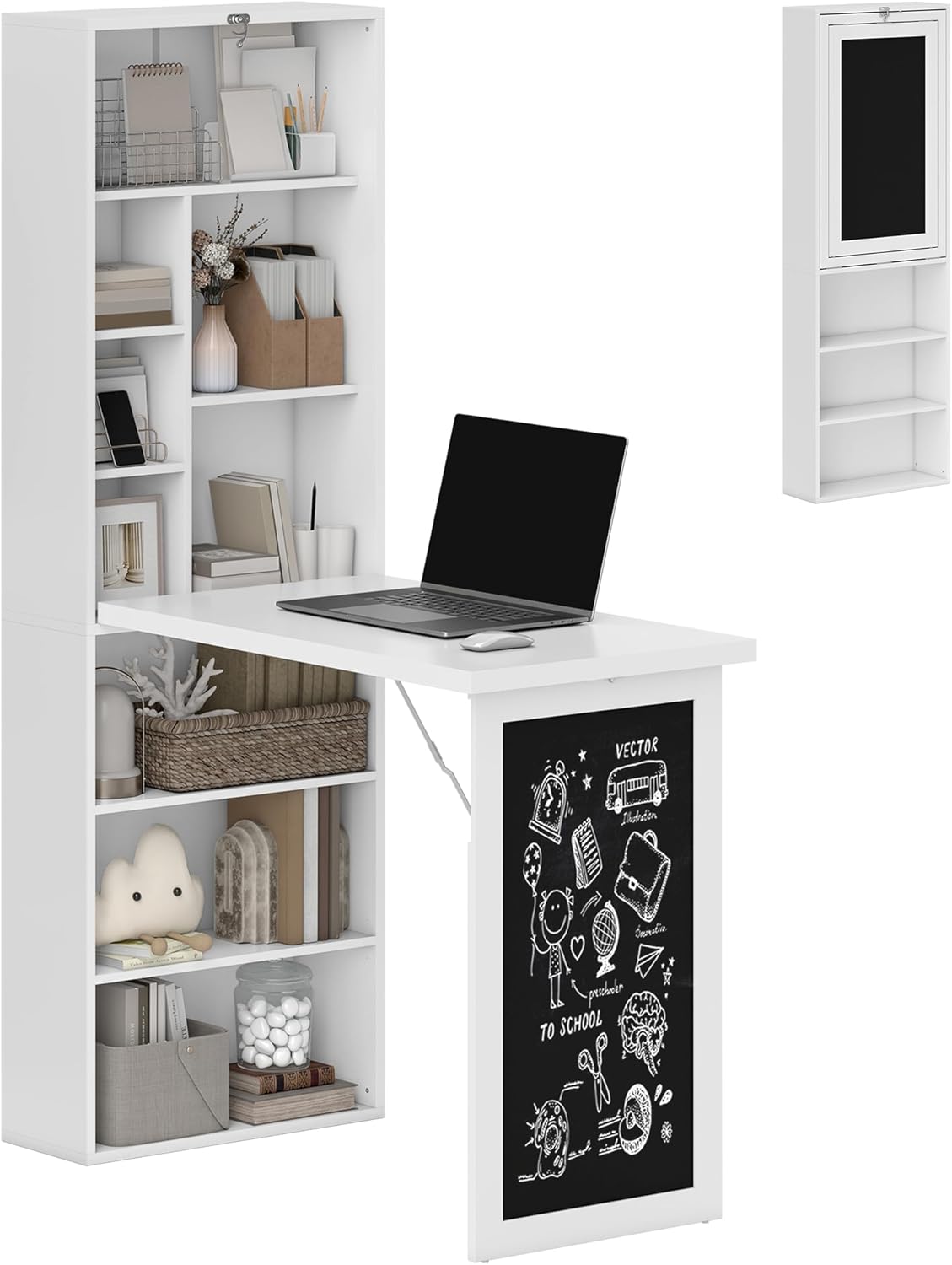
HOMCOM wall-mounted folding desk
A shallow wall unit that gives a laptop workspace and small electronics a closed home after work.
View at Amazon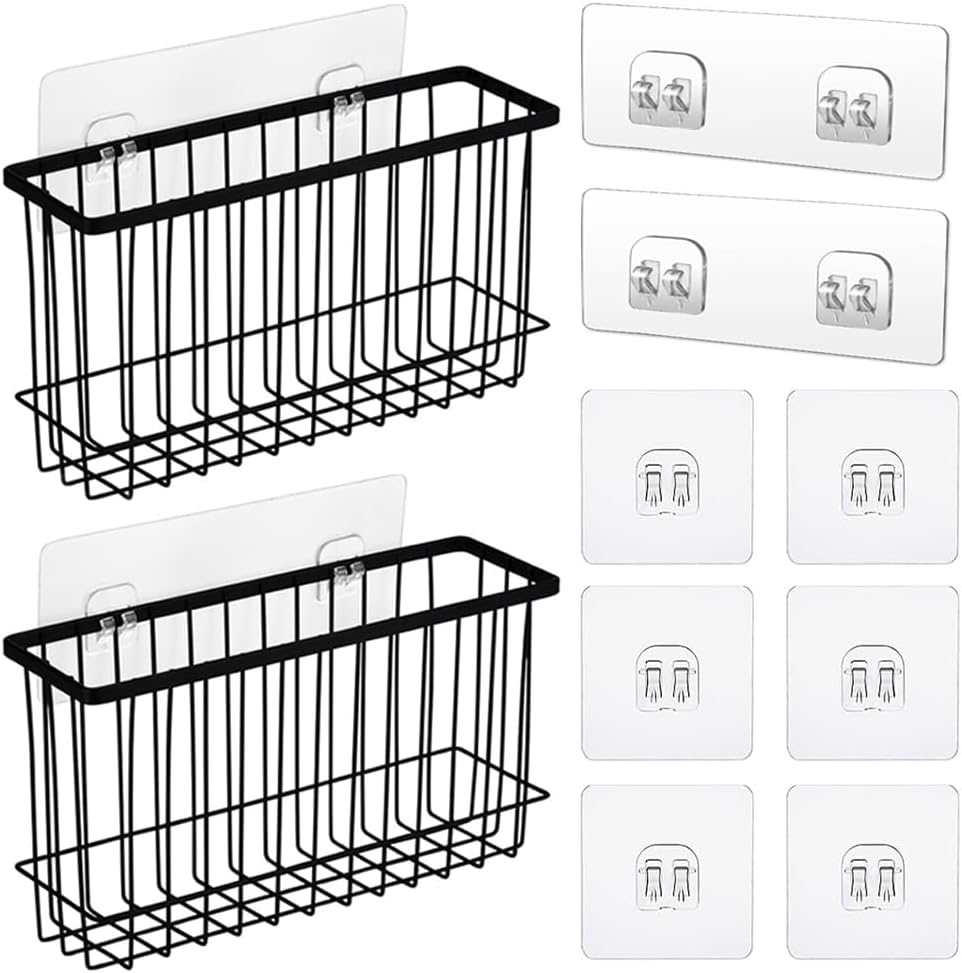
EINFAGOOD adhesive cabinet-door organizers
Shallow organizers that use the back of a cupboard door for lids, cloths and other awkward small objects.
View at Amazon