This article contains affiliate links. If you buy through one, Hyggero earns a small commission at no cost to you. It never changes what we recommend.
A small entryway has to absorb a surprising amount of life.
Shoes arrive wet. Keys disappear. Coats gather. Bags are set down “for a moment” and remain for a week. Yet this hardworking part of the home is also the first thing we see when we return — and the first impression we offer to anyone who visits.
The Scandinavian approach is not to make a small hallway feel empty. It is to give everything a clear place, then leave enough breathing room for the entrance to feel calm. Pale timber, honest materials, and soft light help, but the real difference comes from choosing pieces that earn the space they occupy.
These small entryway ideas are designed for narrow halls, compact apartments, and entrances that are little more than a pause between the front door and the living room. Each one adds function without adding visual noise.
Hyggero may earn a commission from purchases made through links in this article. We select products for their relevance to the room and the idea — not simply because they are available through an affiliate partner.
01 — Begin with the one thing your entryway needs most
Before buying a bench, mirror, or set of matching baskets, notice what actually creates friction in the space.
Is it the shoes left beside the door? Coats with nowhere to go? A lack of light? Or the daily search for keys? A small entryway rarely has room to solve every possible problem, so start with the one that occurs every day.
If shoes are the issue, use the wall closest to the door for shallow storage. If it is keys and mail, a narrow ledge may be enough. If the entrance feels cold rather than cluttered, lighting and texture will make a greater difference than another cabinet.
This is a useful Scandinavian principle: design around the ritual, not the catalog image.
Consider: a slim shoe cabinet, wall rail, key tray, or narrow floating shelf.
02 — Use the wall before you use the floor
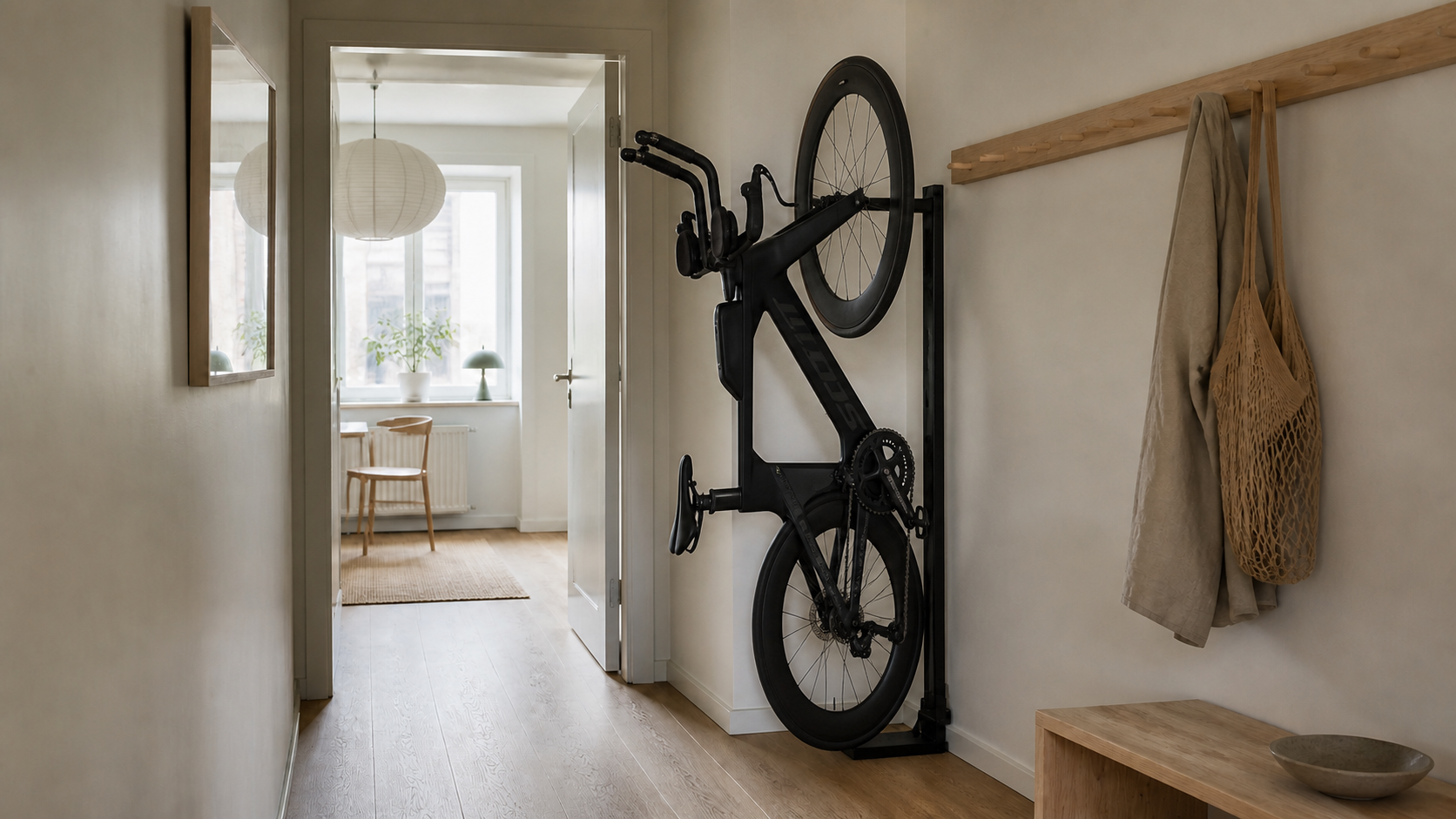
In a tight hallway, floor space is valuable. Walls are often underused.
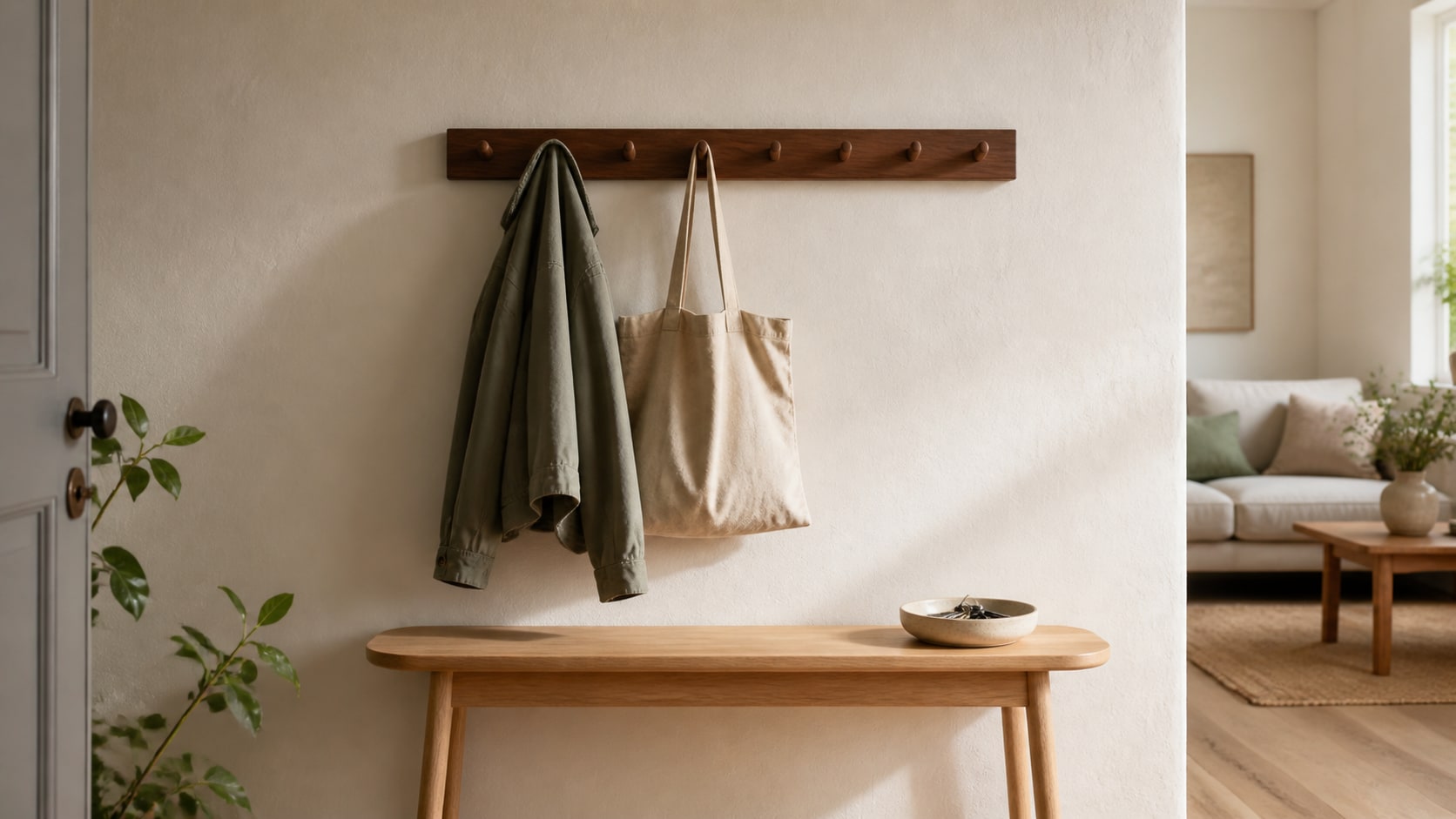
A line of simple wooden pegs can hold coats, a canvas tote, and tomorrow’s scarf without the bulk of a freestanding coat rack. Mounting hooks at two heights gives everyday items a natural order and makes the arrangement easier for children to use.
Keep the display edited. Open storage works best when it carries the pieces that are currently in rotation — not every coat you own. Move heavy winter layers elsewhere when the season changes and allow a little empty space between items.
Oak, ash, and beech bring warmth to a white wall, while blackened steel creates a sharper architectural line. Either can work; what matters is repeating the material elsewhere so the hallway decor feels intentional.
Consider: Shaker-style peg rails, individual timber hooks, or a slim wall-mounted coat rack.
03 — Choose a floating surface instead of a console
A traditional console table can make a narrow entrance feel like an obstacle course. A shallow floating shelf gives you the useful part — the landing place — without the legs or visual weight.
It needs only enough depth for a small tray, a lamp, or a single ceramic bowl. Mount it near the door at a comfortable height and keep the surface mostly clear. The aim is not to create a display that must constantly be rearranged, but a dependable place for the few things that enter and leave with you.
For a softer look, choose a shelf with rounded corners. In a passageway, that small detail feels better both visually and physically.
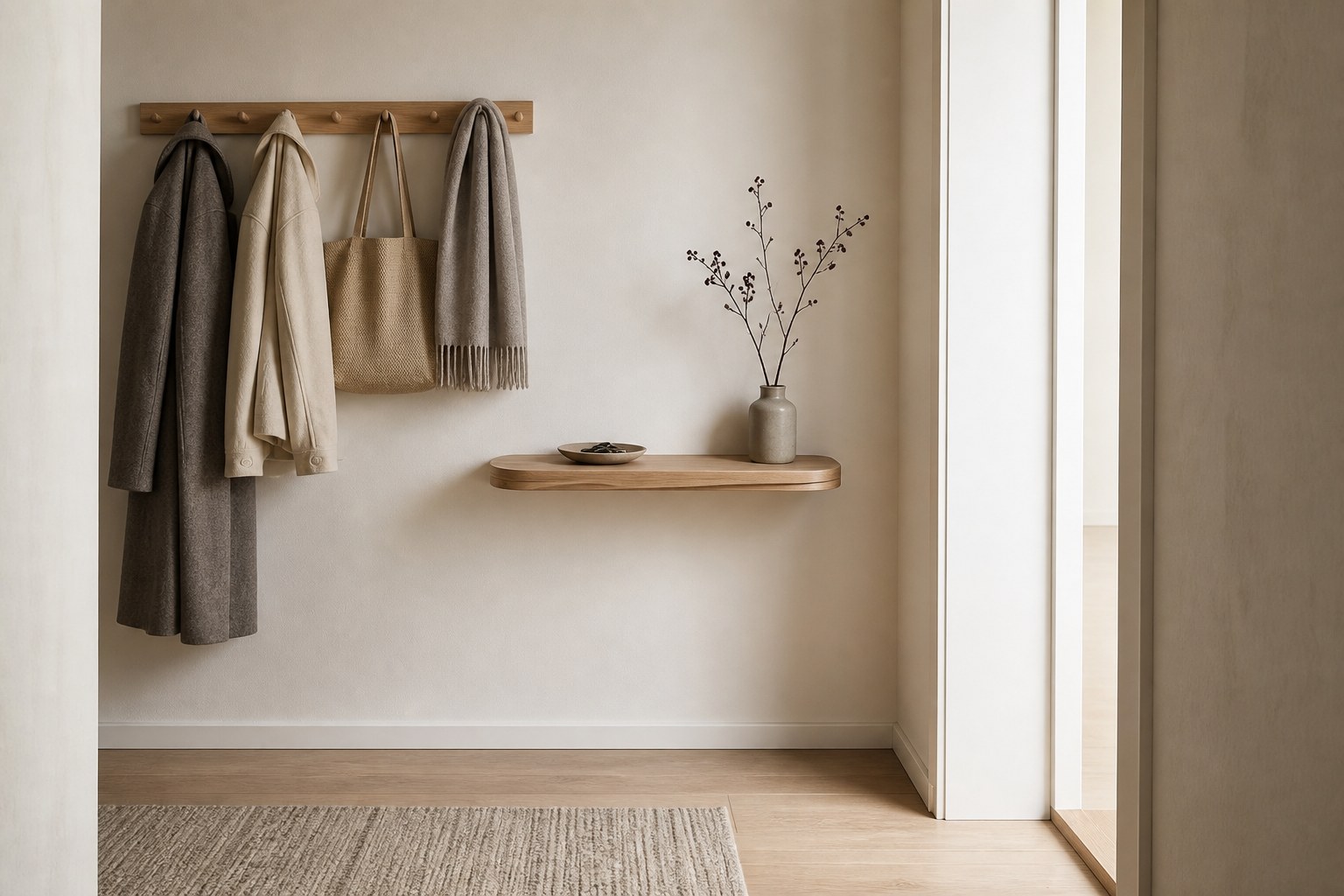
Consider: a shallow oak shelf around six to eight inches deep, a compact wall drawer, or a shelf with concealed brackets.
The Hyggero edit — ROGMARS walnut floating shelves At 36 inches long, this pair of solid-wood shelves creates a useful landing surface without the visual bulk of a console. The concealed brackets keep the line clean; use one shelf rather than both if the entrance needs more air.
04 — Let one mirror do more than reflect
Mirrors are familiar among entryway ideas because they bounce light and make a small space appear larger. Their most important role, however, is practical: a final glance before leaving.
Rather than filling the wall with several decorative mirrors, choose one generous shape. A tall vertical mirror lifts a low hallway and gives a full-length view. A wide round mirror softens a space with many doors and straight lines.
Position it where it can catch daylight from a nearby room or window, but avoid placing it where the first reflection is a pile of coats. What the mirror repeats matters as much as the mirror itself.
A thin oak, brushed aluminum, or frameless edge suits a Scandinavian entryway without asking for too much attention.
Consider: one full-length mirror, an oval wall mirror, or a mirrored cabinet for hidden storage.
The Hyggero edit — Pocetry walnut organic mirror The irregular outline softens a hallway full of straight architectural lines, while the walnut frame introduces warmth. Its 30-by-20-inch size is substantial enough to feel intentional without overwhelming a small wall.
For a sharper contrast against pale walls, the WallBeyond black asymmetrical mirror offers a slimmer aluminum frame and a taller 36-by-24-inch profile.
05 — Build in a place to sit, even if it is very small
The best small entryway ideas improve an everyday movement. A seat makes putting on shoes easier, gives a child somewhere to wait, and creates a temporary place for a bag.
It does not need to be a full bench. A compact stool can tuck beneath a shelf, move into another room when guests arrive, and double as a side table. If the width allows it, a narrow bench with storage underneath creates an efficient drop zone.
Choose something visually light: open legs, a woven seat, or a simple timber construction. Bulky upholstered benches tend to consume more space than they return.
Add one cushion only if it genuinely improves comfort. In a small hall, the grain of the wood or texture of the weave is often decoration enough.
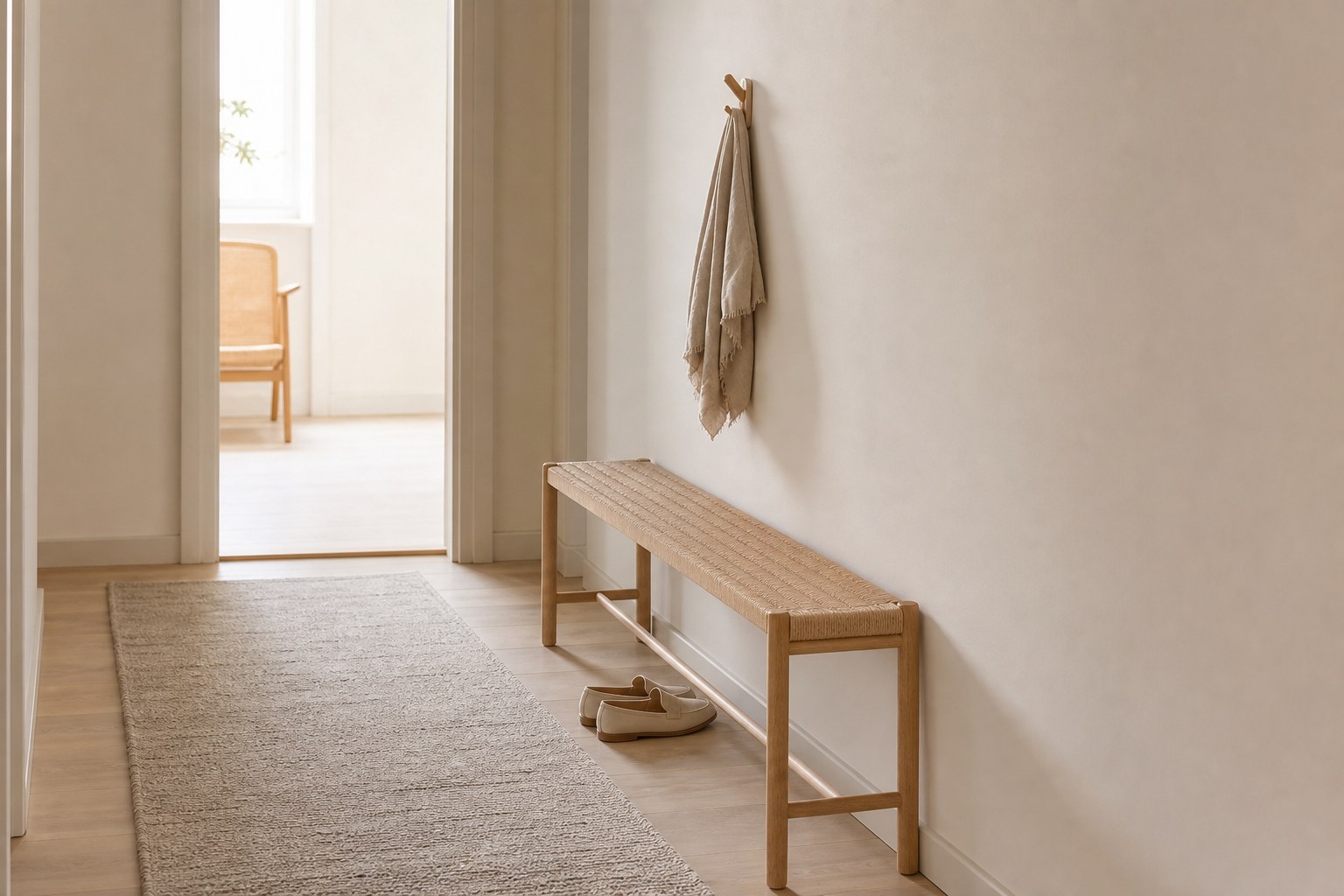
Consider: a low oak stool, narrow spindle bench, or wall-mounted folding seat.
The Hyggero edit — choose for the space you actually have
- The Hulitnag narrow solid-wood bench is only 10.2 inches deep and works where a conventional bench would interrupt the walkway.
- In an entrance where even that footprint is too much, the DHNDSDP wall-mounted folding seat folds back against the wall when it is not being used.
06 — Hide the visual noise at shoe level
Shoes are usually the first source of clutter and the hardest to style away. Open shelves are convenient, but in a very small entrance they can create a dense strip of color and shape along the floor.
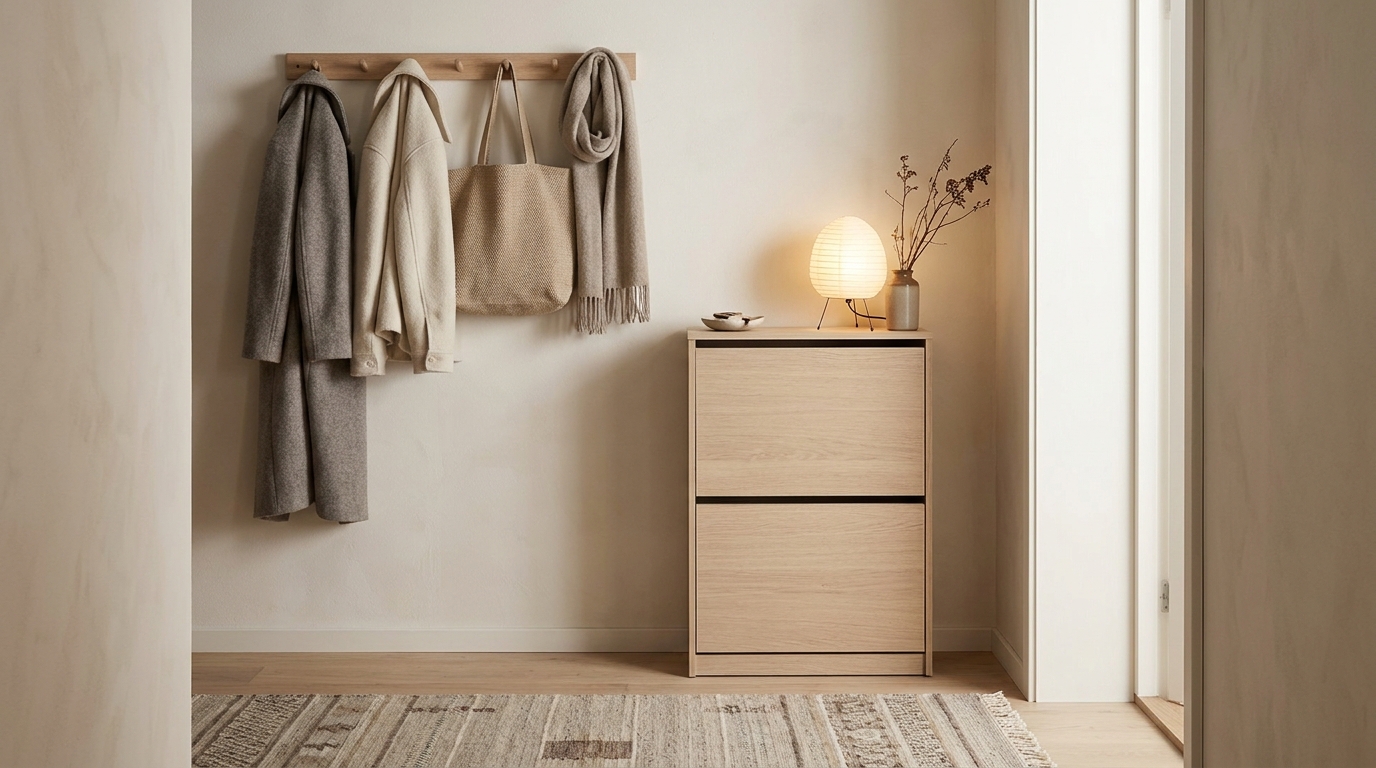
A shallow, closed shoe cabinet makes the hallway feel quieter without demanding much depth. Choose one in the same color as the wall if you want it to recede, or use pale timber to add warmth.
Inside, keep only the pairs used most often. A small mat or boot tray beside the cabinet can hold wet shoes until they are dry. This is more realistic than expecting every pair to go straight into pristine storage on a rainy day.
The Scandinavian version of order is not perfection. It is a simple system that still works in ordinary weather.
— Julius, Hyggero
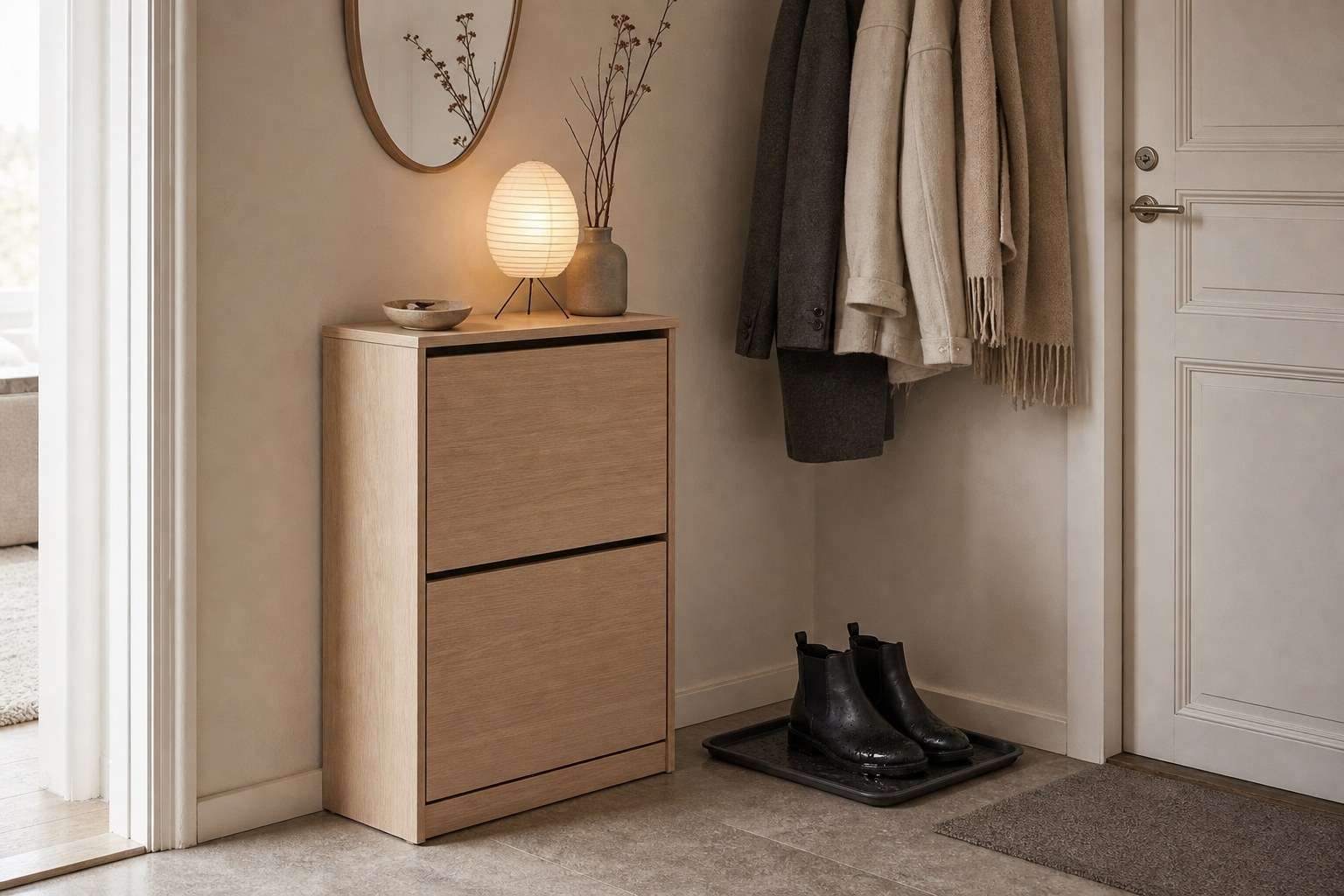
Consider: a tilt-out shoe cabinet, lidded bench, or narrow cupboard with ventilation.
The Hyggero edit — QIVOMIX walnut shoe cabinet At 9.4 inches deep, this is the most convincing small-space storage piece in the edit. Two flip drawers hide the uneven shapes and colors of everyday shoes, while the walnut-toned top can hold the tray or lamp that makes the cabinet feel like furniture rather than utility storage.
If you would rather combine storage and seating, the YQJJGL shoe-storage bench adds two open shoe levels, a cushion, and a small concealed drawer. It asks for more floor space, but lets one piece perform several jobs.
07 — Create a soft pool of light
Hallways are often lit by a single ceiling fixture that is bright enough to be useful but too harsh to feel welcoming. Layering in one softer source changes the character of the entrance immediately.
A small wall lamp leaves the floor clear and casts a gentle wash across plaster, timber, and artwork. If there is a shelf or console, a compact table lamp can create the same effect. Choose a warm bulb — around 2700K — and let the shade diffuse the light rather than expose it.
Good lighting is especially important in windowless entrances. It gives depth to a pale palette and prevents restrained hallway decor from feeling clinical.
If possible, put the light on a timer or motion sensor. Coming home to a quiet glow is a small luxury that quickly becomes part of the room’s function.
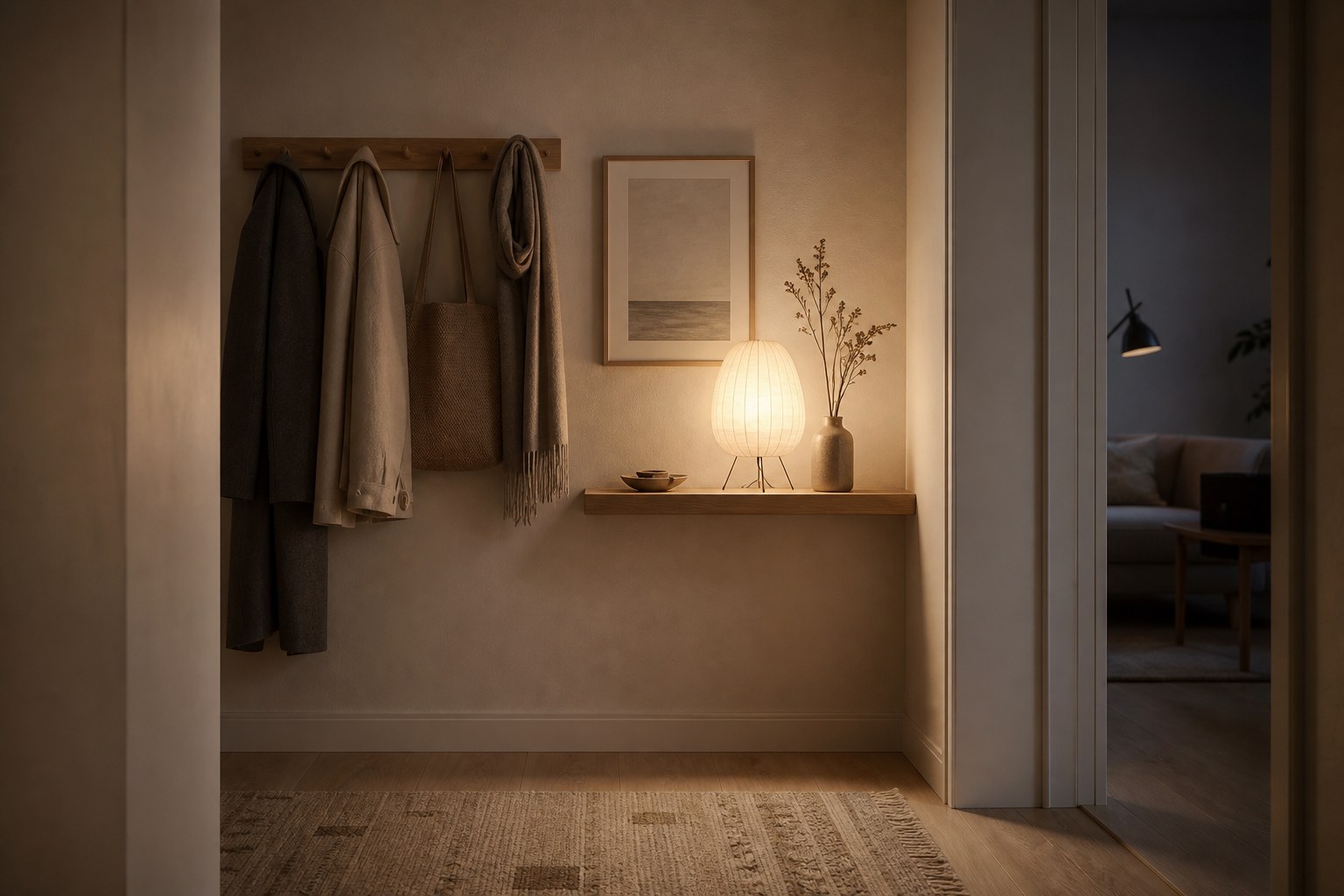
Consider: an opaline wall light, pleated paper shade, or compact portable lamp.
The Hyggero edit — Nogy rice-paper lamp Rice paper softens the light before it reaches the room, giving this small lamp the diffused quality that suits a quiet entrance. Its sculptural form sits naturally beside oak and walnut and brings a slight Japandi note without disrupting the Scandinavian palette.
For a warmer and more playful accent, the Glivpny orange mushroom lamp replaces the paper shade with tinted glass and a dimmable glow. Use it as the one saturated color in an otherwise restrained scheme.
08 — Keep the palette tonal, then add texture
White is not the only answer to a small hallway. Warm off-white, muted stone, pale gray, and soft mushroom tones can create more depth while preserving a sense of light.
The simplest approach is tonal: keep the walls, storage, and larger pieces close in color, then introduce contrast through materials. A wool runner, oak hooks, a linen shade, and a ceramic dish can make a restrained entrance feel layered without making it busy.
Dark colors can work too, especially in an entrance with little natural light. Rather than fighting the lack of brightness, a deep gray-green or muted brown can make the space feel enclosed in a deliberate, cocooning way. Keep the adjoining room lighter so the transition feels considered.
Texture does the work that pattern often tries to do.
Consider: limewash-style paint, a flatwoven wool runner, linen, and unglazed stoneware.
09 — Use one purposeful piece of art
Small spaces do not need miniature art. In fact, one larger work often feels calmer than a collection of small frames.
Choose a piece that can hold the wall on its own: a quiet photograph, an abstract print, or a textile with visible weave. Leave clear space around it and resist filling every remaining gap. The work should create a pause rather than another layer of information.
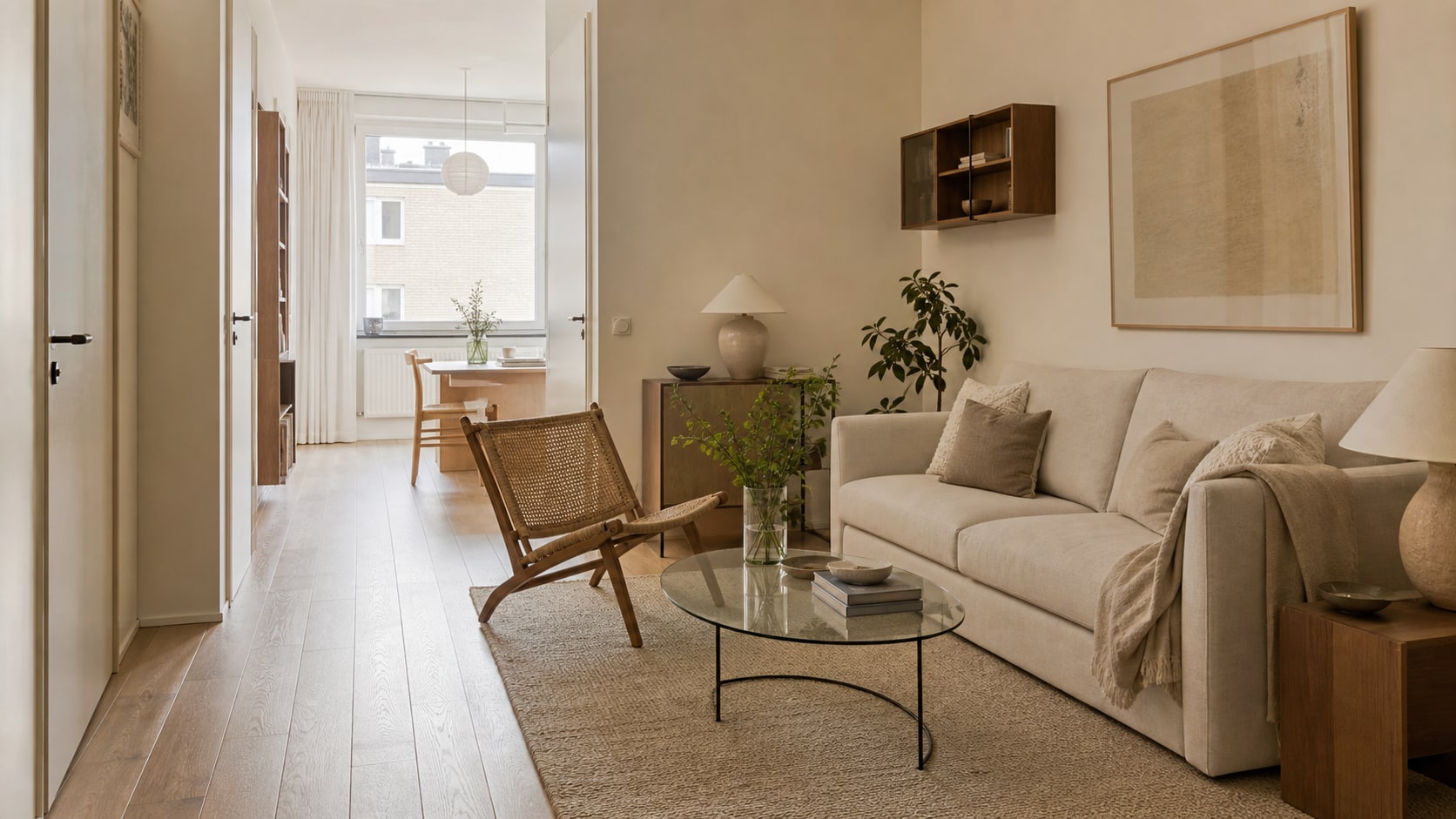
If your entrance opens directly into the living area, art can also define it as a place in its own right. Repeat a color or material from the adjoining room to connect the spaces without making them identical.
This is where hallway decor can become personal. Storage makes the entrance work; art makes it feel like yours.
Consider: one oversized print, a small original work, or a framed textile.
The Hyggero edit — neutral textured wall-art set These two large, framed works introduce relief and shadow rather than strong color. Hang them together only when the wall has enough width; in a narrow hall, separating the pair can make each piece feel more deliberate and give the entrance a visual rhythm.
10 — Finish with a landing ritual
The most successful entry way ideas are often not decorative at all. They are small invitations to behave differently.
Place a tray exactly where you naturally put down your keys. Keep a hook free for the bag you use every day. Put a basket near the door for items that need to leave the house. Give umbrellas a container that can handle water. The easier the system is to follow, the calmer the room remains.
A bowl in stoneware, turned wood, or brushed metal can add character, but its position matters more than its brand. Watch where things accumulate, then place the solution there — not where a photograph says it ought to be.
The entrance should help you arrive, put things down, and move into the rest of the home without carrying the day’s clutter with you.
Consider: a key tray, mail slot, umbrella stand, or “outgoing” basket.
The Hyggero edit — CCINPPY ceramic cloud tray The low white ceramic form gives keys and small essentials a defined boundary without adding another box to the hallway. Its irregular edge also echoes the softer mirror shapes elsewhere in the edit.
A small entrance, considered
There is no need to fit all ten ideas into one hallway.
Choose the three that resolve the most persistent problems, repeat a limited set of materials, and leave something out. A narrow shelf, good hook, and warm pool of light may be all the room requires.
Scandinavian interiors are often described through pale wood and neutral color, but their deeper appeal lies in clarity. Useful things are easy to reach. Materials are allowed to age. Empty space is treated as part of the composition.
That is especially valuable in a small entryway: not less life, but less friction around it.
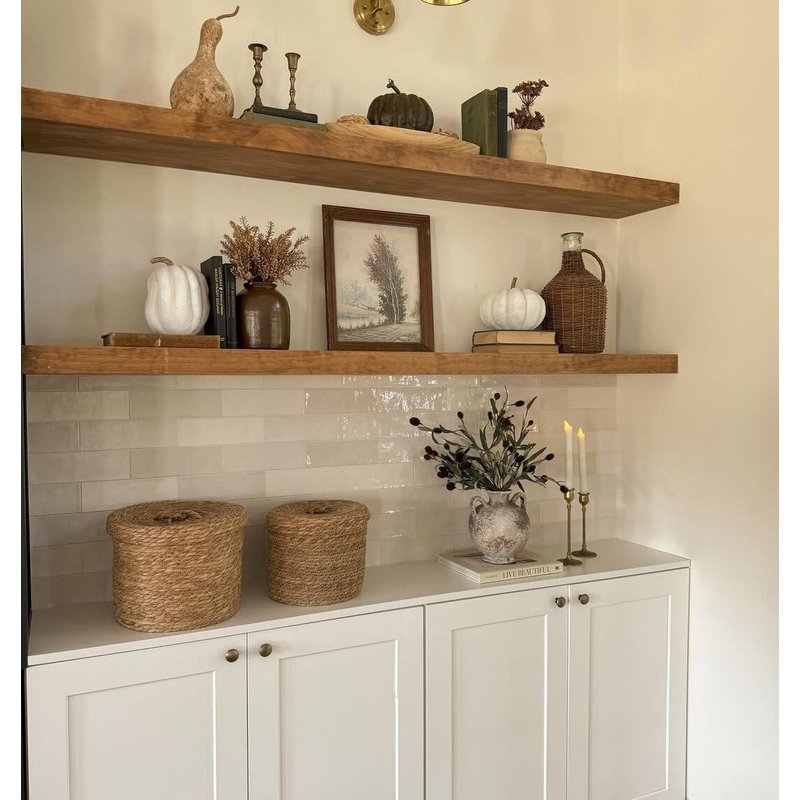
ROGMARS walnut floating shelves
A 36-inch pair of solid-wood shelves — the useful part of a console without the legs. Concealed brackets keep the line clean.
View at Amazon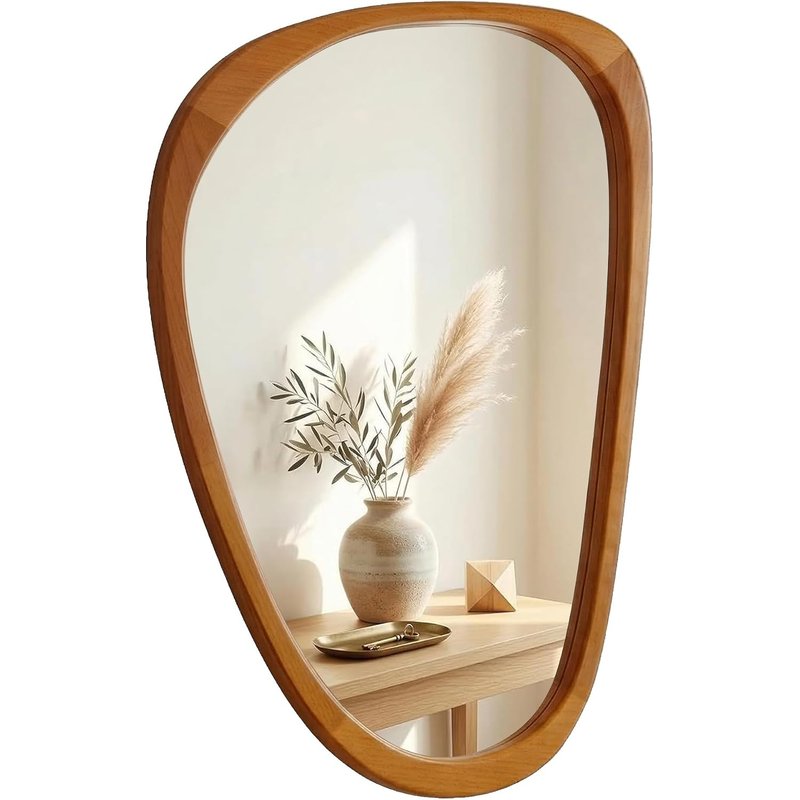
Pocetry walnut organic mirror
The irregular outline softens a hallway full of straight lines; the walnut frame brings warmth at 30 by 20 inches.
View at Amazon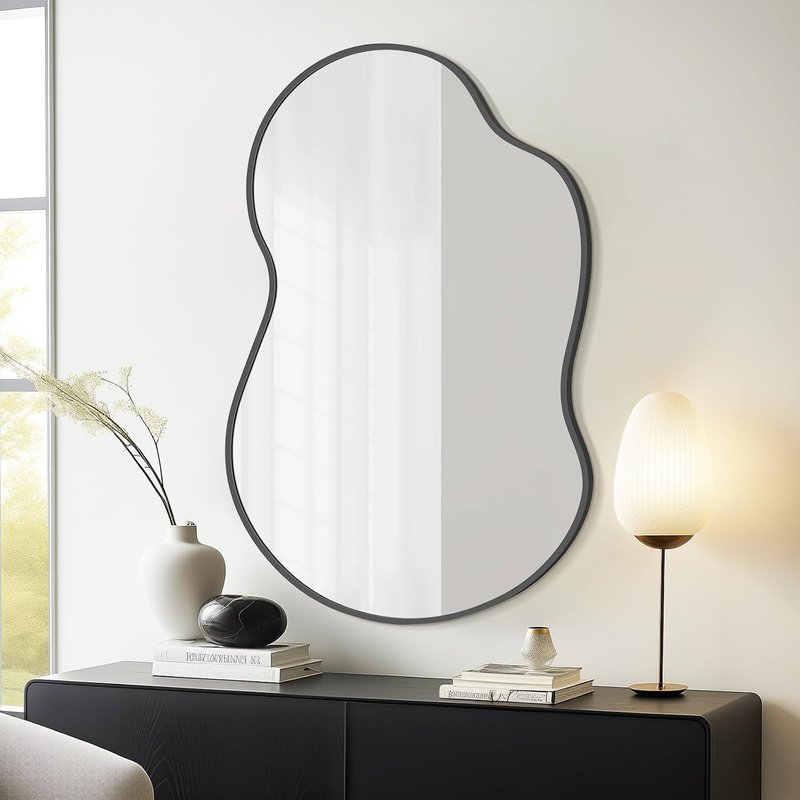
WallBeyond black asymmetrical mirror
A slimmer aluminum frame and taller 36-by-24-inch profile, for sharper contrast against pale walls.
View at Amazon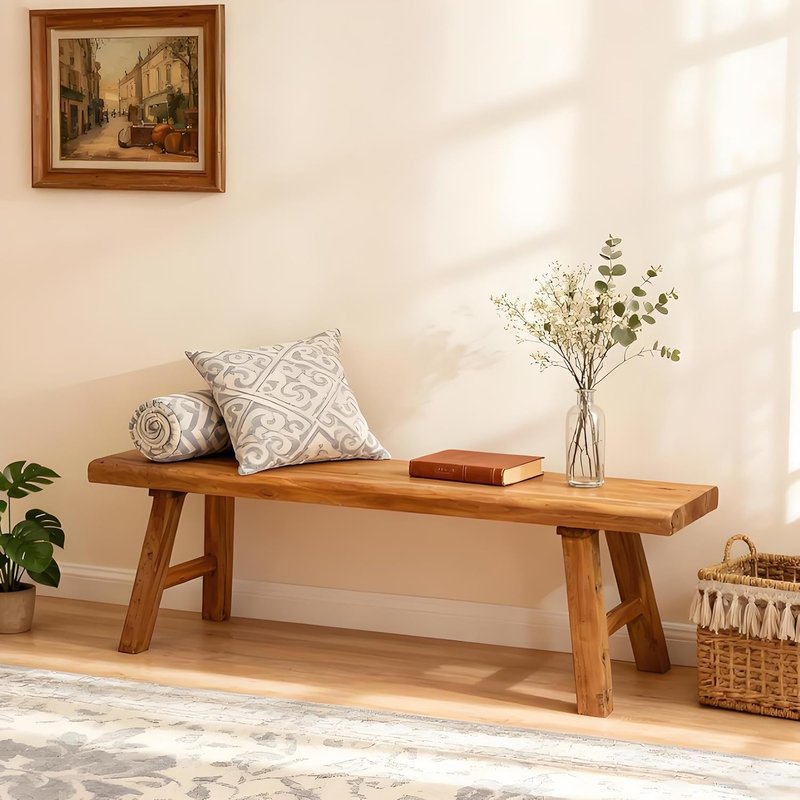
Hulitnag narrow solid-wood bench
Only 10.2 inches deep — a seat that works where a conventional bench would interrupt the walkway.
View at Amazon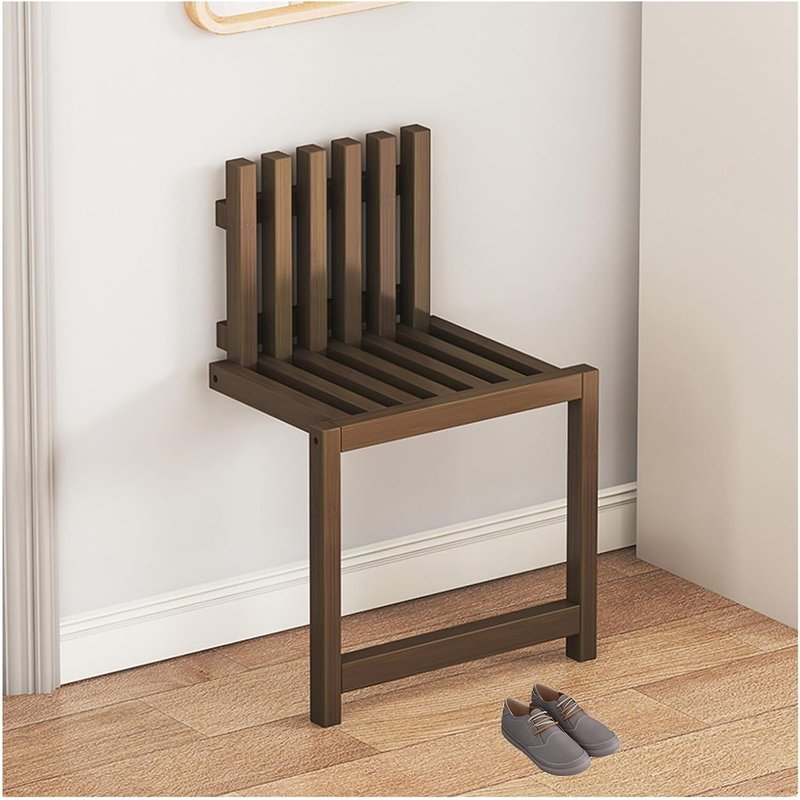
DHNDSDP wall-mounted folding seat
Folds flat against the wall when not in use — seating for entrances where even a slim bench is too much.
View at Amazon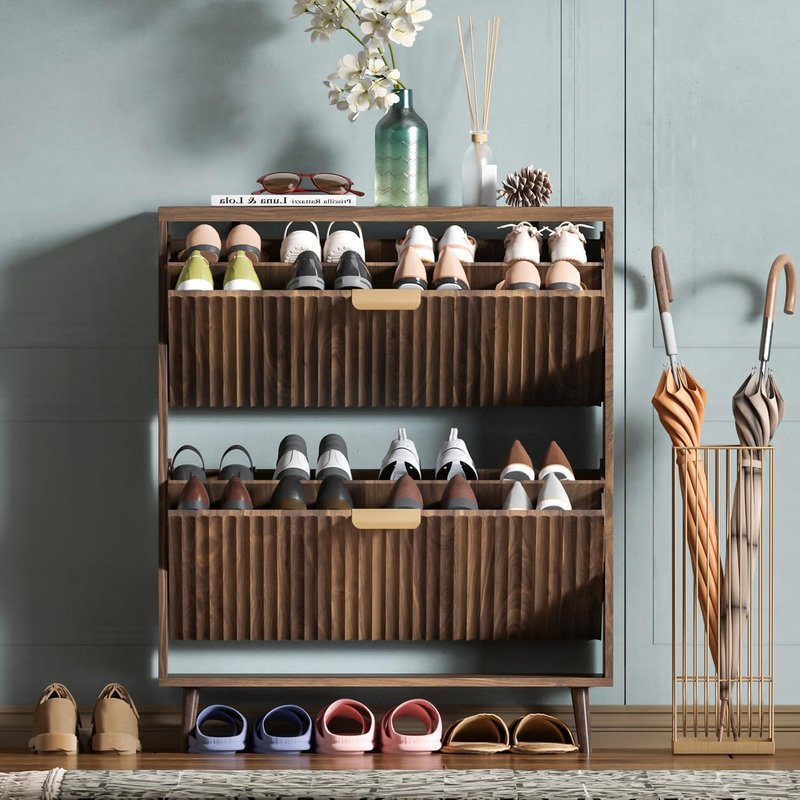
QIVOMIX walnut shoe cabinet
At 9.4 inches deep, two flip drawers hide everyday shoes while the walnut-toned top holds a tray or lamp.
View at Amazon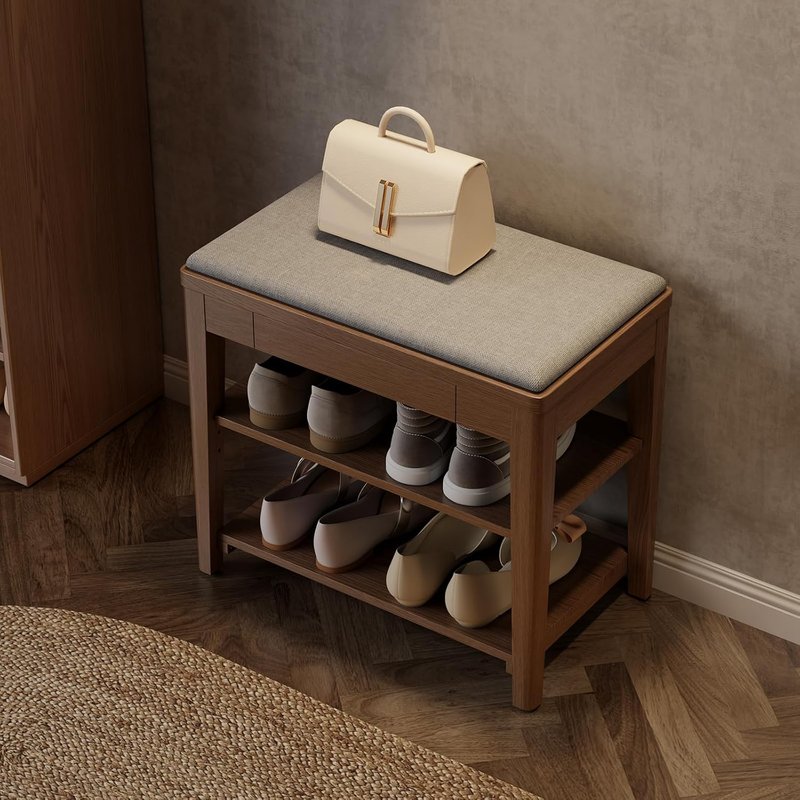
YQJJGL shoe-storage bench
Two open shoe levels, a cushion, and a small concealed drawer — one piece doing several jobs.
View at Amazon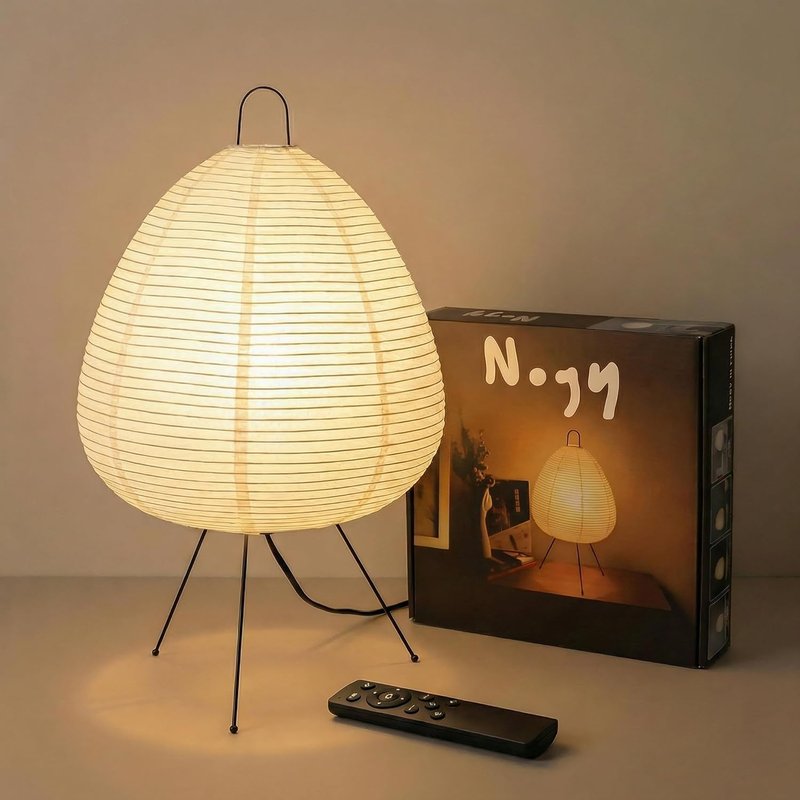
Nogy rice-paper lamp
Rice paper softens the light before it reaches the room — a diffused, sculptural glow beside oak and walnut.
View at Amazon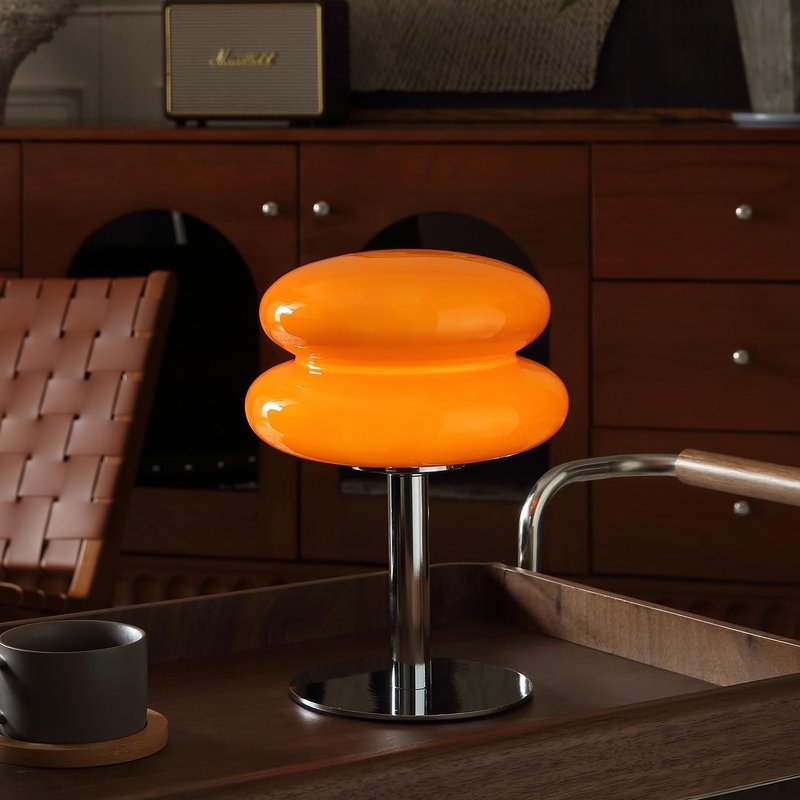
Glivpny orange mushroom lamp
Tinted glass and a dimmable glow — the one saturated color in an otherwise restrained scheme.
View at Amazon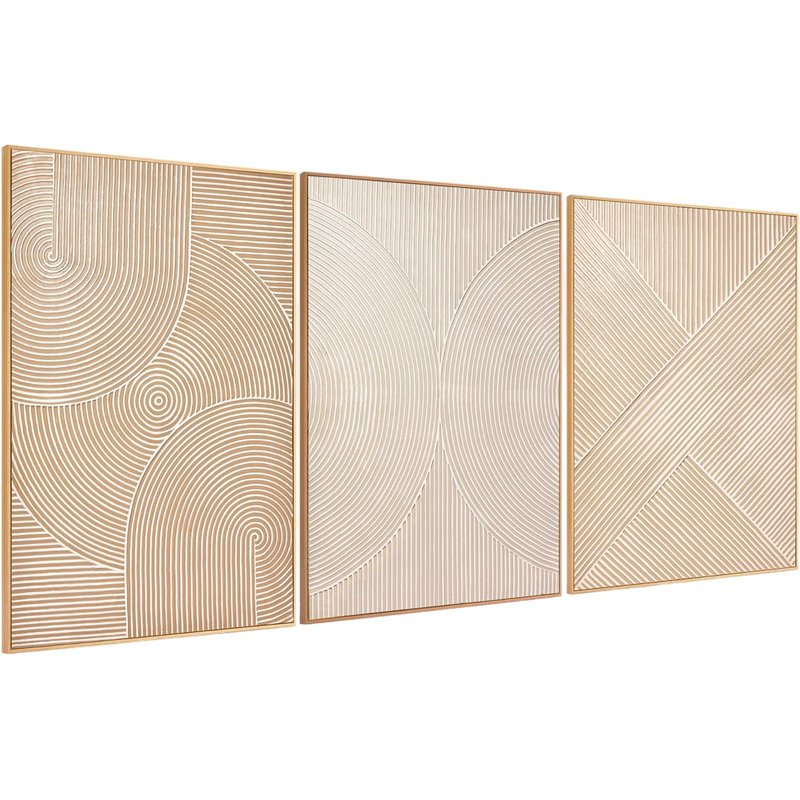
Neutral textured wall-art set
Two large framed works that bring relief and shadow rather than strong color.
View at Amazon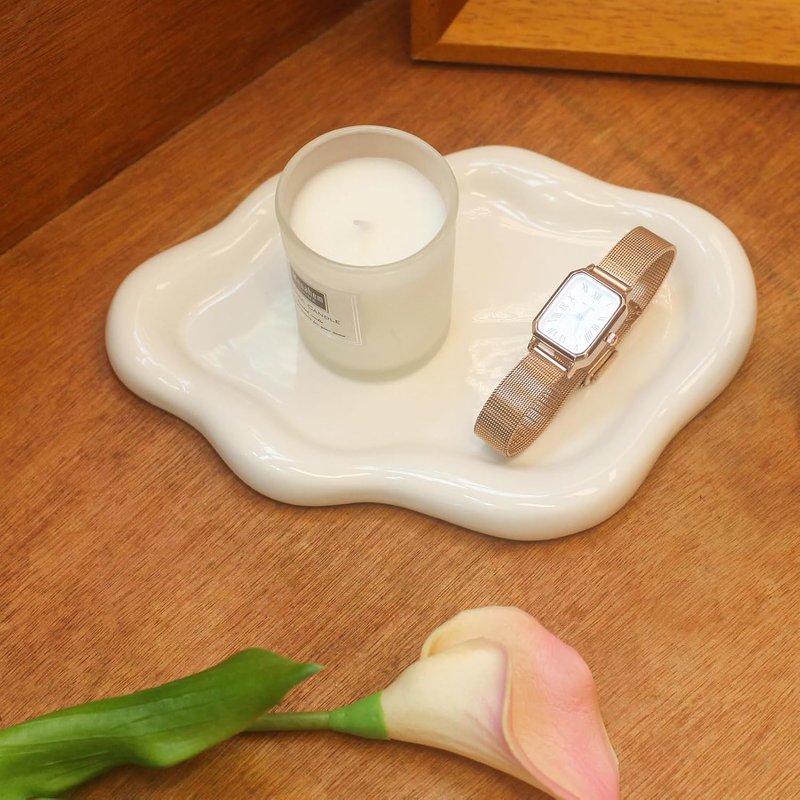
CCINPPY ceramic cloud tray
A low white ceramic form that gives keys a defined boundary without adding another box to the hallway.
View at AmazonHow can I make a small entryway look bigger?
Keep the floor as clear as possible, use shallow wall-mounted storage, and choose one well-positioned mirror to reflect light. A tonal color palette also reduces visual breaks, helping the space feel more continuous.
What furniture works best in a narrow entryway?
Look for pieces with little depth and more than one use: a floating shelf, tilt-out shoe cabinet, compact stool, or narrow bench with storage. Measure the walking route first and protect that space before adding furniture.
How do I make an entryway look Scandinavian?
Focus on function, natural materials, and restraint. Pale timber, wool, linen, warm light, and a limited palette are useful starting points, but the key is to keep only the objects that support the way you enter and leave your home.
What should every small entryway have?
At minimum, provide a place for the items you use every day: a hook for outerwear or a bag, somewhere for shoes, and a consistent place for keys. Add a mirror and soft light if space allows.