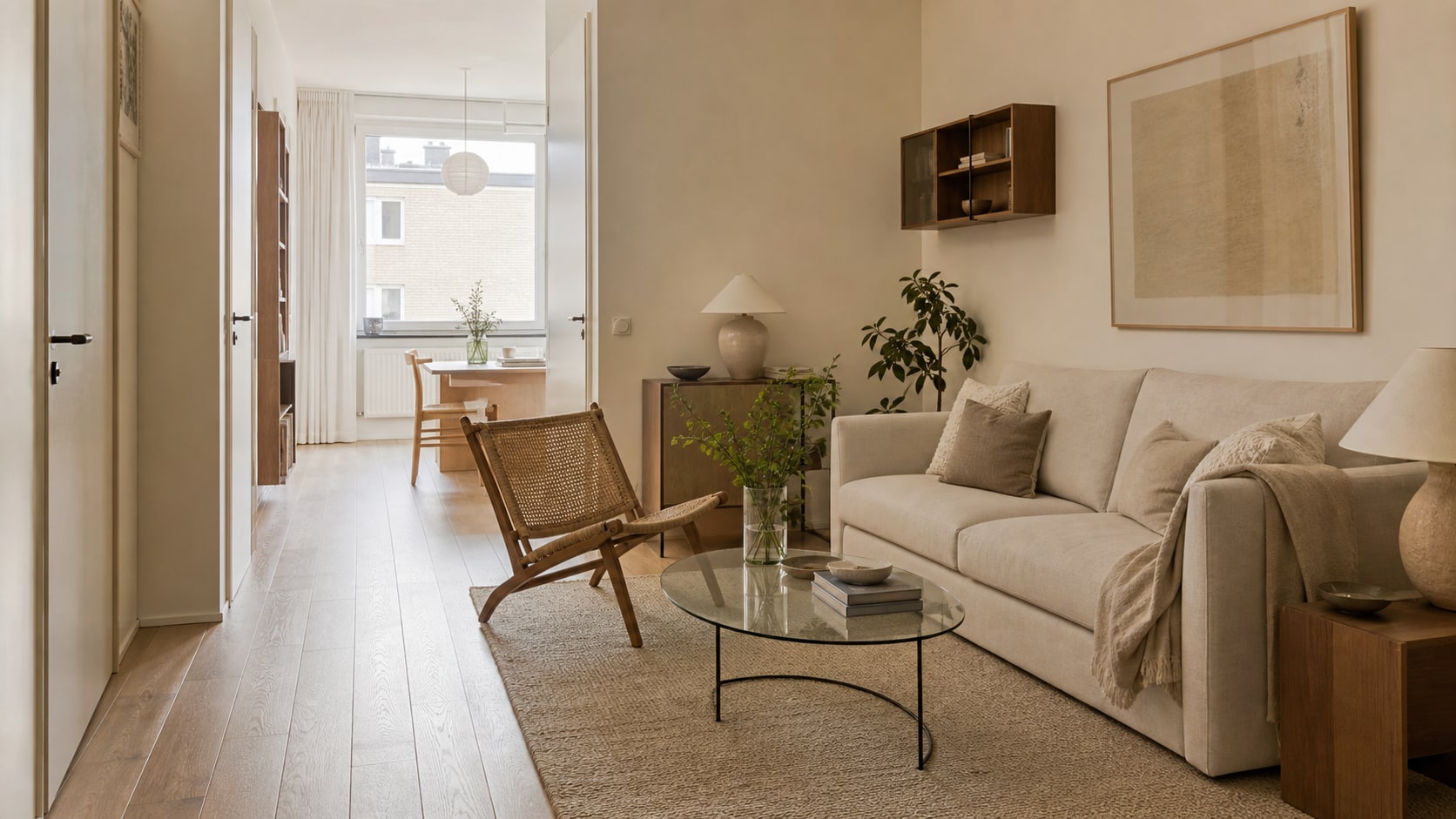
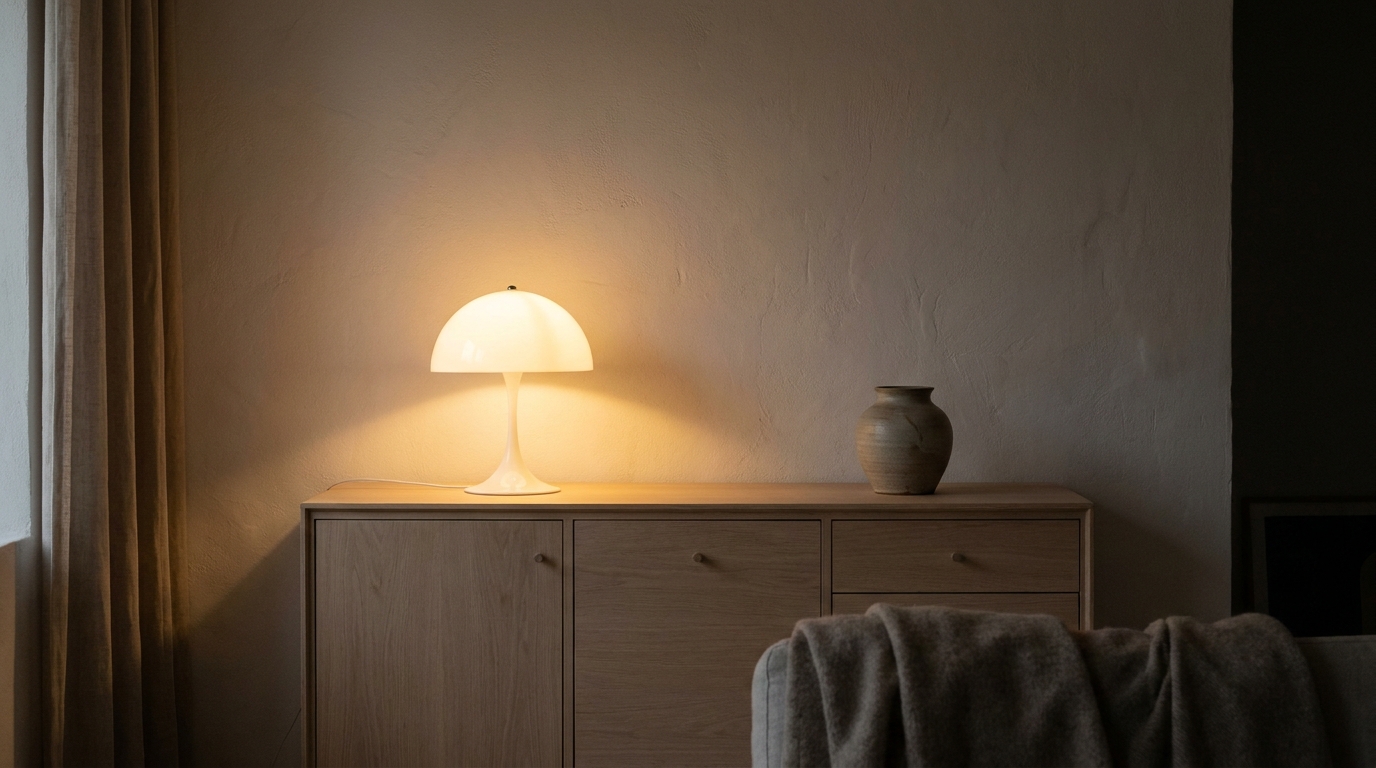
There is a particular quality of light in Danish apartments in winter that has almost nothing to do with money.
It is low. It comes from four or five small sources rather than one big one. It is warm enough to read as candlelight rather than office. And the bulb itself is almost never visible — it sits behind opal glass, folded paper, or a shade angled downward, so what you see is a glow rather than a filament.
That is the entire trick. It is not the furniture, and it is not the square meters. A room lit by one ceiling fixture will look flat no matter what is in it. The same room lit by three table lamps at different heights looks composed — as though someone thought about it.
Below are seventeen table lamps that do this well. The first seven are Scandinavian design icons: pieces worth knowing by name, whether or not you ever buy one, because they teach your eye what to look for. The next ten are the shapes those icons turned into — the forms you can now find at every price, if you know what separates a good one from a cheap one.
What actually makes a lamp look expensive
Before the list, four things that matter more than the lamp’s price tag.
The light source should be hidden. This is the founding principle of Danish lighting. When Poul Henningsen designed the first PH lamp for Louis Poulsen in 1925–26, he built it from three stacked, curved shades so that no matter where you stood, you could not see the bulb — only reflected light. He was reacting against the harshness of early electric light and trying to get back to the warmth of a kerosene flame. A century later it is still the fastest way to tell a considered lamp from a careless one: look at the lamp from a seated position. If you can see the bulb, the room will feel cheaper.
The color temperature should be 2700K. Not 3000K, not 4000K. 2700K reads golden and residential; 3000K reads clean and slightly clinical. In a living room or bedroom, 2700K makes seating areas feel soft and intentional. Save 3000K for kitchens and desks, where contrast is doing real work. And do not mix the two in the same sightline — one lamp will look yellow and the other white, and the room will read as unplanned.
Three sources beat one. The Scandinavian habit is to light a room with several small pools rather than a single overhead flood: a table lamp on a sideboard, one at the sofa end, one on a shelf. Aim for three light sources in any room you actually sit in, at three different heights. This costs less than a new sofa and changes the room more.
Dimmable, always. A lamp you can turn down is a lamp you will use at 8 p.m. instead of overhead lighting. If the lamp has no dimmer, put the bulb on a smart plug or use a dimmable smart bulb. It is the cheapest upgrade on this page.
Part one — seven icons worth knowing by name
These are the reference points. Most are investment pieces, and we have not linked them — they are widely available from the manufacturers and authorized dealers, and you should buy them from somewhere with a warranty rather than through us. Learn the shapes here; buy the shapes in part two.
01 — Louis Poulsen PH 3/2, Poul Henningsen, 1926
The original, and still the clearest demonstration of the idea. Three concentric shades, each one sized so the bulb is invisible from every angle, throwing warm reflected light down and outward. Henningsen spent his career refining the geometry, and the numbers in the model names refer to the shade sizes. If you want to understand why Danish rooms feel the way they do, this is the object to look at first.
What to steal from it: layered shades and a light that falls downward, not sideways into your eyes.
02 — Louis Poulsen AJ Table, Arne Jacobsen, 1957
Designed as part of Jacobsen’s total scheme for the SAS Royal Hotel in Copenhagen, where he drew everything from the building down to the cutlery. The angled cylindrical shade tilts, so you can aim it at a book or turn it down onto the table. The inside is painted white to keep the light soft rather than hot.
What to steal from it: a tiltable shade. A lamp you can aim is a lamp with two jobs.
03 — Louis Poulsen Panthella, Verner Panton, 1971
Panton’s hemisphere-on-a-trumpet. The domed shade hides the bulb entirely and acts as a reflector, pushing an even wash of light downward. The early versions were opal acrylic; it now exists in a range of finishes and sizes. It is also probably the most copied silhouette in contemporary lighting — most of the mushroom lamps you will see are descendants of it.
What to steal from it: the dome. It is the most forgiving shade shape there is.
04 — &Tradition Flowerpot, Verner Panton, 1968
Two half-spheres facing each other, the upper one twice the diameter of the lower. The lower hemisphere hides the bulb, and its colored inner surface bounces the light back up. Originally produced by Louis Poulsen, and made today by &Tradition. There is now a cordless version, which is the one most people actually want — it moves from the dinner table to the balcony without an extension cord.
What to steal from it: color. In an otherwise neutral Scandinavian room, one saturated lamp is the whole personality.
05 — Le Klint 375, hand-folded in Denmark
The pleated shade began around 1900, when the architect P.V. Jensen-Klint folded one by hand for a kerosene lamp in his own home. His son Tage patented the design in 1938 and founded the company around 1943, naming it after his daughter. The shades are still folded by hand. Later designers — Kaare Klint, Esben Klint, and Poul Christiansen with his sine-curve Sinus line — extended the vocabulary.
What to steal from it: pleats. A folded shade breaks light into dozens of soft gradients instead of one flat surface. It is why paper and pleated shades photograph so well.
06 — New Works Kizu, Lars Tornøe
A solid marble base with a flat opal acrylic disc floating above it. All the visual weight sits at the bottom, all the light at the top, and the contrast between heavy stone and glowing disc is the entire design. Comes in two sizes and in light or dark stone.
What to steal from it: material contrast. Heavy base, weightless light.
07 — &Tradition Setago JH27, Jaime Hayon
A portable, rechargeable lamp with a two-tone body: one color outside, another inside the shade, so the light picks up a tint as it falls. Small enough to carry and dimmable at the base. This is the modern Scandinavian dinner-table lamp — the object that replaced the candle for people who eat late.
What to steal from it: portability. A lamp that can move is a lamp used in three rooms.
Part two — ten shapes that do the same work for less
The icons above are the vocabulary. These are the same forms at prices most of us actually buy at. Where we have found a version worth recommending, it is in the picks at the end of this piece. Where we haven’t, we have said so rather than filling the gap.
08 — the mushroom lamp
The Panthella silhouette, democratized. A domed shade over a slim stem, usually in metal or glass. It works because the dome makes glare almost impossible, and because the shape reads as designed from across a room.
What separates a good one: an opaque or opal shade rather than clear glass, a base heavy enough not to tip, and a warm finish — cream, sand, rust, muted green — over a cold white. Avoid anything with a visible bulb below the shade line.
Where to put it: sideboard, bedside, or a shelf in a hallway.
Our pick — a small mid-century mushroom in gold with a yellow shade The warm metal and the tinted shade do the thing the plain white versions can’t — the light picks up a color on its way out, the way the Flowerpot’s painted interior does. It is a decorative object first and a light source second, so put it somewhere it will be looked at.
09 — the paper-shade lamp
Rice paper, washi, or folded parchment over a simple frame. The cheapest way to get genuinely beautiful light in a room, because paper diffuses better than almost anything else at the price.
What separates a good one: real paper rather than printed plastic, visible ribbing or folding, and a shade deep enough that the bulb sits well inside it. A paper lamp with a shallow shade will glare.
Where to put it: floor corner, bedside, or on the ground beside a chair — paper lamps look right low.
Our pick — a Noguchi-style paper lantern The form descends from Isamu Noguchi’s Akari light sculptures — washi paper stretched over a thin ribbed frame — and it is the reason almost every paper lamp you have ever seen looks the way it does. Strictly it is Japanese rather than Scandinavian, but the two traditions want the same thing from a lamp: natural material, no visible bulb, and light softened before it reaches you. It is also, by a distance, the cheapest genuinely beautiful object on this page.
10 — the pleated shade
Le Klint’s principle in fabric or ceramic. The current version of this is often a pleated or folded ceramic shade — porcelain or resin molded to look like draped cloth — which gives you the gradient without the fabric maintenance.
What separates a good one: deep, even pleats and an off-white or ecru tone rather than bright white. Pleats that are too shallow just read as texture; pleats with depth read as light.
Where to put it: anywhere the lamp will be seen switched off as often as on. This is a shape that decorates.
Our pick — an ivory pleated fabric shade on a fluted ceramic base This is the closest thing on the list to the Le Klint principle at a normal price — the pleats do the work, and the base stays deliberately mute so the shade is the only thing you look at. Ivory rather than white, which matters more than it sounds: a bright white pleated shade under a warm bulb goes slightly yellow and looks like a mistake, where ivory just deepens.
11 — the opal glass globe
A sphere of milky glass on a small base. The most quietly expensive-looking shape on this list, because opal glass glows evenly across its whole surface — there is no hot spot, no visible filament, nothing to give it away.
What separates a good one: true opal glass, not frosted clear glass. Hold it up: opal glass looks white when unlit; frosted glass looks gray. The difference is obvious once you have seen both.
Where to put it: bathroom shelf, bedside, or paired — two identical globes on either side of a bed is a very Copenhagen move.
We are not linking one yet. At this price the distinction above is exactly where corners get cut, and most spheres sold as opal turn out to be frosted clear glass. We would rather leave the slot open than send you to one we have not been able to tell apart from the real thing.
12 — the ceramic base with a linen shade
The warmest option here, and the one that stops a minimalist room from feeling austere. A hand-thrown or hand-look ceramic base — sand, clay, chalk, unglazed terracotta — under a plain linen or cotton drum shade. It is also the shape that does most of the work in a room built on warm earth tones.
What separates a good one: an unglazed or matte-glazed base with visible texture, and a shade in unbleached linen rather than white polyester. Polyester shades go slightly green under warm bulbs.
Where to put it: the sofa end table. This is the lamp you sit next to.
Our pick — a matte ceramic base under a beige linen shade Linen rather than polyester is the whole reason this one is here — the shade transmits a little light through the weave instead of blocking it entirely, so the lamp glows faintly along its sides rather than just throwing a cone up and down. The link goes to the muted green, which is the more interesting choice in a room that is already all wood and white; there is an off-white listed separately if it is going next to a pale sofa.
13 — the stone base
Travertine, marble, or lava stone under a simple shade — the Kizu idea. Weight at the bottom, light at the top. Stone also solves the tipping problem that plagues cheap lamps.
What separates a good one: honestly, at low prices, very little. Most inexpensive stone lamps are printed resin, and they look it in daylight. We have not found a version under the designer tier that we would recommend, so we are not linking one. If you want this look, it is worth saving for the real thing, or finding a vintage marble base and rewiring it.
14 — the wood base
The most literally Scandinavian object on the list: a turned pale-wood base under a glass, paper, or fabric shade. Light oak, ash, beech, or bamboo — oiled rather than lacquered.
What separates a good one: solid wood, not veneered particle board, and a pale finish. Dark-stained oak-effect lamps read as generic; the whole point is the blond wood.
Where to put it: anywhere you already have wood — a lamp that echoes the floor or the shelving ties a room together.
Our pick — a turned wooden teardrop base under an amber glass dome The amber glass is doing the same job as opal, only warmer — it tints the light before it leaves the lamp, so it reads as candlelight even with a neutral bulb. It has three switchable color temperatures; use the warmest one and ignore the other two.
A lighter alternative: a woven bamboo cylinder on a small wooden base, at roughly half the price. Bamboo is not oak, and the weave throws a patterned light rather than a smooth one — closer to Japandi than strict Scandinavian. Worth it if your room already has rattan or jute in it; skip it if everything else you own is flat and pale.
15 — the rechargeable portable
One of the defining lighting trends of the past few years, and for good reason: a cordless lamp goes on a dinner table, a balcony, a bathroom shelf, or the floor beside a bath without anyone having to think about outlets. Battery life and warm-LED quality have both improved enough that these are no longer a novelty.
What separates a good one: at least three brightness steps (one-brightness portables are always too bright), a genuinely warm LED around 2700K, USB-C charging, and eight or more hours at the lowest setting. Check the charging port is hidden underneath, not on the side.
Where to put it: the dinner table. Then everywhere else.
The budget pick — a gray metal cordless reading lamp with three brightness levels, under $30. This is the least beautiful object on this page and we are recommending it anyway, because it does the job properly: three genuine dimming steps, a large battery that also works as a power bank, and a price low enough that you can buy two and stop thinking about it. Put it where function matters more than looks — a desk, a kitchen counter, a bedside table you actually read at.
The step-up — a small handmade cube with parchment-like panels, dimmable, at around four times the price. What you are paying for is that it looks like something rather than like a gadget — this is the one that goes on the dinner table when people come over. Lit, the panels turn amber and the whole object stops reading as a lamp, which is the argument for it; unlit, it is a pale box, so put it where it will be switched on.
16 — the translucent stone lamp
Carved stone that transmits light — a block or cylinder of alabaster or calcite glows from within, with the veining visible in the surface. Warmer and more irregular than opal glass, and the most tactile object here. Where the stone base at number 13 uses stone as weight, this uses it as the shade.
What separates a good one: real stone has visible, uneven veining and color variation between pieces. If every unit in the product photos looks identical, it is resin, and it will read as resin in daylight.
Our pick — a handcrafted calcite egg, dimmable Three honest notes. It is calcite, not alabaster — a closely related translucent stone, slightly more crystalline and often more sharply patterned, and cheaper to work. It is heavier than the photographs suggest, around fifteen pounds of solid stone, so give it a surface that can take the weight rather than a floating shelf. And because each piece is cut from natural stone, the one that arrives will not look like the one in the photograph. That is the point of buying it, but it is worth knowing before you order rather than after.
Keep it dim. This is a lamp for the end of a sideboard at 10 p.m., not a light source you read by.
17 — the chrome one
The 1970s revival, and the most divisive shape on this list. Polished chrome or nickel, usually in a mushroom form, sometimes in high-gloss lacquer in cobalt, rust, or mustard.
What separates a good one: a proper mirror finish. Chrome is unforgiving — a slightly dull or streaky plating is instantly visible, and there is no styling your way around it. We are not linking one, because at low prices the plating is where manufacturers cut corners. If you want the reflective look on a budget, a glossy lacquered lamp in a strong color achieves more of the same effect and hides its flaws better.
How to place them
Buying the lamp is half of it. Three rules that cost nothing:
Three sources, three heights. One low (floor or a low shelf), one at seated eye level (side table), one higher (sideboard or bookshelf). Your eye reads the variation as depth.
Never light a room from its center only. Push light to the edges. A room lit from its corners feels larger than the same room lit from above, because the walls are visible rather than falling into shadow.
Match the shade height to the surface. The rule of thumb: sit down where you actually sit, and the bottom of the shade should land at about your eye level. On a standard sofa that usually works out somewhere around 24 to 26 inches from the floor. Higher and you will see the bulb; lower and you are lighting the tabletop instead of the room. Check it from the seat, not standing up — that is where the mistake always happens.
Pair, don’t scatter. Two identical lamps flanking a bed, a sofa, or a sideboard looks deliberate. Five different lamps in one room looks like a collection of accidents. Repeat a shape.
Three lamps at different heights make a room look composed. One ceiling fixture makes it look flat, whatever else is in the room.
— Julius, Hyggero
Which lamp for which room
The same lamp behaves differently depending on where it stands. Here is how we would use the seventeen above, room by room.
Living room lamps
The living room is where the three-source rule matters most, because it is the room you sit in longest after dark and the room most likely to be lit by a single ceiling fixture.
Build it in this order. One lamp at the sofa end — this is the anchor, and it should be the warmest, most tactile thing you own. The ceramic base with a linen shade (12) is the obvious choice; a pleated shade (10) does the same job with more presence. One on the sideboard or media unit, ideally a dome — the mushroom shape (08) or an opal glass globe (11) — placed so it lights the wall behind it rather than the room in front. One low and off to the side, a paper lamp (09) on the floor beside a chair or in a corner. That corner lamp is the one people forget, and it is the one that makes the room look twice as considered.
If you are pairing, pair the sideboard: two matching domes at either end of a long surface reads as intentional in a way that one never does.
Bedroom lamps
Bedrooms want less light and warmer light than people give them. The mistake is treating a bedside lamp as a reading light and buying something bright enough for a desk.
Two matching lamps, one either side of the bed. This is the single highest-return decision in the room, and it does not matter much which of the seventeen you choose as long as there are two of them. Domes (08) and opal globes (11) are the safest — they will not glare at you from a lying position, which most shades will. If you read in bed, a tiltable shade like the AJ (02) or anything with an adjustable head earns its place; otherwise a fixed dome is calmer.
Then one more, away from the bed — on a dresser or windowsill. A rechargeable portable (15) is good here because it will not stay put; it will migrate to the bathroom, the balcony, the hallway. That is a feature.
Keep the bedside bulbs at the low end of the lumen range. This is the one room where too dim is better than too bright.
Hallways, kitchens and everywhere else
A single small lamp on a hallway shelf changes the whole feeling of arriving home, and it is a job a paper lamp (09) or a small dome (08) does for very little money — one of the quietest moves in a small entryway. On a kitchen counter, a rechargeable portable (15) sitting where the overhead spots do not reach is the difference between a kitchen you leave at 9 p.m. and one you stay in.
The part everyone skips: the bulb
You can undo every one of these lamps with the wrong bulb.
- 2700K. Written on the box. It is the single most important number here.
- Dimmable, and check the lamp supports it — some LED integrated lamps do not.
- Modest output. Somewhere in the region of 400 to 600 lumens is plenty for an ambient table lamp. Much past 800 and a mood lamp becomes a work light.
- High CRI (90+) if you can find it. CRI is how accurately a bulb renders color. Low-CRI light makes wood look gray and skin look ill; it is why some rooms feel subtly wrong and nobody can say why.
- Same temperature throughout the room. One 3000K bulb among 2700K lamps will look conspicuously white and flatten the whole effect.
Bringing it together
If you do one thing from this page, do this: buy one warm, shielded table lamp, put a dimmable 2700K bulb in it, place it somewhere that is currently lit only from the ceiling, and stop using the overhead light in that room after dark.
That is the whole Scandinavian approach to cozy lighting, and it costs about the price of a takeout dinner. The seventeen lamps above are just seventeen good ways of doing it — and light, more than furniture, is what makes Scandinavian interiors feel the way they do.
This article contains affiliate links. If you buy through one, Hyggero earns a small commission at no cost to you. It never changes what we recommend.
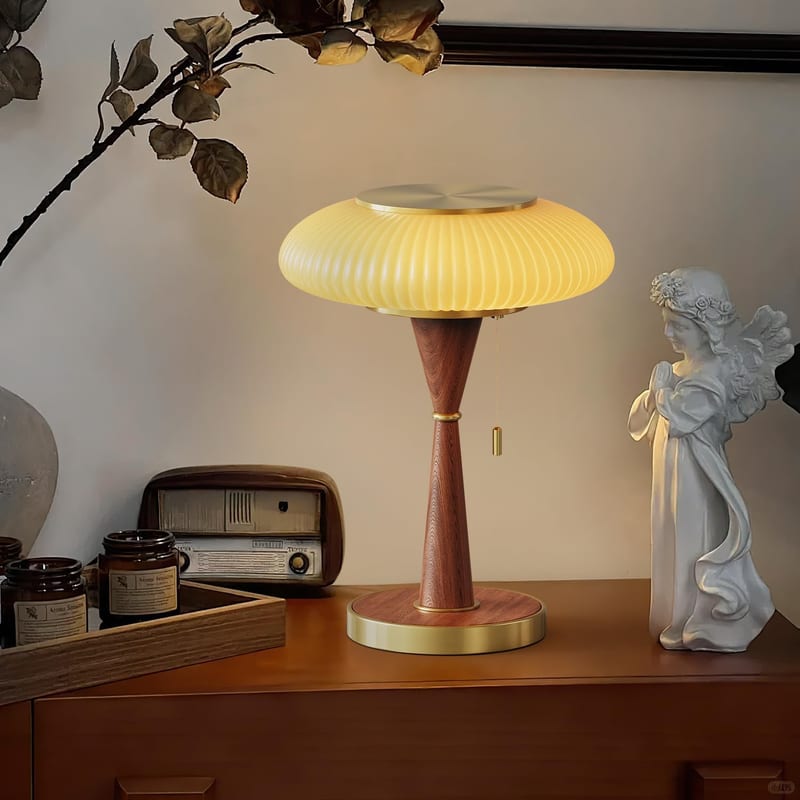
Gold mushroom lamp with a yellow shade
Warm metal and a tinted shade, so the light picks up a color on its way out. A decorative object first, a light source second.
View at Amazon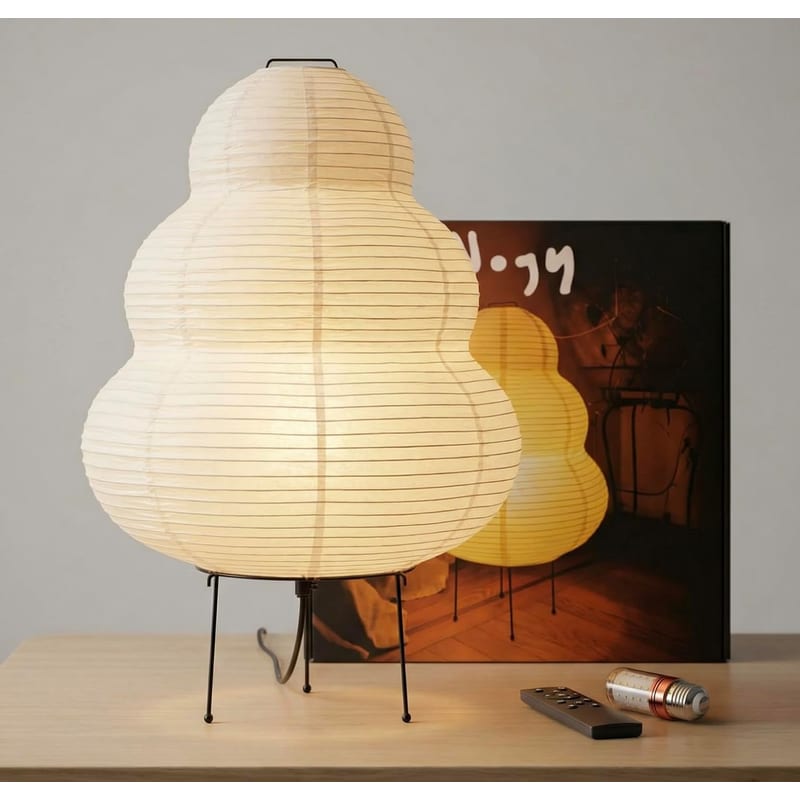
Noguchi-style rice paper lantern
Washi-style paper over a thin ribbed frame — the cheapest genuinely beautiful object on this list, and the softest light on it.
View at Amazon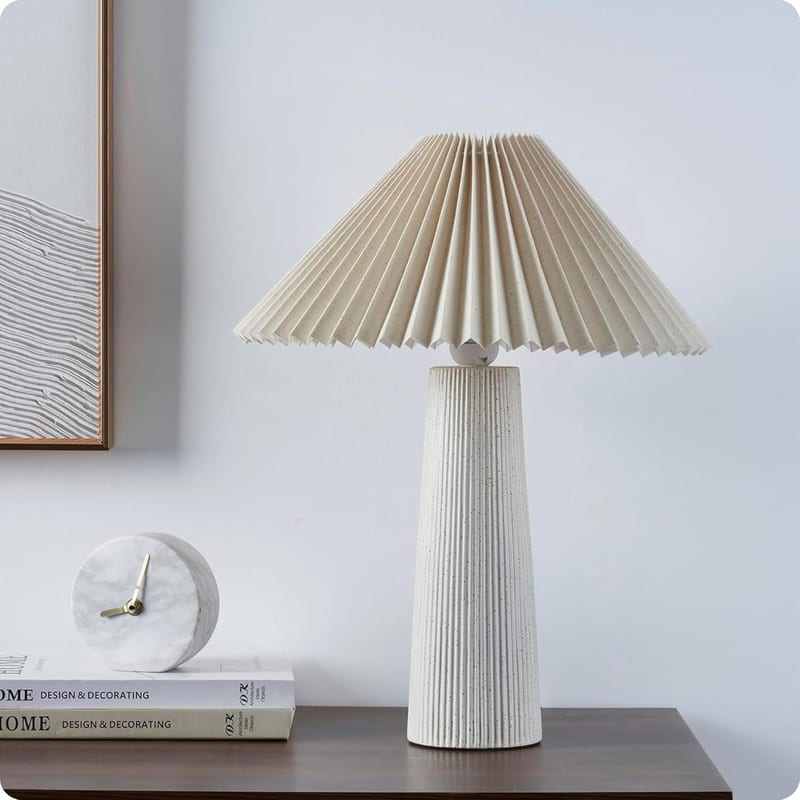
VCNY Home ivory pleated shade lamp
The Le Klint principle at a normal price: deep pleats doing the work over a deliberately mute ceramic cylinder. Ivory rather than white.
View at Amazon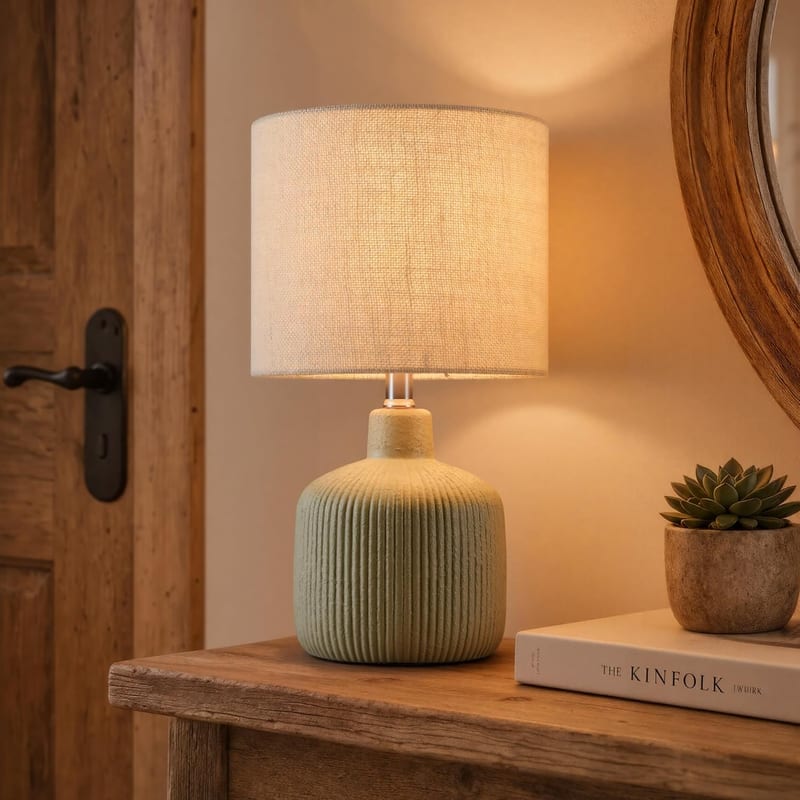
KAWOTI ceramic lamp with a linen shade
Linen rather than polyester, so the shade glows faintly along its sides instead of throwing a cone up and down. The lamp you sit next to.
View at Amazon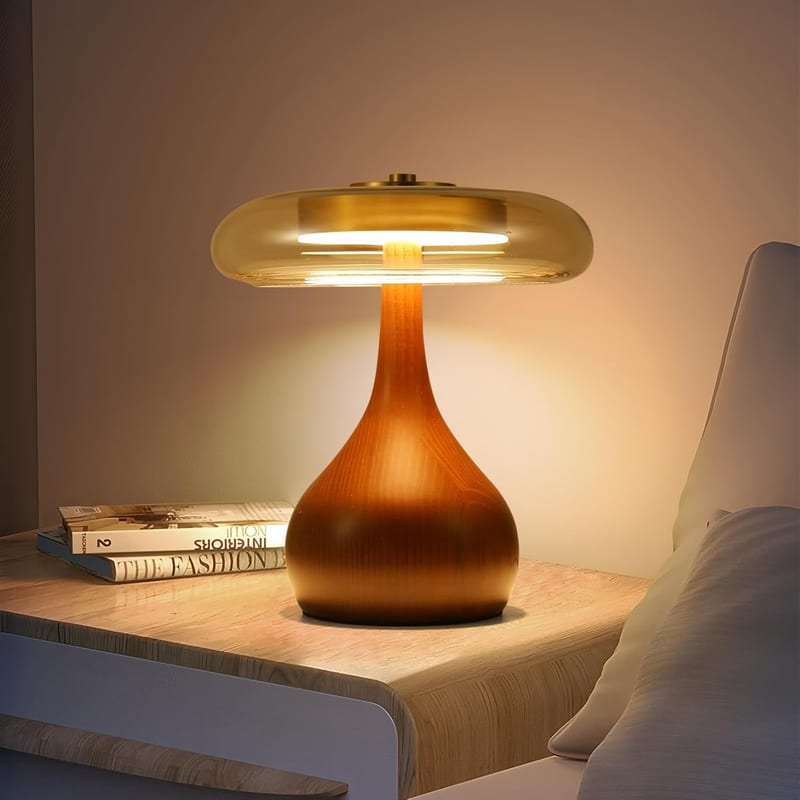
Wooden teardrop base with an amber glass dome
Amber glass tints the light before it leaves the lamp, so it reads as candlelight even with a neutral bulb.
View at Amazon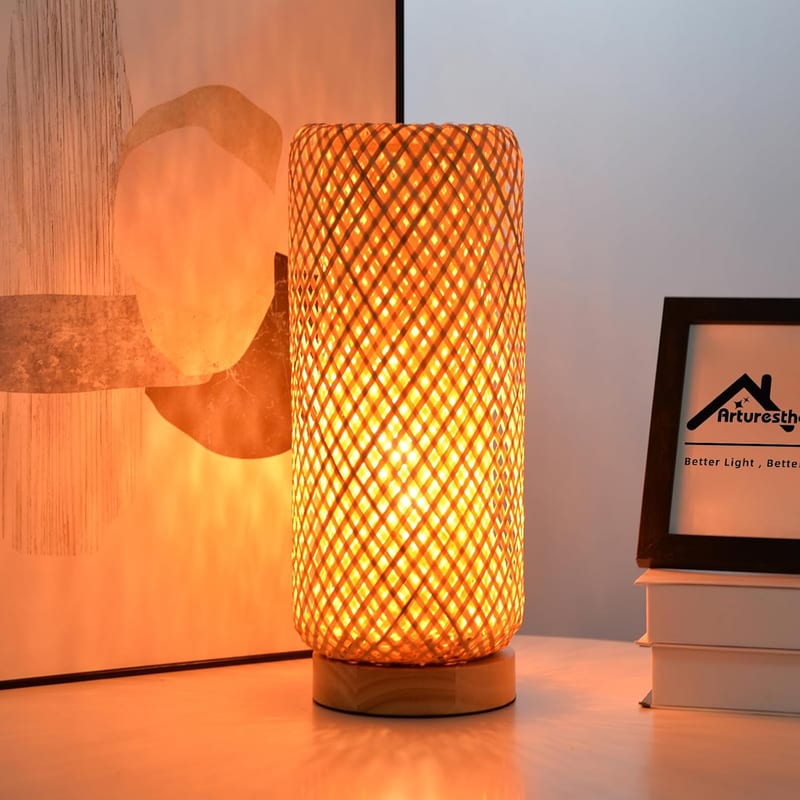
Woven bamboo cylinder lamp
A patterned light rather than a smooth one — closer to Japandi than strict Scandinavian. Worth it if the room already has rattan or jute in it.
View at Amazon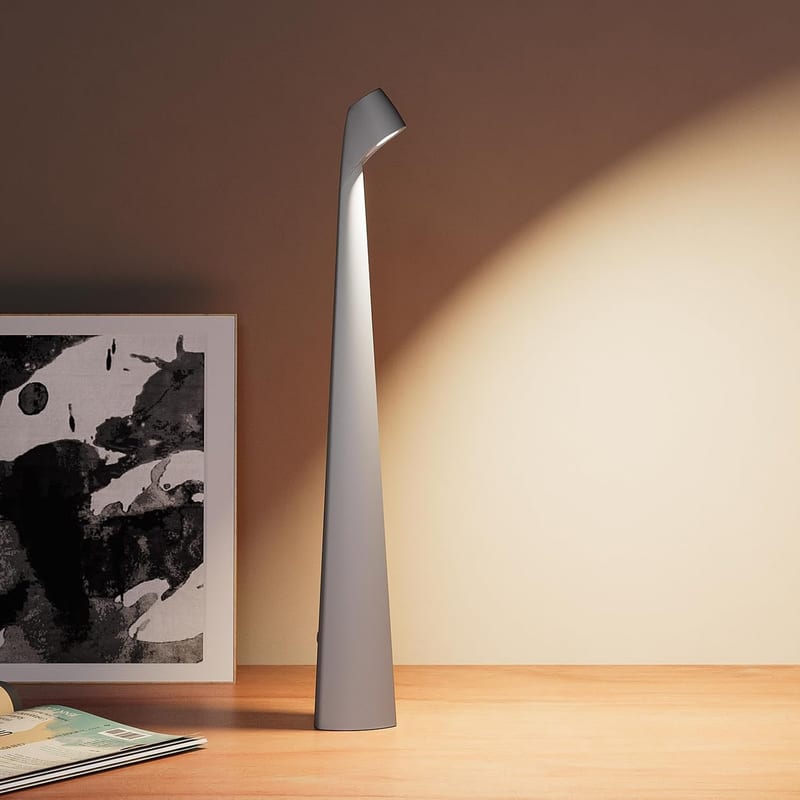
Cordless metal reading lamp
Three genuine dimming steps and a battery that doubles as a power bank. Put it where function matters more than looks.
View at Amazon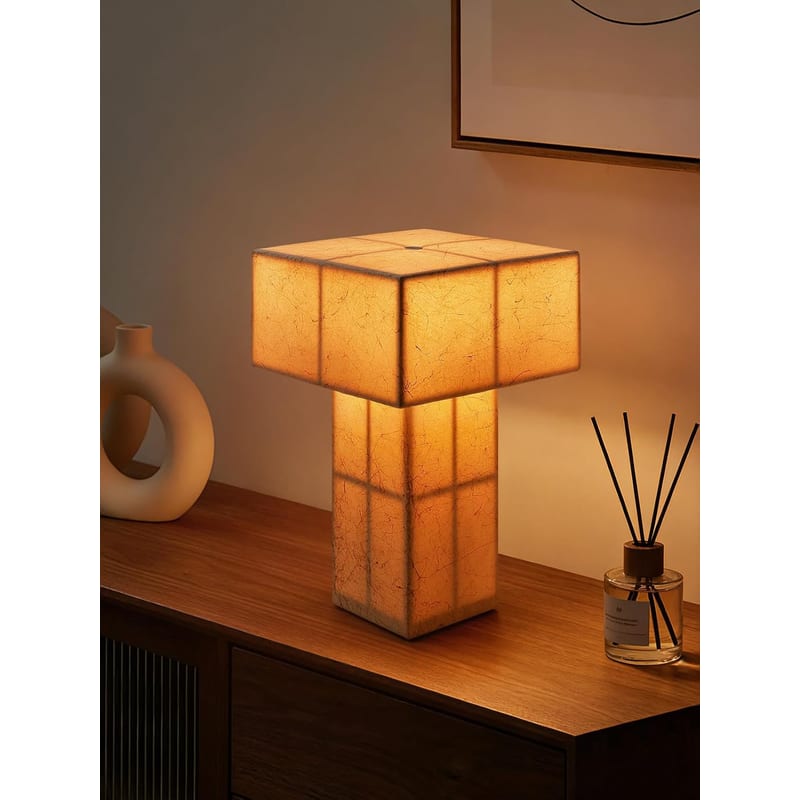
Handmade cordless cube lamp
Looks like something rather than like a gadget. This is the one that goes on the dinner table when people come over.
View at Amazon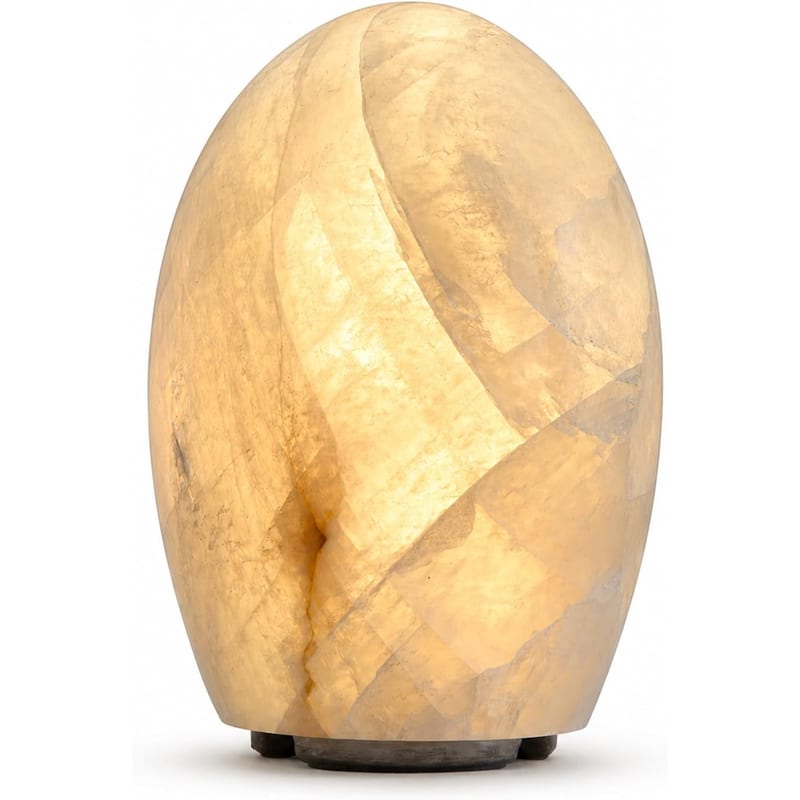
Artsolute natural calcite stone lamp
Natural stone cut into a dimmable egg, so it glows from within. Around fifteen pounds of it. Each piece is different from the photograph — that is the point of buying it.
View at AmazonWhat color temperature should a table lamp bulb be?
2700K. It reads golden and residential, where 3000K reads clean and slightly clinical and 4000K belongs in a workshop. Keep every bulb in the same sightline at the same temperature — one 3000K bulb among 2700K lamps will look conspicuously white and flatten the whole effect.
How many table lamps does a living room need?
Three, at three different heights: one at the sofa end, one on a sideboard or media unit, and one low and off to the side. Your eye reads the variation as depth, which is why three small pools of light make a room look composed where a single ceiling fixture makes it look flat.
What kind of lamp is best for a bedside table?
Two matching lamps, one either side of the bed, matter more than which model you choose. Domes and opal glass globes are the safest, because they will not glare at you from a lying position the way most shades will. If you read in bed, choose something with a tiltable or adjustable head, and keep the bulbs at the low end of the lumen range.
How do I make an inexpensive lamp look expensive?
Hide the bulb, then warm the light. Look at the lamp from where you actually sit — if you can see the bulb, the room will feel cheaper. Then use a dimmable 2700K bulb of modest output, choose opal glass or paper over clear glass, and pair two identical lamps rather than scattering five different ones.