This article contains affiliate links. If you buy through one, Hyggero earns a small commission at no cost to you. It never changes what we recommend.
The short list
Five practical mudroom picks
Chosen for a clear job: somewhere to sit, hang daily outerwear, contain shoes, or move seasonal clutter behind closed doors.
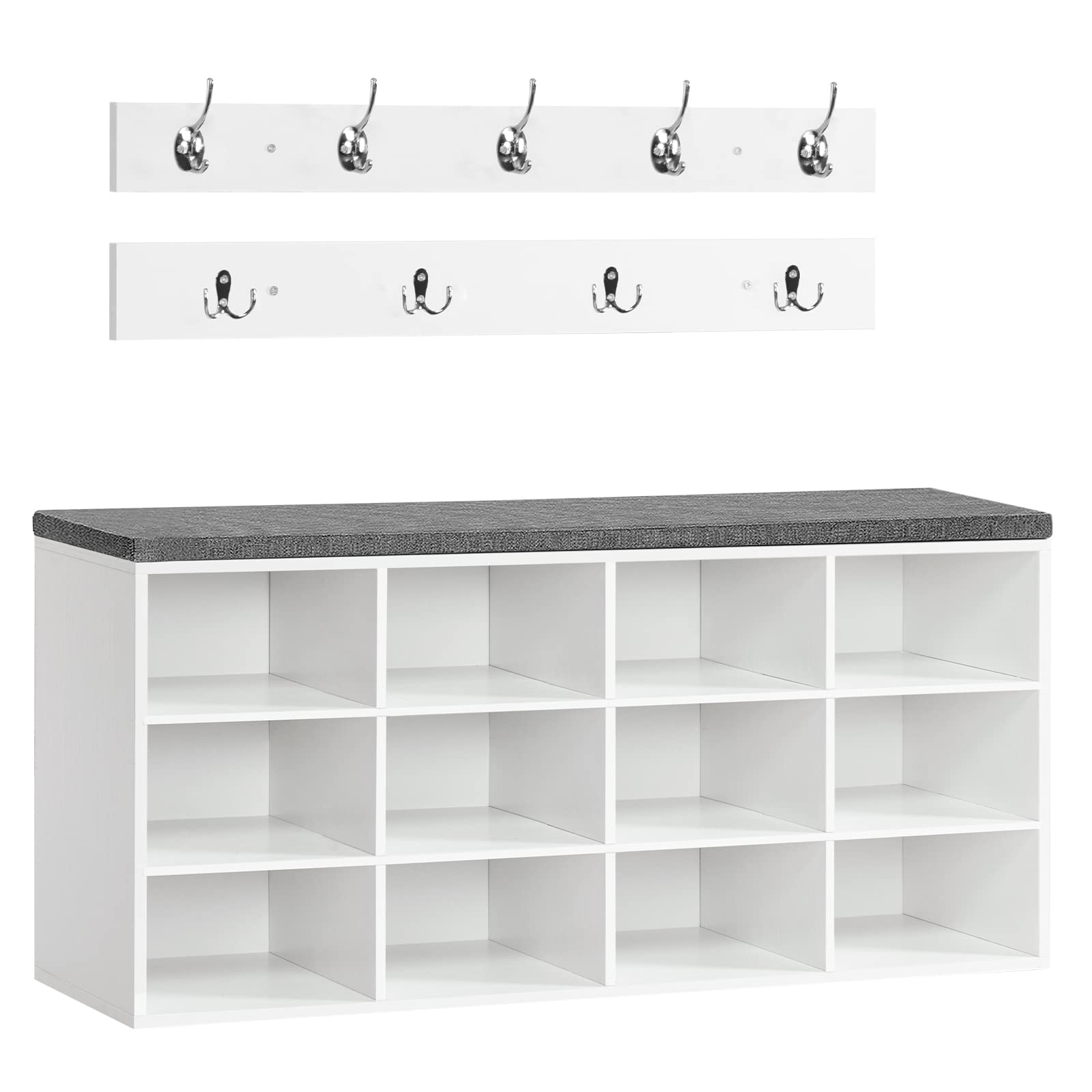
Hall Tree with Bench, Hooks and Shoe Cubbies
A single landing station for sitting, removing shoes, storing them below and hanging outerwear above.
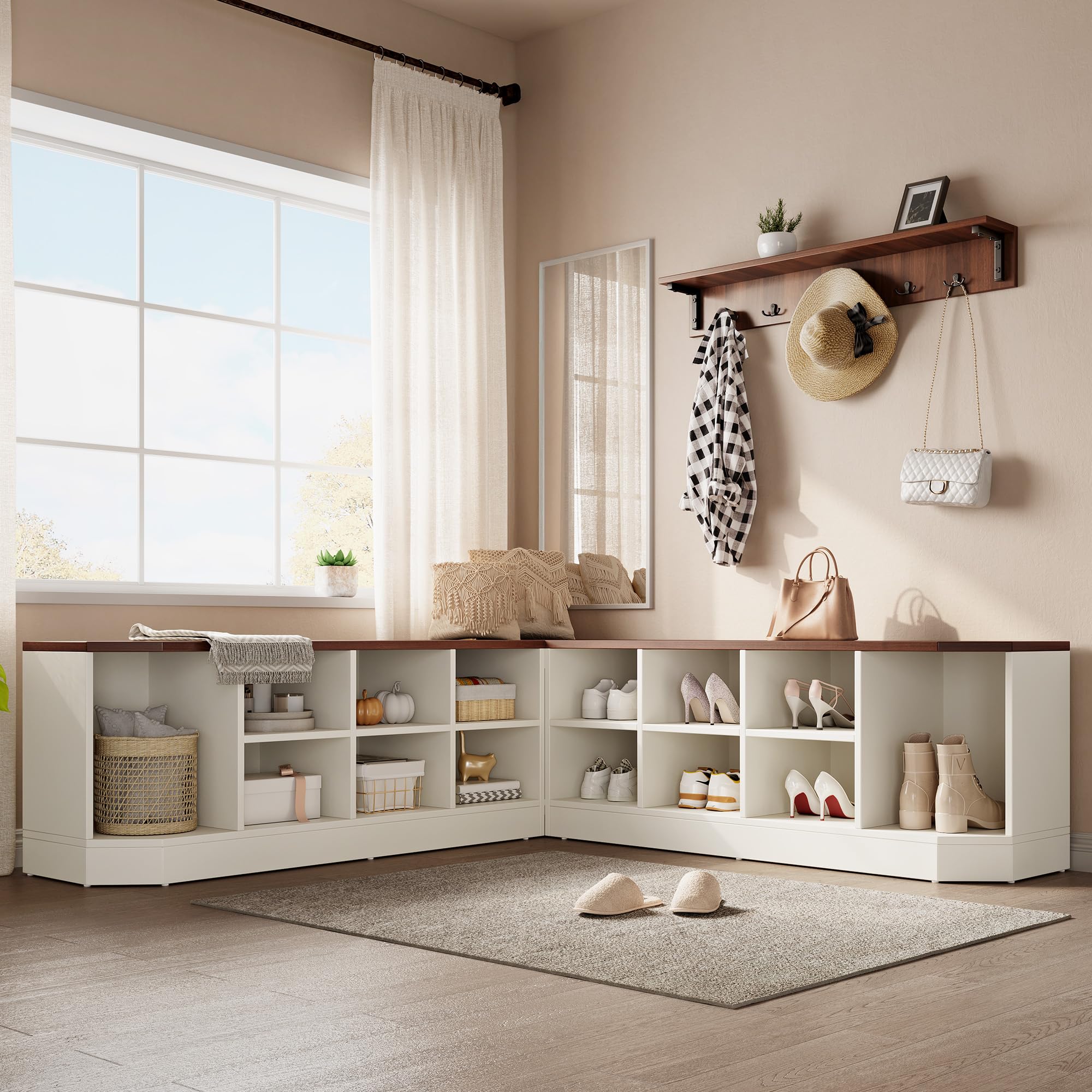
L-Shaped Shoe Bench with Hooks
Turns an awkward corner into a continuous zone for sitting, hanging and storing shoes.
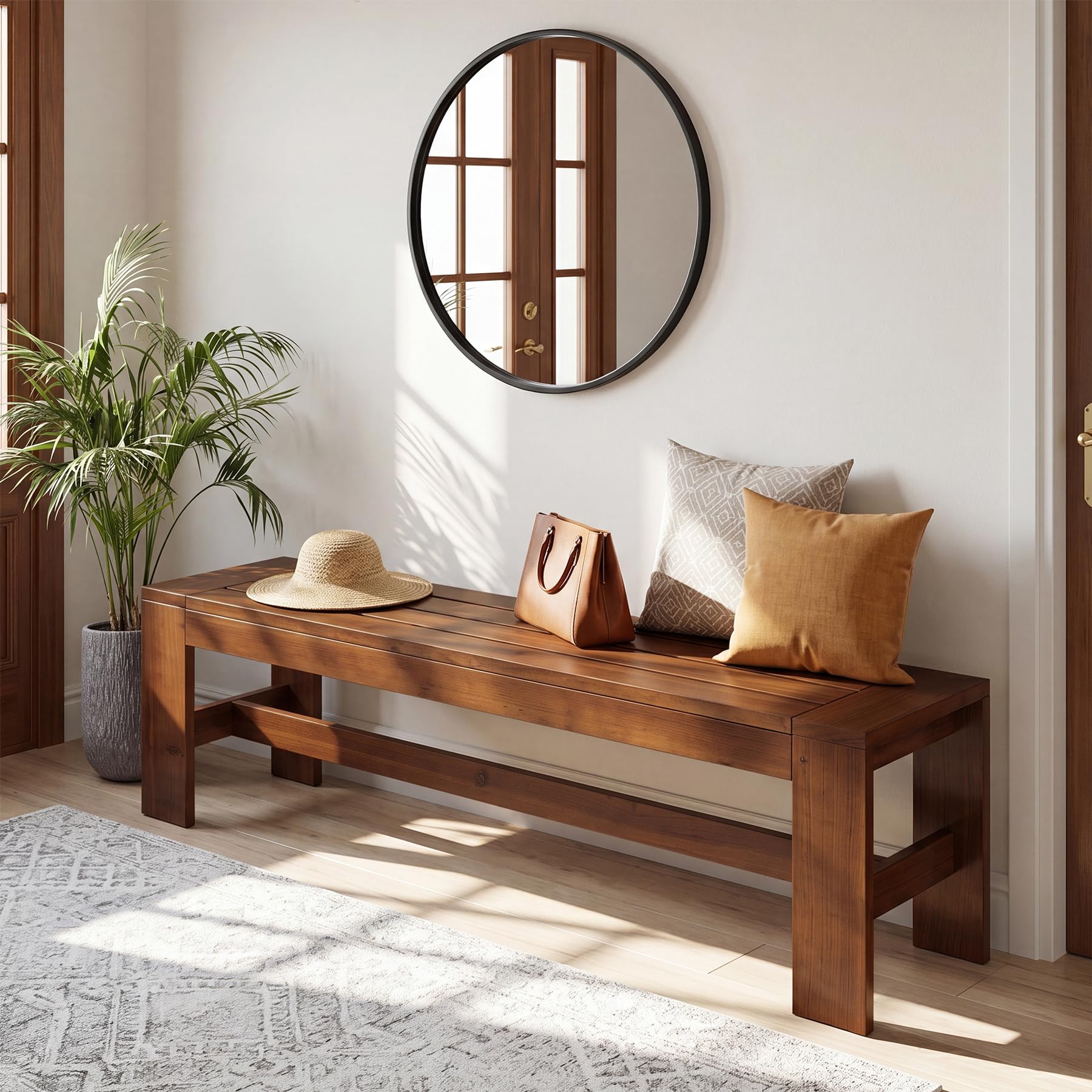
Solid-Wood Mudroom Bench
A stable, wipeable seat with flexible open space for baskets or tall boots below.
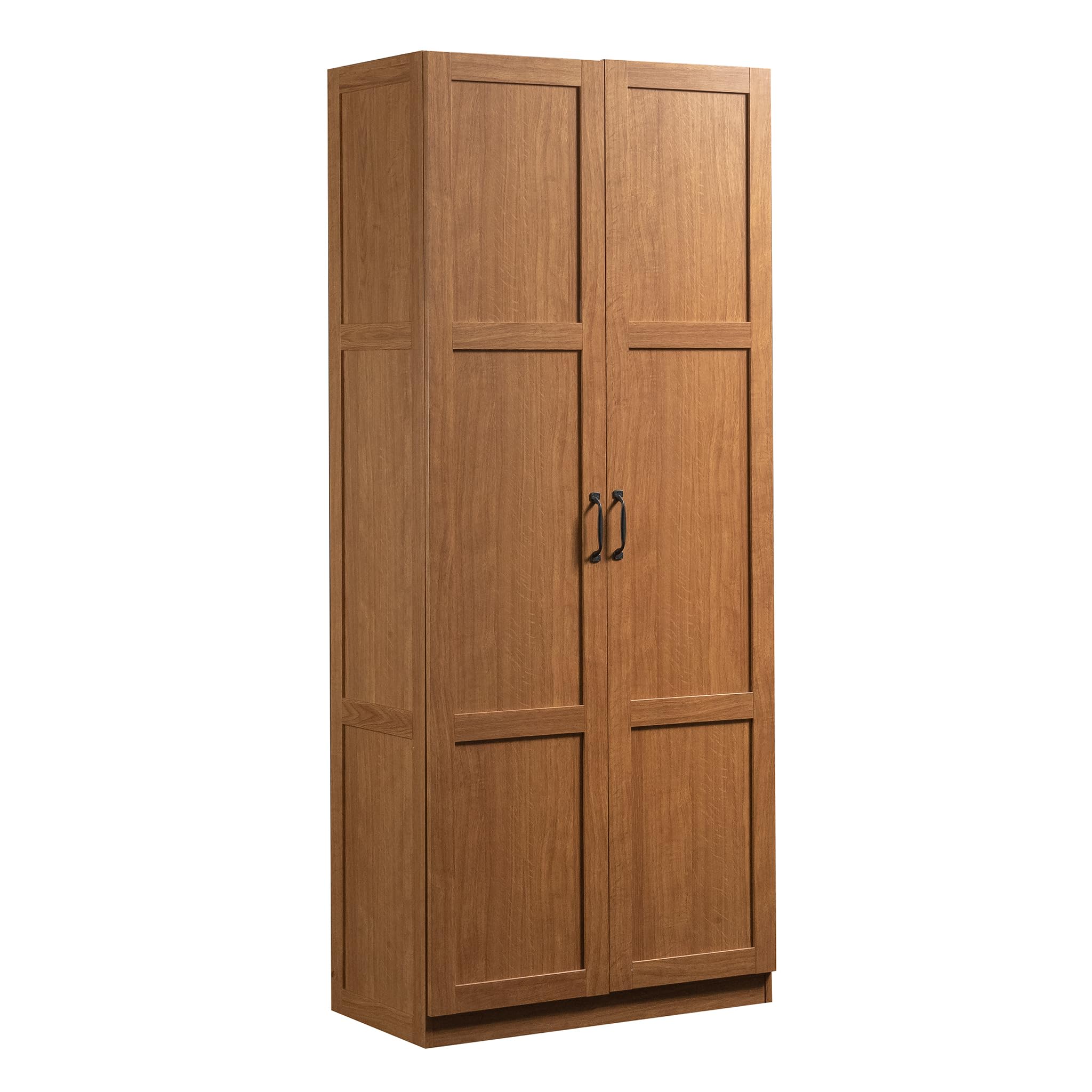
Storage Cabinet with Adjustable Shelves
Closed doors give seasonal gear and less attractive necessities a visually quiet home.
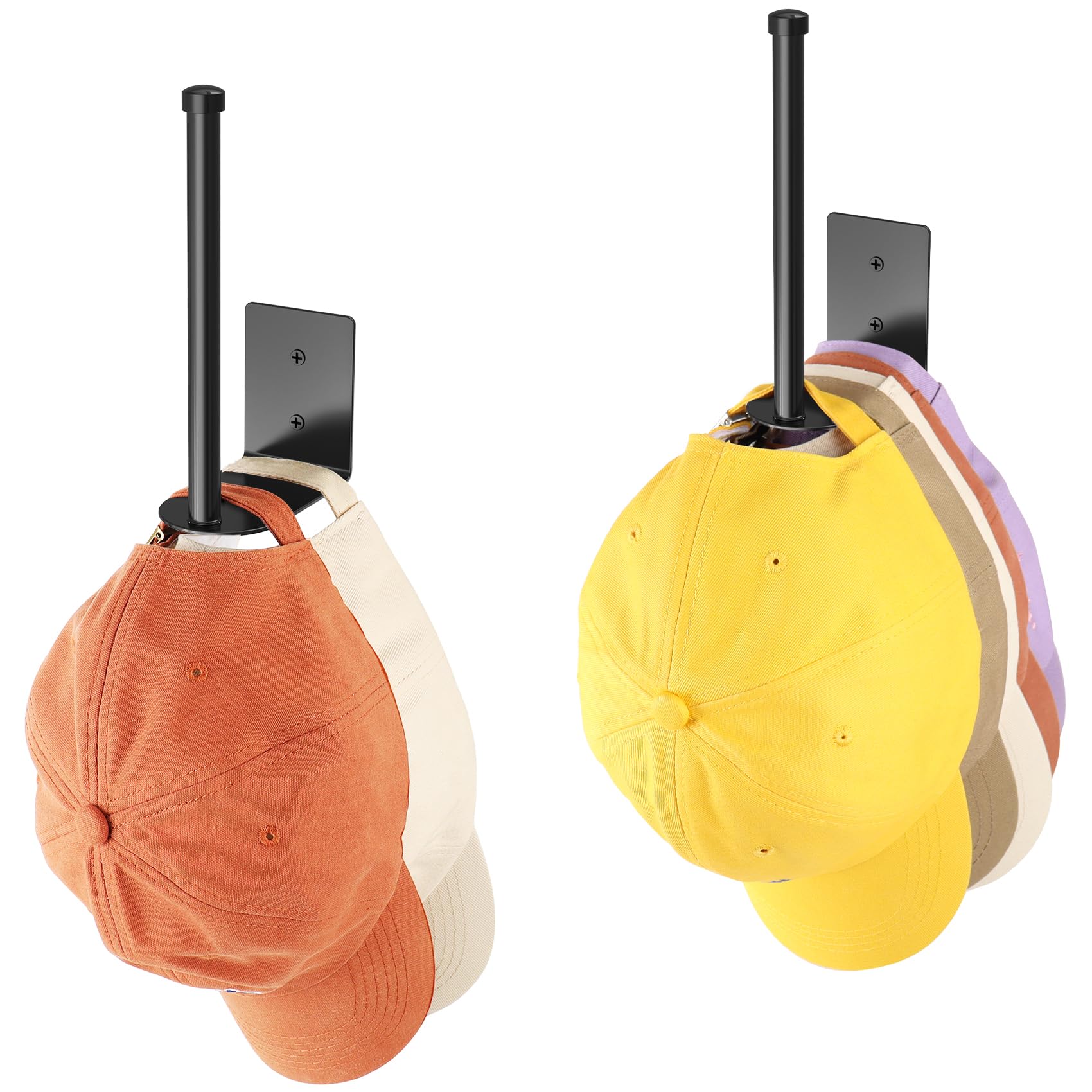
Wall-Mounted Hat Organizer
Keeps caps and small accessories visible on a narrow strip of wall without crowding coat hooks.
Prices and availability can change. Check dimensions, door swing and wall-fixing requirements on the retailer page before ordering.
A good mudroom does not need to be large or lined with custom cabinetry. It needs to make the messiest moments of the day easier: arriving with wet shoes, dropping a bag, finding a coat and getting everyone out the door again. The most useful mudroom ideas begin with those routines, then give each one a clear place to happen.
The order matters. Shoes should stop near the door. Coats and bags need to hang without covering the floor. Wet items need air and a surface that can be cleaned. Once those basics work, baskets, cabinets and smaller organizers can take care of everything else. The result feels calmer not because less life happens there, but because the room is ready for it.
1. Start with one combined landing station
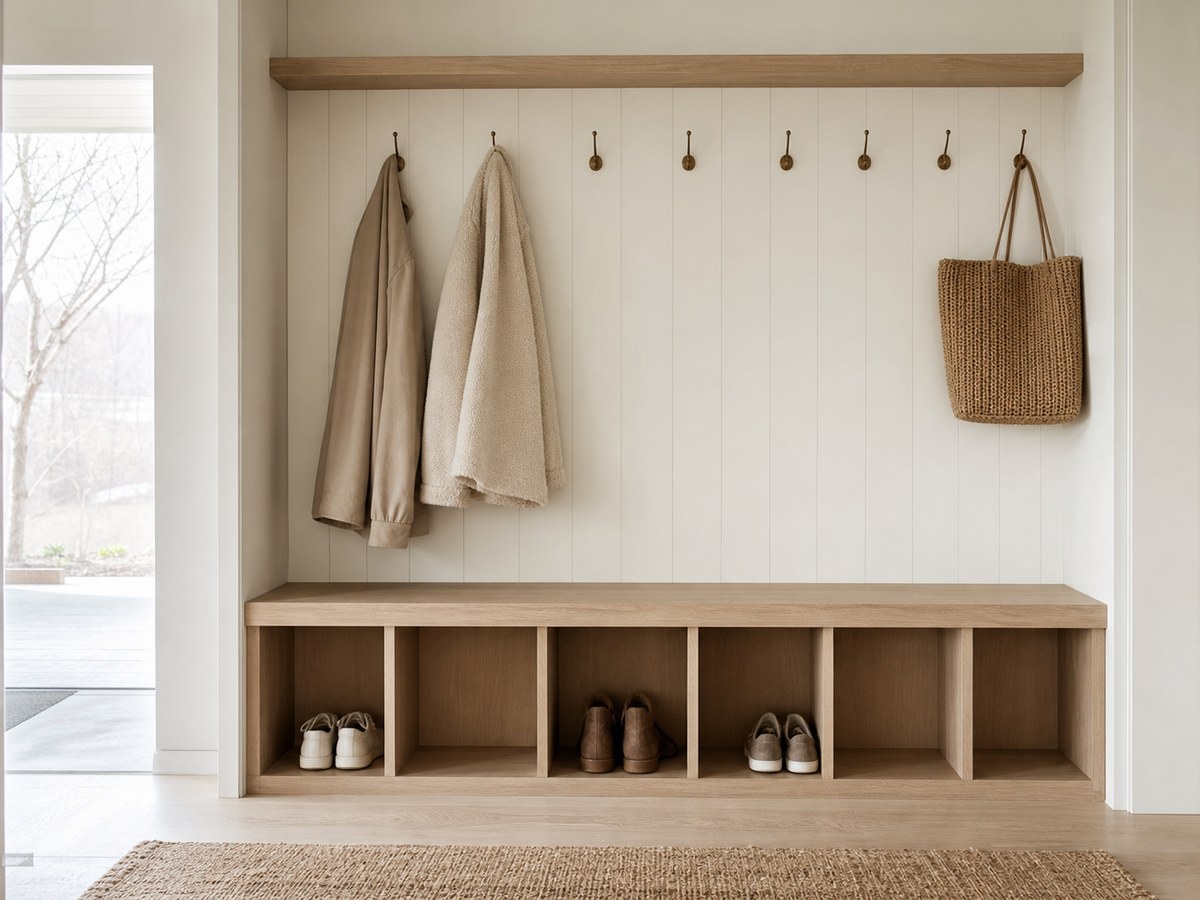
A practical all-in-one option: HOOBRO hall tree with bench, hooks and shoe cubbies
When coats, bags and shoes currently land in different corners, begin by bringing them together. A hall tree creates a simple sequence: sit down, remove shoes, store them below and hang outerwear above. That single piece can do the work of several smaller organizers without scattering storage across the room.
The HOOBRO design is especially useful when you need visible shoe compartments rather than one open shelf. The cubbies make it easier to notice when the collection is overflowing, while the bench keeps the center of the room from becoming the place where everyone sits. Keep the styling restrained. Leave a few hooks and compartments empty so the station has room to absorb an ordinary busy day.
2. Give every pair of shoes a defined home
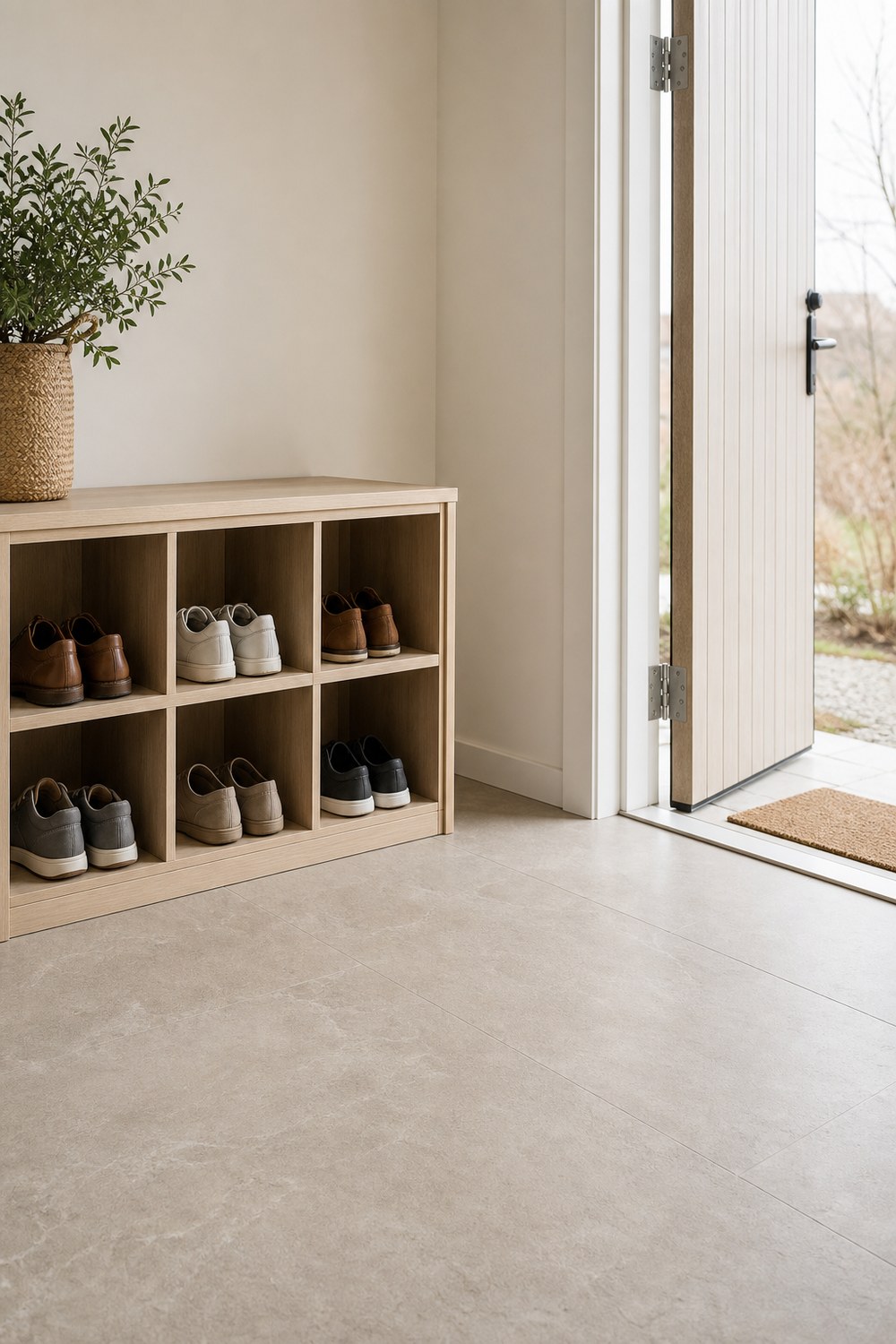
The best shoe storage ideas are based on frequency, not on squeezing in the largest possible number of pairs. Keep the shoes worn this week within easy reach, move occasional pairs into closed storage and rotate out-of-season footwear somewhere else. A mudroom should support the current routine rather than become the household’s entire shoe archive.
Allow one compartment, basket or clearly marked section per person. Children are more likely to put shoes away when their space is obvious and reachable. For adults, a wider opening may be more useful than several small cubbies, especially for boots. Before buying anything, measure the longest pair and the depth available with the door fully open. Storage that narrows the route through the room will create a new problem while trying to solve the first one.
3. Turn an unused corner into the main drop zone
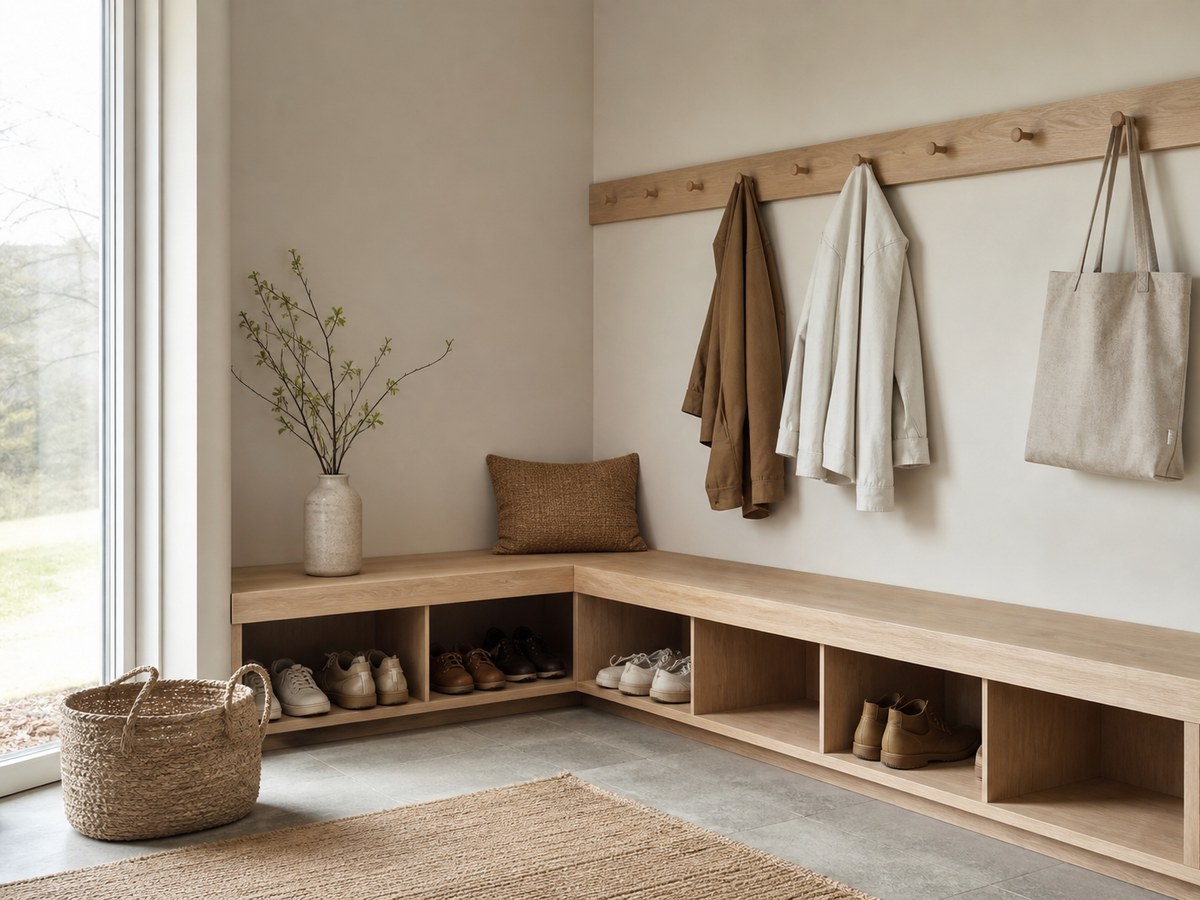
Best for an awkward corner: DWVO L-shaped shoe bench with hooks
Corners often become dead space because a straight bench leaves one wall unused. An L-shaped unit turns both walls into one continuous zone for sitting, hanging and storing shoes. It can also give two people room to get ready without standing in the main walkway.
Use the shorter side for the items grabbed most often and the longer side for shoes or outerwear that need more room. Resist filling every hook: a corner already contains more visual lines than a flat wall, so generous spacing keeps it from feeling crowded. The DWVO unit is a strong choice when you want the look of built-in mudroom lockers without committing to permanent joinery. Measure baseboards, door swing and the exact corner angle before ordering; an L-shape only works when it can sit cleanly against both walls.
4. Add a bench that is comfortable enough to use
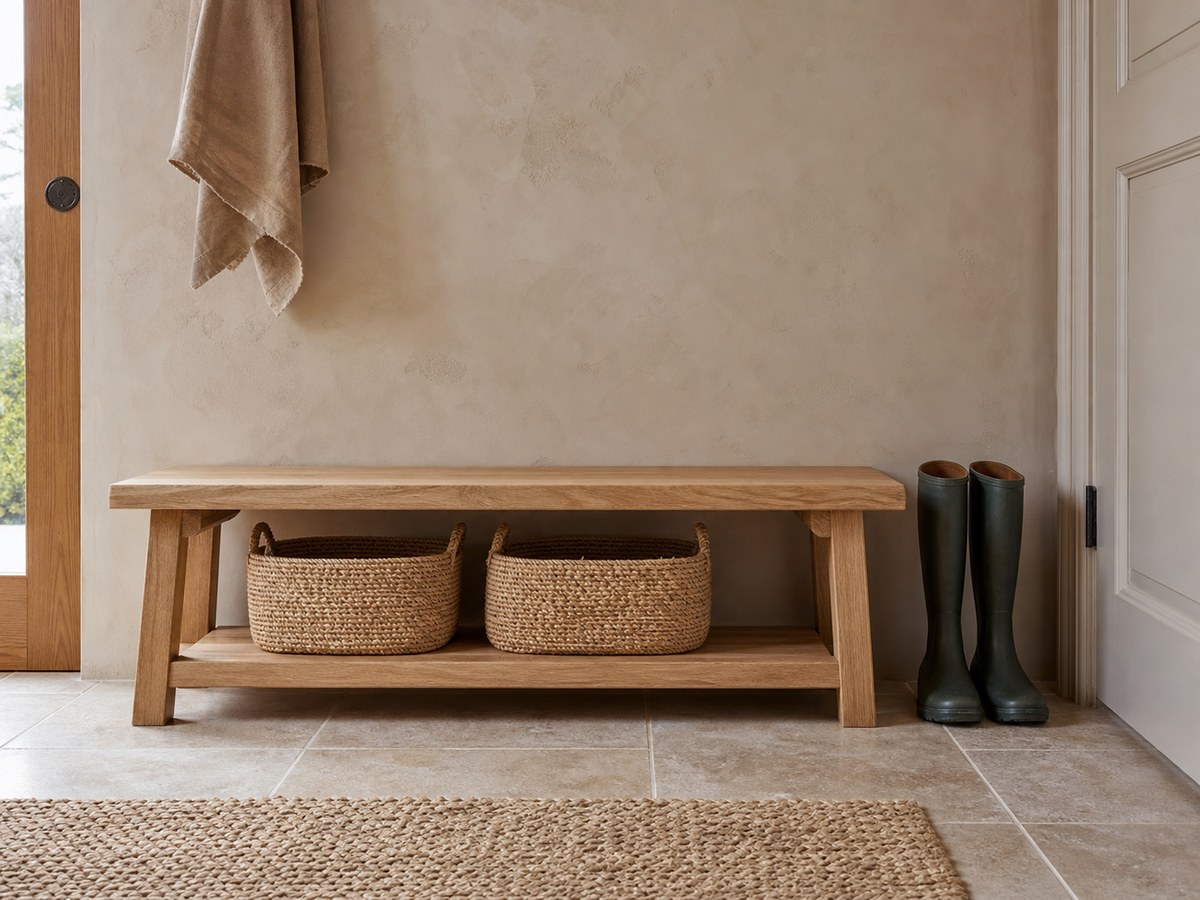
A warm, simple seat: TRIBEWOOD solid-wood mudroom bench
A bench is not decorative filler. It makes it easier to remove muddy footwear without leaning against a wall or carrying dirt further into the home. Choose one that feels stable, has enough clear space in front of it and does not block the natural route from the door.
This solid-wood bench brings warmth to a room that can otherwise feel highly practical. Because it does not try to contain everything itself, it is flexible: add two baskets beneath it for gloves and outdoor accessories, or leave the floor open for tall boots. Avoid a deep pile of cushions. One washable pad is enough if you want softness, and a bare wooden surface is often easier to wipe down. The goal is a bench that remains available for sitting rather than becoming another shelf for bags.
5. Hide seasonal overflow behind closed doors
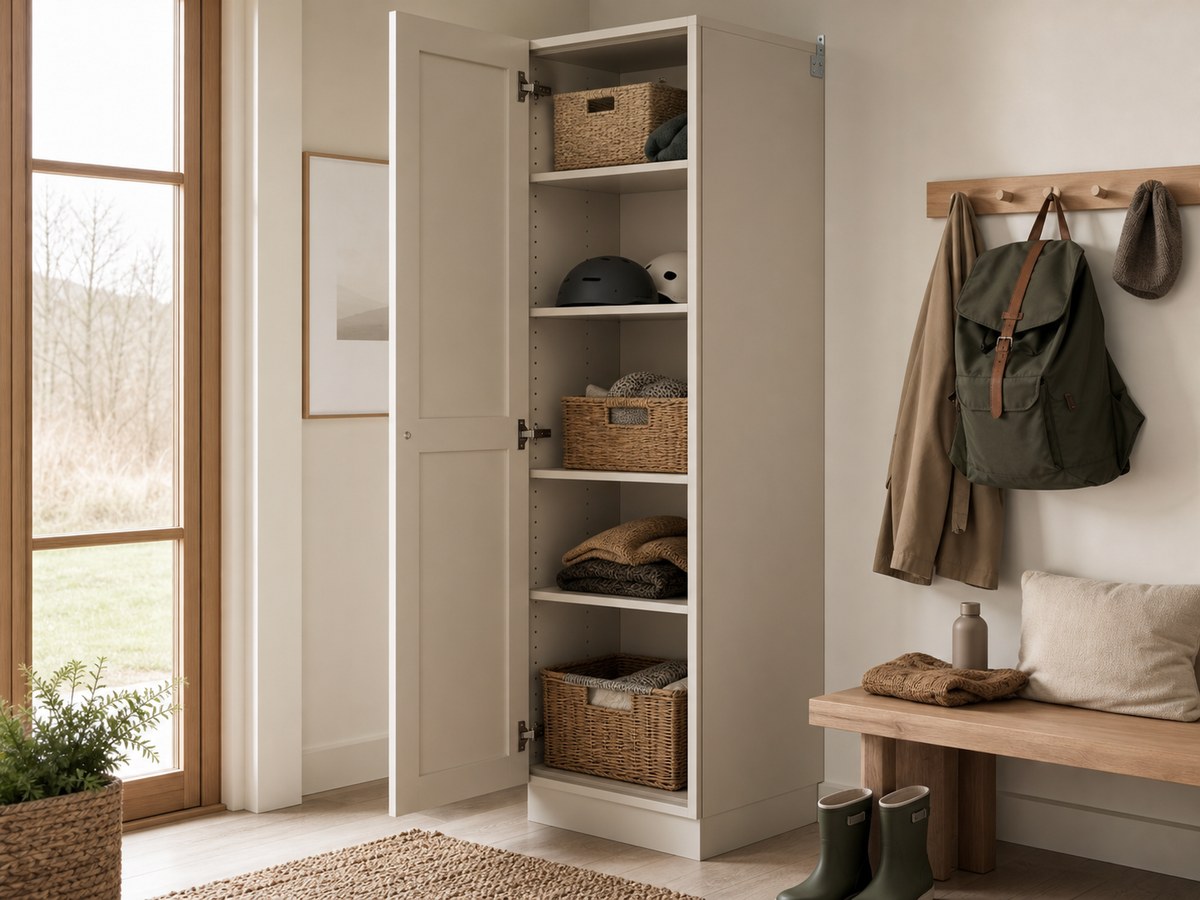
For concealed overflow: Sauder storage cabinet with adjustable shelves
Open storage is useful for daily items, but it should not carry every season at once. A tall cabinet gives less attractive necessities—spare shoes, helmets, dog supplies, cleaning cloths and winter accessories—a place to disappear. Adjustable shelves matter because mudroom items vary dramatically in height.
Organize the cabinet by access rather than by category alone. Put everyday refills at hand height, heavier items low down and rarely used seasonal pieces at the top. Use only a few broad labels; an overcomplicated system tends to collapse as soon as someone is in a hurry. Closed doors also create visual rest beside open hooks and cubbies. For safety, secure any tall cabinet to the wall according to the manufacturer’s instructions, especially in a room used by children.
6. Move hats and small accessories onto the wall
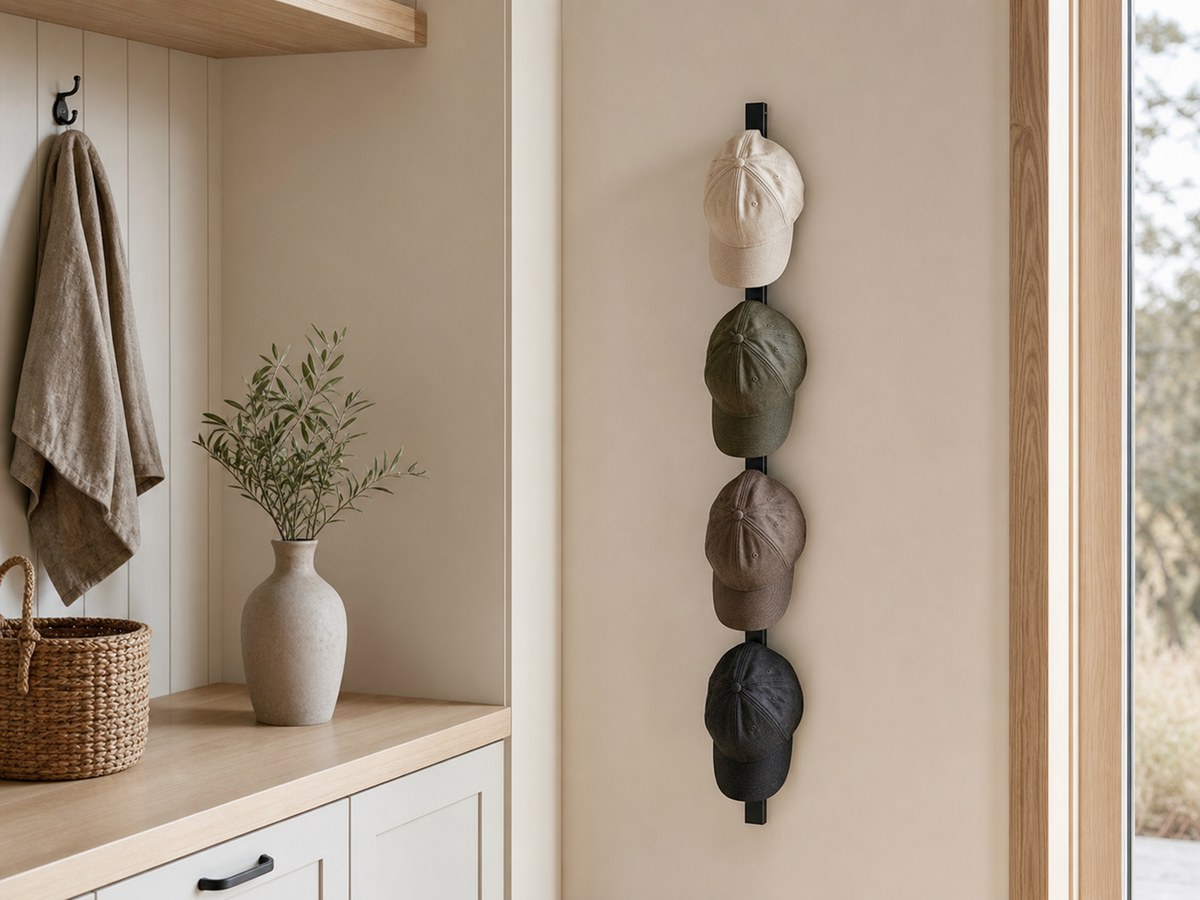
Useful for a narrow strip of wall: Durmmur wall-mounted hat organizer
Caps, scarves and smaller grab-and-go items are easy to lose inside deep baskets. A slim wall organizer keeps them visible without taking over the main coat hooks. The Durmmur design can be arranged vertically or horizontally, so it can fit a narrow section beside a cabinet or above a lower shelf.
Give the organizer one clear job. A row holding only caps looks intentional; a mixture of hats, keys, bags and loose accessories quickly becomes visual noise. Keep keys and very small items in a tray or shallow drawer instead. Wall storage works best when it follows the architecture of the room, so align it with a nearby door frame, cabinet edge or shelf rather than placing it in the middle of an otherwise empty wall.
7. Create a wet-shoe zone that can dry
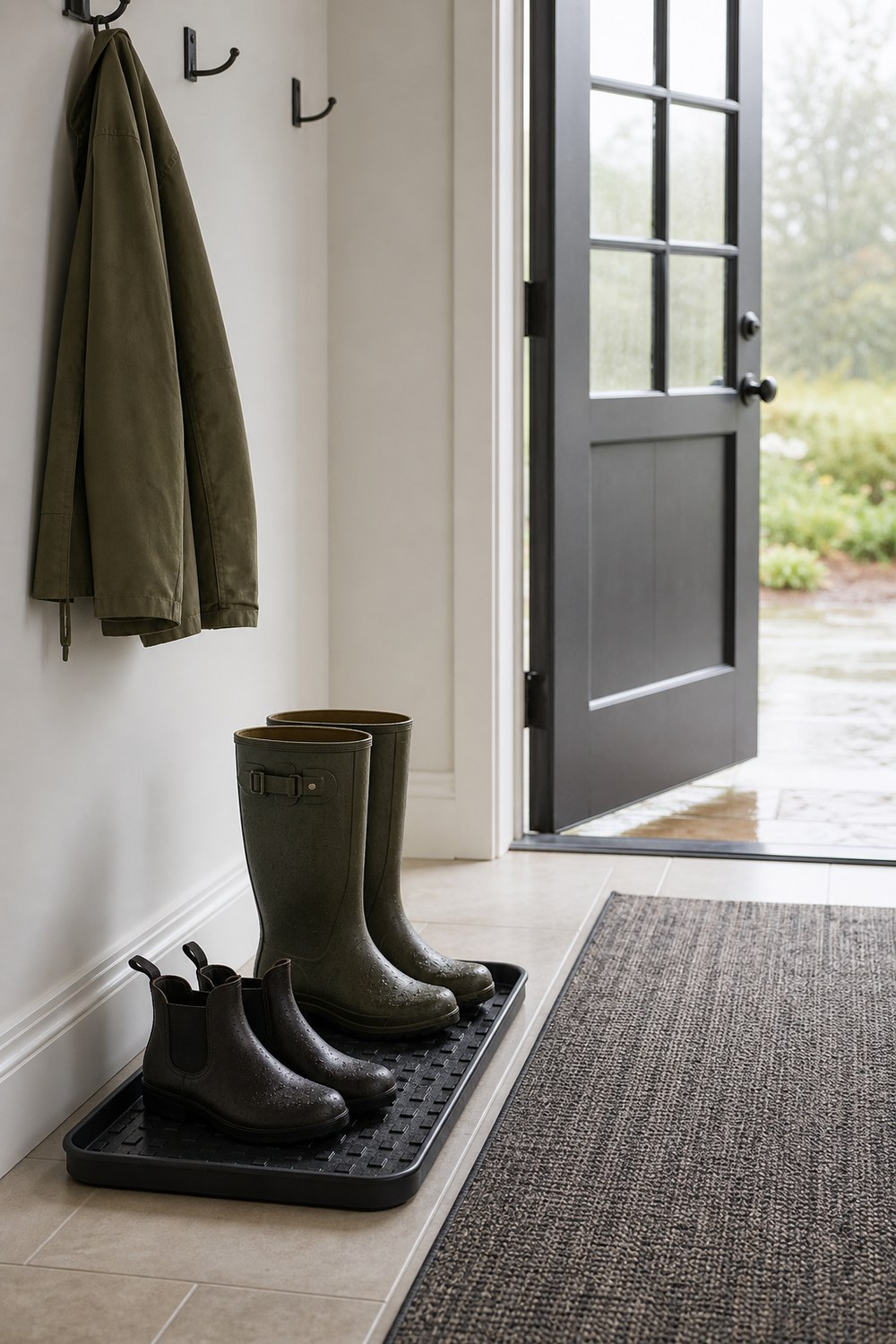
Wet footwear needs different storage from dry everyday shoes. Give it a washable tray near the door, ideally where air can circulate and drips cannot reach wood, baskets or the shoes stored beside it. A low lip contains water and grit; a removable insert or raised grid helps soles dry instead of sitting in moisture.
Do not make the tray too large. Its purpose is to hold the wet pairs currently in use, not to become permanent storage. Once shoes are dry, return them to their normal compartment. In snowy or rainy seasons, place a washable runner between the door and tray so the path is protected as people step inside. Natural materials can still appear in baskets and cabinetry, but the wet zone itself should be chosen for cleaning, durability and airflow.
8. Assign hooks and cubbies by person
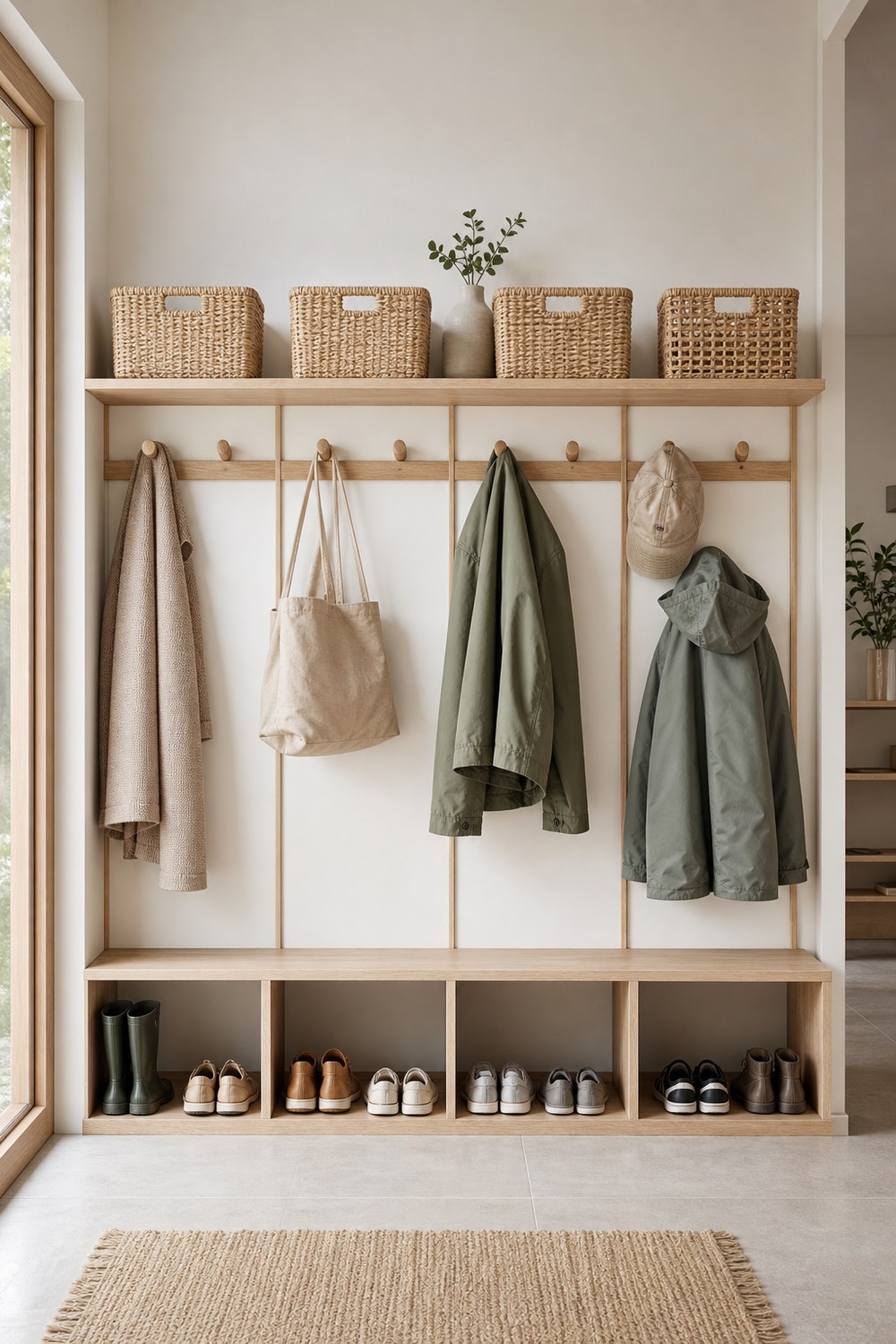
Shared storage becomes easier when ownership is obvious. Give each household member one hook for a daily coat, one place for a bag and one shoe section. This borrows the clarity of mudroom lockers without requiring a wall of custom-built units. A discreet label, different basket weave or consistent left-to-right order is enough.
Set the height for the person using it. Children’s hooks should be reachable without help; adult coats need enough clearance that hems do not cover the bench or shoes. Keep communal items—umbrellas, dog leads or shopping bags—in a separate shared zone so they do not migrate into one person’s space. The limit is part of the system: when one hook can no longer hold the day’s outerwear, something needs to return to the closet rather than being layered on top.
9. Protect the walkway from storage creep
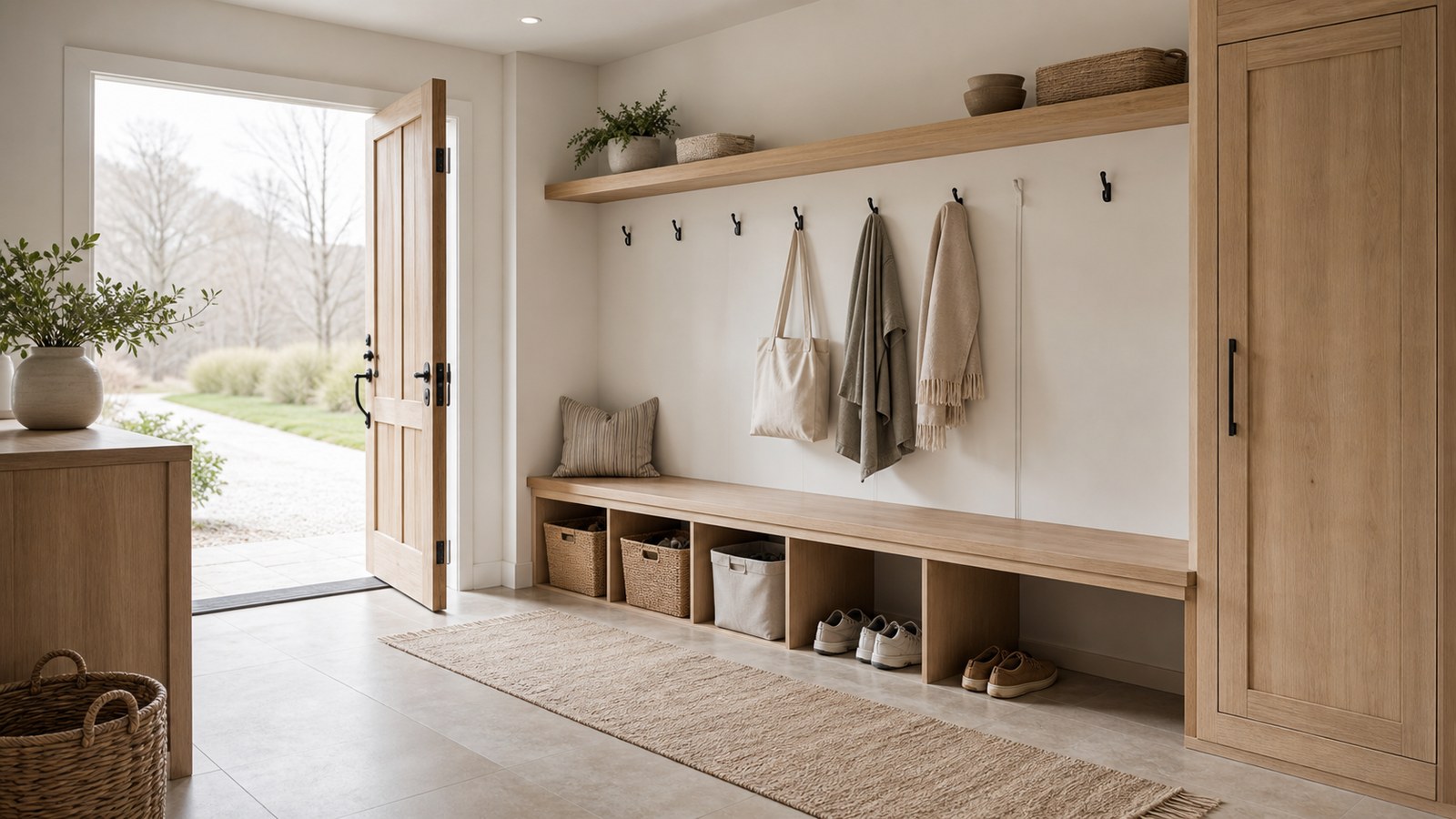
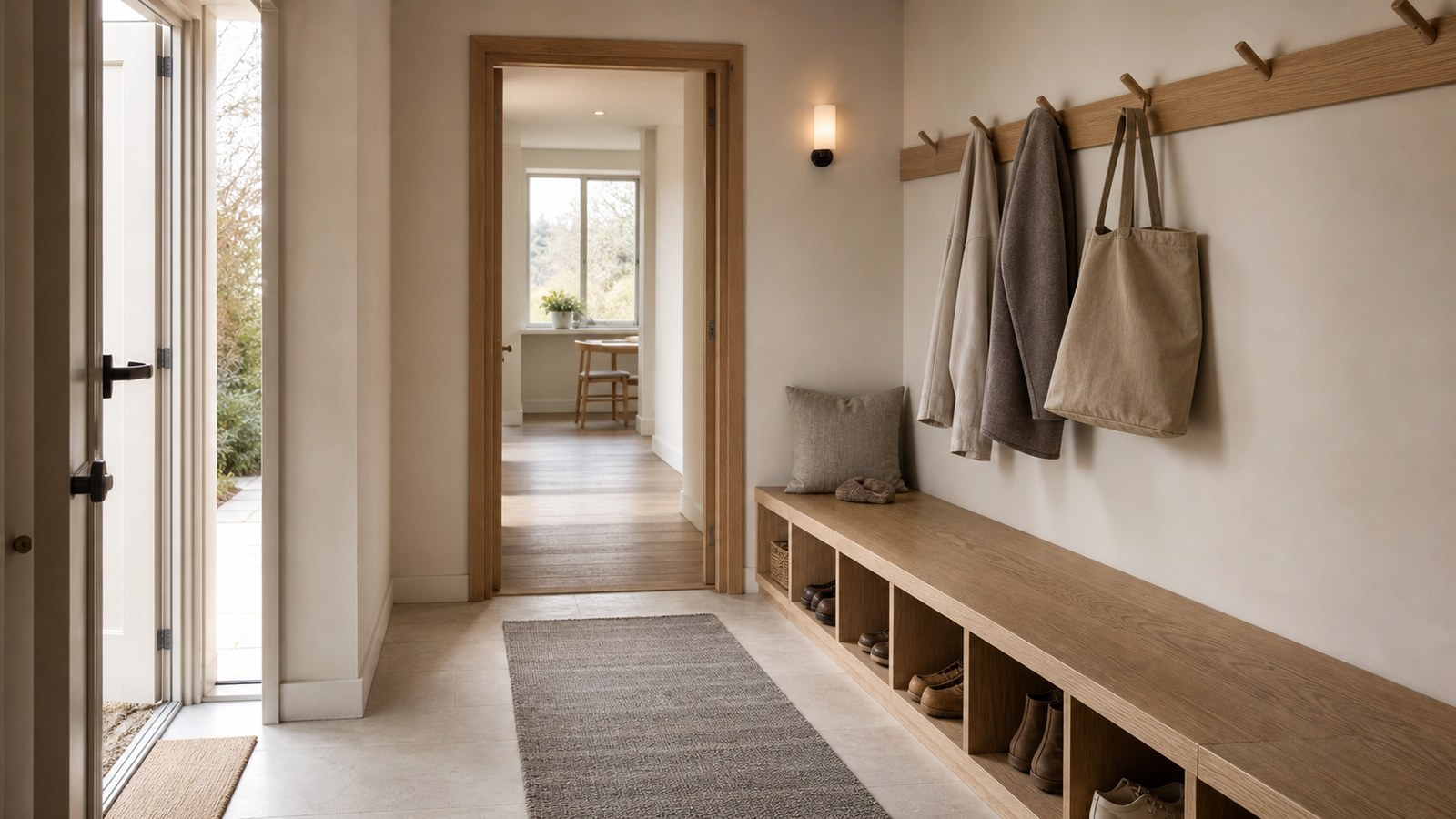
The final test of any mudroom is whether you can move through it with your hands full. Open the door completely, carry a bag through the room and sit on the bench. Nothing should need to be shifted first. Keep the center clear and choose one side of the room as the main storage wall whenever the layout allows.
Marking the route visually can help. A narrow runner makes the walking line obvious, while storage that shares one material or color reads as a single zone instead of a collection of objects. End the day with a two-minute reset: dry shoes move off the tray, bags return to hooks and anything without a home leaves the room. The calmest mudroom is not the one with the most storage. It is the one whose limits are easy to understand and maintain.
A calmer mudroom starts with the daily route
Choose the first change by following what happens when you come home. If shoes spread across the floor, define their space first. If bags cover the bench, add reachable hooks. If seasonal gear overwhelms the room, move it behind closed doors. Solving the most repeated point of friction will make a bigger difference than buying several organizers at once.
Once the practical zones are working, the room can be softened with warm wood, a restrained palette and one or two natural textures. Function comes first, but it does not have to look clinical. When every item has a believable place to land, dry and wait for tomorrow, even a hardworking mudroom can feel calm.
Hall Tree with Bench, Hooks and Shoe Cubbies
A single landing station for sitting, removing shoes, storing them below and hanging outerwear above.
View at Amazon L-Shaped Shoe Bench with Hooks
Turns an awkward corner into a continuous zone for sitting, hanging and storing shoes.
View at Amazon Solid-Wood Mudroom Bench
A stable, wipeable seat with flexible open space for baskets or tall boots below.
View at Amazon Storage Cabinet with Adjustable Shelves
Closed doors give seasonal gear and less attractive necessities a visually quiet home.
View at Amazon Wall-Mounted Hat Organizer
Keeps caps and small accessories visible on a narrow strip of wall without crowding coat hooks.
View at Amazon