This article contains affiliate links. If you buy through one, Hyggero earns a small commission at no cost to you. It never changes what we recommend.
An open room can feel generous until two activities begin competing for the same space. The bed is visible from the sofa. A desk sits in the middle of the living area. The dining table slowly becomes an office because nothing tells one zone where to end and another to begin.
A permanent wall would solve the boundary, but it may also remove the qualities that made the room work: daylight, long sightlines and easy circulation. The right room divider creates just enough separation without making the space feel closed.
That means choosing by function, not appearance alone. Some dividers provide real visual privacy. Others preserve light while creating a psychological boundary. Storage dividers can solve two problems at once, but they need more floor space and better stability. These nine room divider ideas cover those different needs rather than treating every screen as interchangeable.
Choose the boundary before you choose the divider
Start by deciding what the room actually needs. If you only want the sofa area to feel separate from the dining table, an open or partially transparent divider is usually enough. If someone sleeps or changes clothes behind it, privacy matters more than preserving every ray of light.
| What you need | Best starting point | Main trade-off |
|---|---|---|
| A flexible visual boundary | Folding screen | Needs a zigzag footprint to remain stable |
| Full bedroom privacy | Opaque curtain or blackout screen | Blocks daylight as well as sightlines |
| A renter-safe installation | Floor-to-ceiling tension system | Must fit the ceiling height and be checked regularly |
| Separation plus organization | Pegboard or storage divider | Adds visual activity and needs careful loading |
| A boundary that keeps the room bright | Open shelving | Creates only partial privacy |
| A temporary layout that changes often | Accordion divider | Less substantial than fixed furniture |
None of the products below should be treated as soundproof. Fabric and shelving may soften a room slightly, but meaningful noise control requires products with verified acoustic performance and attention to gaps at the ceiling, floor and sides.
1. Use a wide folding screen when the layout needs to change
A folding screen is the simplest answer when the boundary is not permanent. It can hide a work area during the evening, give a guest bed more privacy or separate a living room without fixing anything to the floor or ceiling.
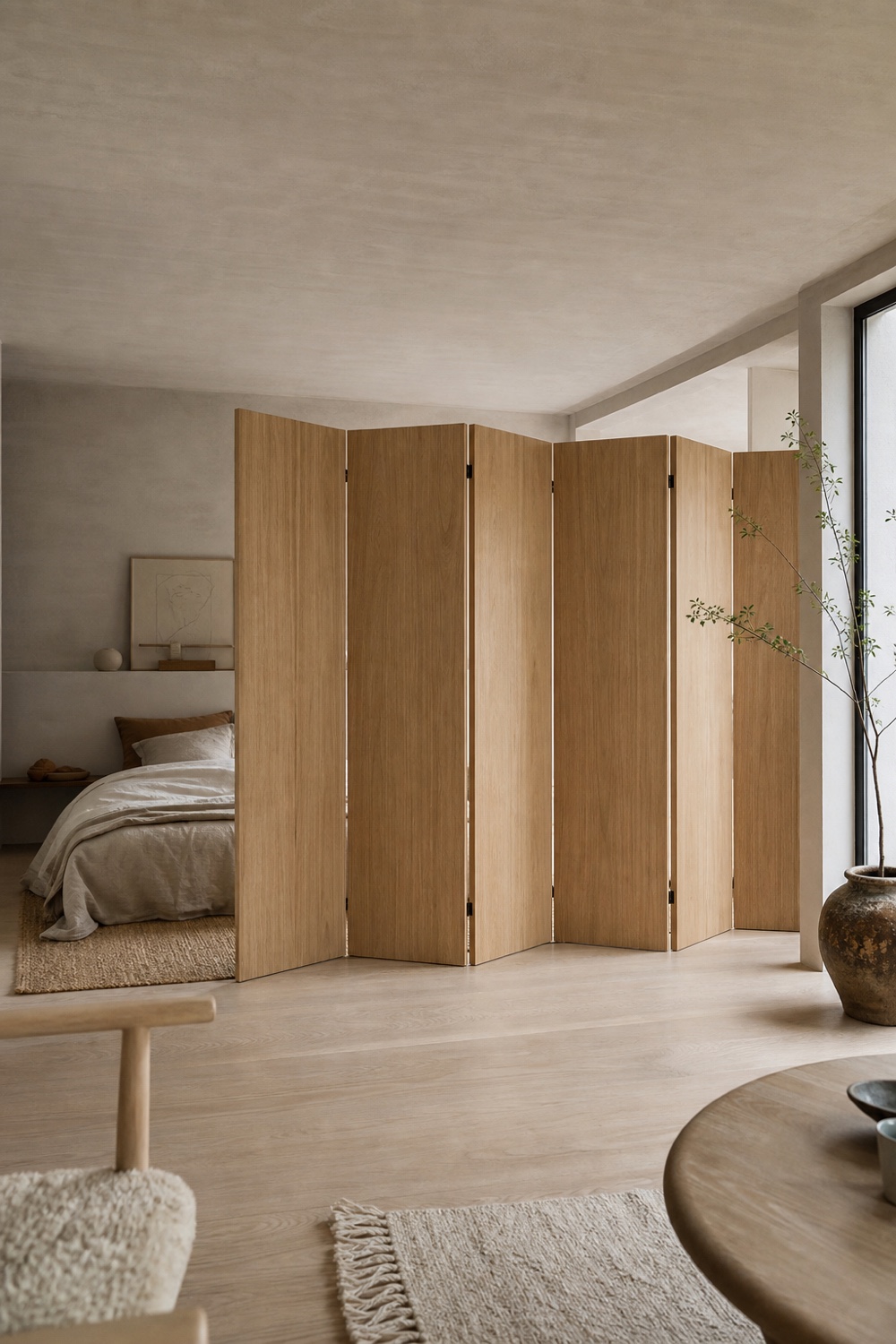
The VEVOR six-panel Japanese-style wood folding screen is the broadest movable option in this selection. The multiple hinged panels let it form a shallow curve around a bed or a deeper angle around a desk, then fold away when the room needs to open again.
Do not stretch a folding screen completely flat. The folds are what create its standing footprint, and a small zigzag is more stable than one long straight line. Place it outside the main walking route and leave enough space that a bag, vacuum or passing shoulder will not catch an outer panel.
Best for: flexible bedroom privacy, guest areas and hiding a desk after work.
Think twice if: children, pets or frequent traffic make a lightweight freestanding divider easy to knock.
2. Build a renter-safe curtain wall with a tension system
Curtains are useful when a screen would consume too much floor space. They create a continuous boundary, can open completely during the day and introduce softness rather than another piece of furniture.
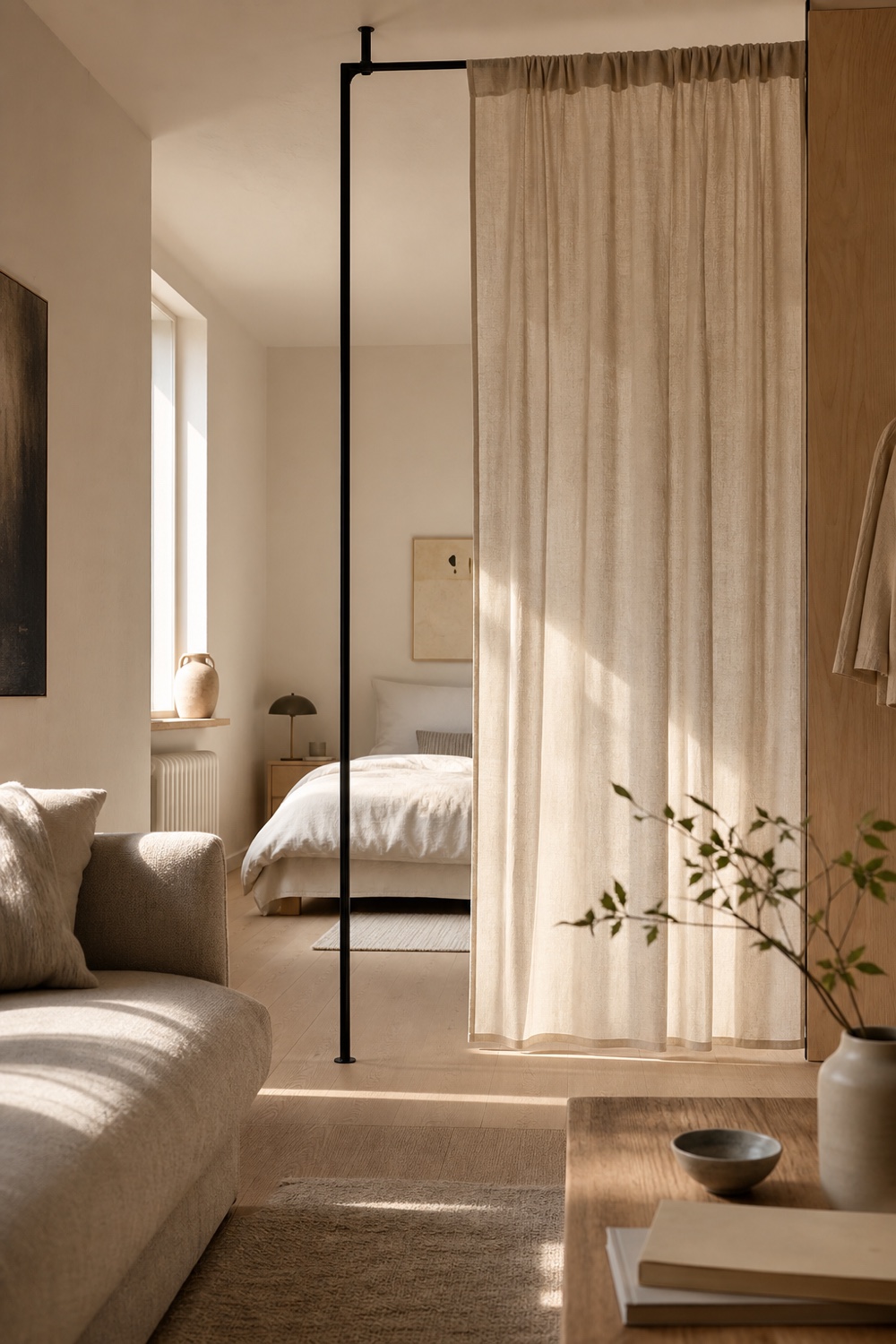
The SUNALLY no-drill floor-to-ceiling tension curtain rod is the most renter-friendly framework here because it relies on tension rather than permanent wall fixings.
The important detail is easy to miss: the curtain is not included. Treat this as hardware and choose the fabric separately. A light linen-look panel will create visual zoning while allowing some glow through; a denser curtain will provide more privacy but make the enclosed side darker.
Measure from the finished floor to the actual ceiling at more than one point. Older rooms are not always perfectly level. Tighten the system according to the instructions, check it again after the fabric has hung for a few days and avoid using it beneath a fragile suspended ceiling.
Best for: rental apartments, alcove beds and layouts that should open fully during the day.
Think twice if: the ceiling surface cannot safely accept tension or the opening is outside the product’s adjustment range.
3. Choose a blackout curtain when privacy matters more than daylight
Some room divider ideas for a bedroom need to do more than suggest a boundary. In a shared room or studio, the sleeping area may need to disappear visually, especially when someone is dressing, resting or using a screen after dark.
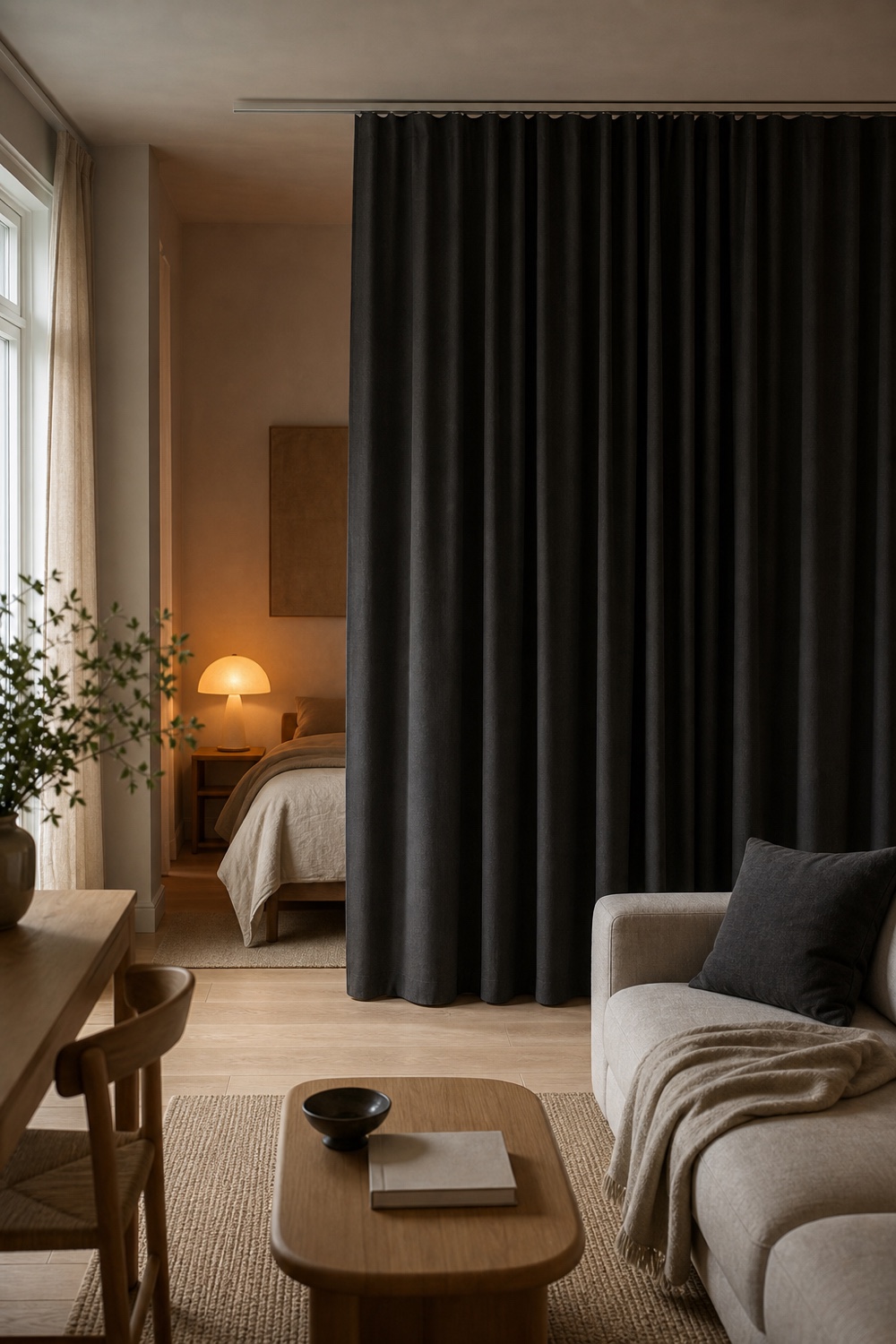
The AJAZZ blackout room-divider curtain and no-drill rod set combines the framework and an opaque curtain in one solution. It is the strongest option in this group for visual privacy and light blocking.
That benefit is also the compromise. A blackout divider can turn the bed area into a dark pocket even in daytime. Before placing it, identify which side receives the window and which side needs borrowed light. If the curtain divides the window from the main room, keep it open whenever privacy is unnecessary.
The curtain should skim the floor rather than pool heavily, especially in a route people use at night. Leave a deliberate opening rather than squeezing through the fabric, and keep it clear of heaters, vents and open flames.
Best for: bedroom privacy in studios and shared rooms.
Think twice if: the divided zone has no independent light or ventilation.
4. Use a shoji-style screen when the divider must look like furniture
A plain screen can feel temporary. A wood divider with small display ledges has more presence and can connect the boundary to the materials already used in the room.
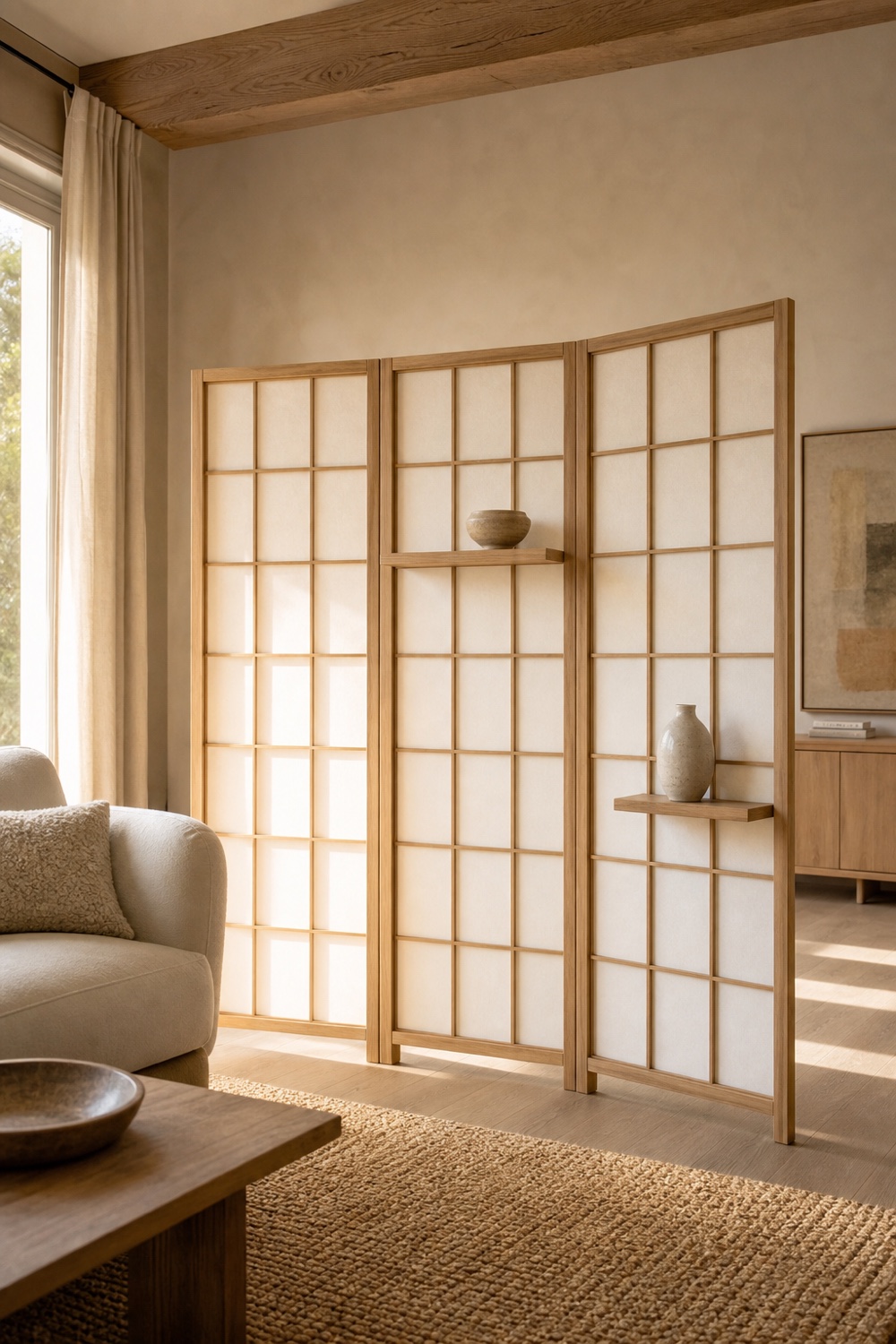
The Svimi four-panel shoji-style folding screen with display shelves works well when a living room divider needs to feel warmer and more decorative than fabric. Its paulownia-wood construction keeps the piece relatively light, while the small shelves interrupt the flat surface.
Treat those ledges as accents, not storage. One ceramic object, a small framed photograph or a lightweight plant is enough. Loading every shelf turns the divider into a busy display wall and makes one side heavier than the other.
Like any folding screen, it needs angled panels to stand properly. Decide the footprint before buying by marking the intended curve on the floor with painter’s tape. The advertised width is not the same as the width it occupies once folded into a stable position.
Best for: living rooms where the divider remains visible from both sides.
Think twice if: you need complete visual privacy or substantial storage.
5. Turn the boundary into vertical organization with pegboard
A work zone often needs separation because the tools and cables are visually noisy, not because someone requires full privacy. A pegboard divider handles both problems: it creates a clear edge and gives small objects somewhere to live.
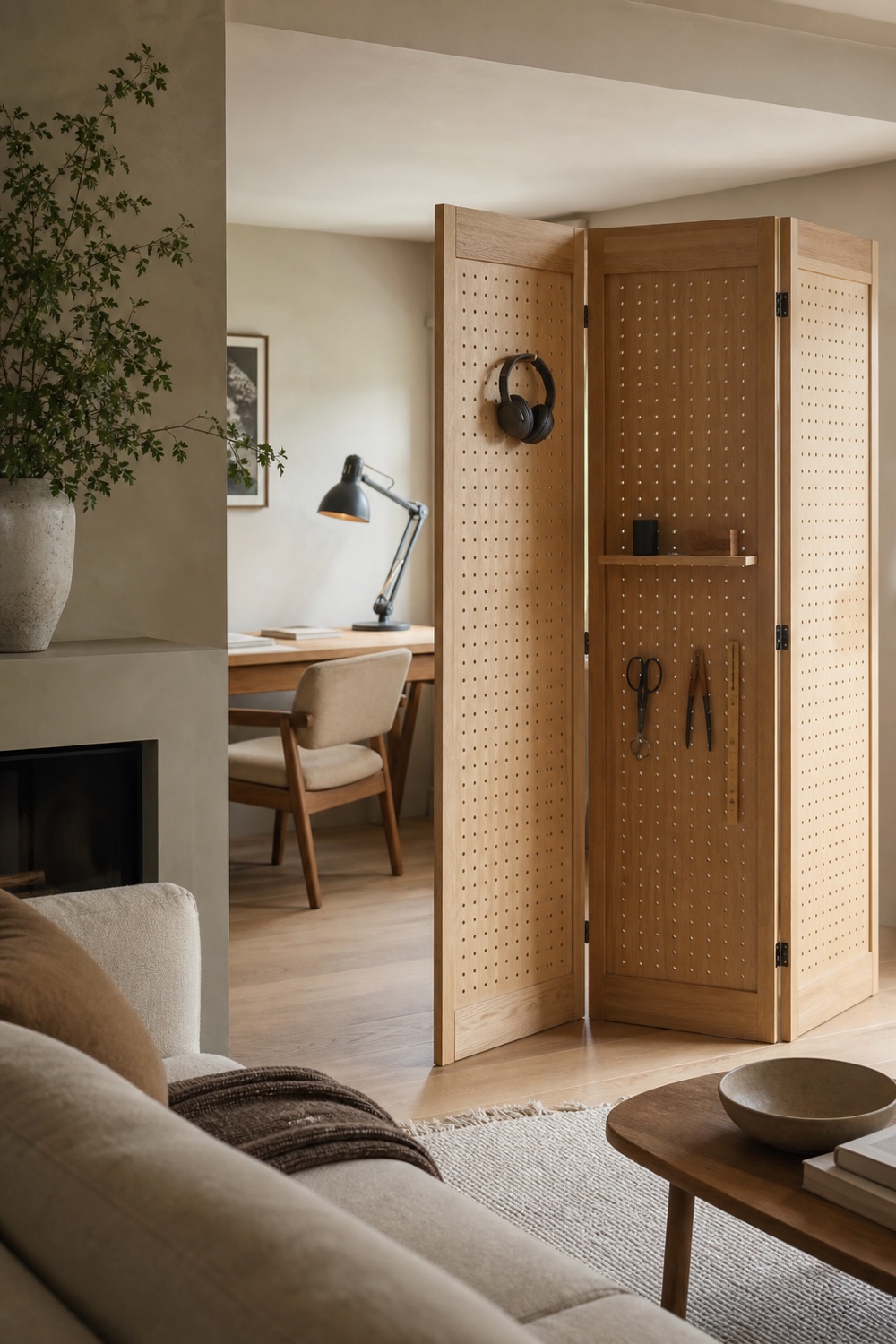
The Leesinwing four-panel pegboard folding divider is the most functional choice for a desk, craft table or children’s activity zone. Hooks and small accessories can keep headphones, tools or stationery off the work surface while the panels make the zone feel self-contained.
Keep the calm side facing the main living area and the organized side facing the workspace. This preserves the visual boundary instead of displaying every tool to the rest of the room.
Weight matters. Spread items across the panels, keep heavier objects low and do not assume furniture-scale load capacity from a display pegboard. A divider that is neatly organized but top-heavy has solved the wrong problem.
Best for: home offices, craft areas and flexible creative spaces.
Think twice if: the main goal is uninterrupted bedroom privacy.
6. Use a divider with a bench when the boundary also needs a landing zone
In an open-plan apartment, the entrance often dissolves directly into the living room. A freestanding divider with seating and storage can create an arrival zone without building a hallway.
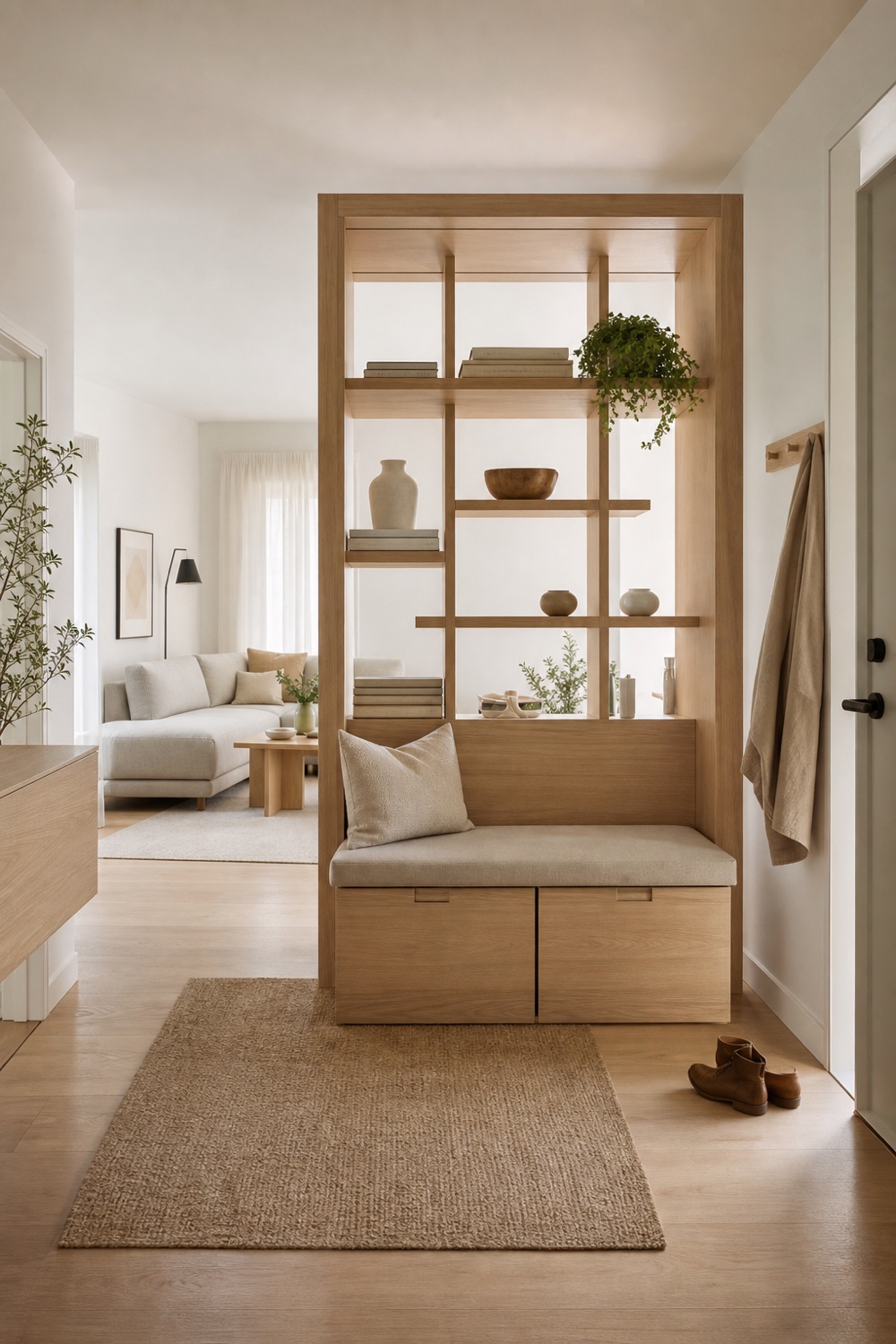
The Tribesigns room divider with shelves and bench gives the boundary a second job: somewhere to sit, place a bag and keep a few everyday items from migrating into the living area.
This is a more substantial piece than a folding screen, so test the depth with painter’s tape before ordering. Open the front door, pull out the nearest dining chair and walk the usual route while the outline is on the floor. The divider should define circulation, not create a narrow obstacle course.
Follow the assembly and anti-tip guidance supplied with the product. Bench-and-shelf dividers experience uneven forces when someone sits down, removes shoes or pulls on a hook; stability matters more than styling.
Best for: studio entrances and open rooms that lack a natural drop zone.
Think twice if: the available passage is already narrow.
7. Preserve daylight with an open shelving divider
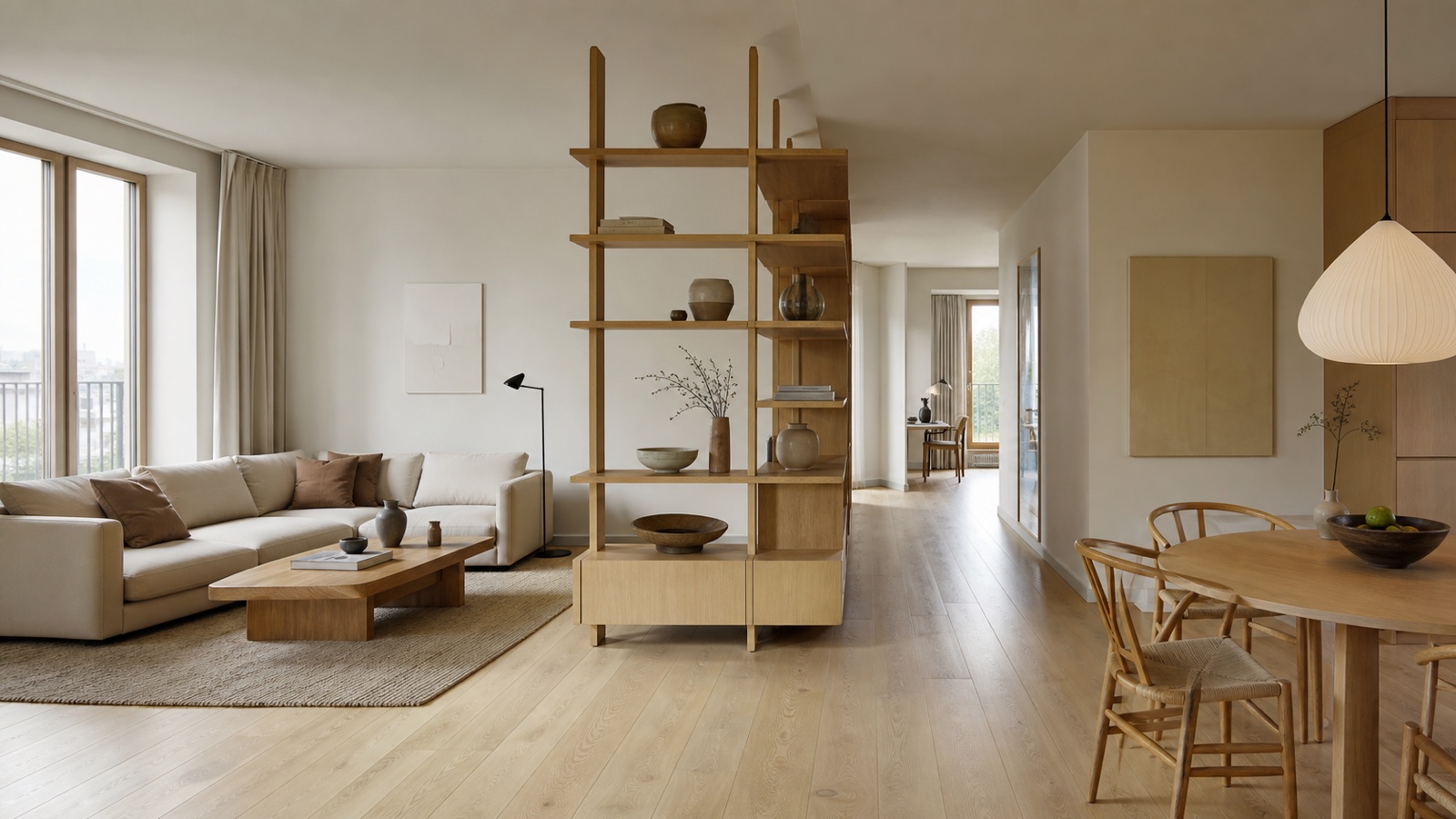
When the goal is to make two activities feel separate—not to hide one from the other—open shelving is often the best living room divider. The vertical structure creates an edge, but the gaps allow light and long sightlines to continue through the room.
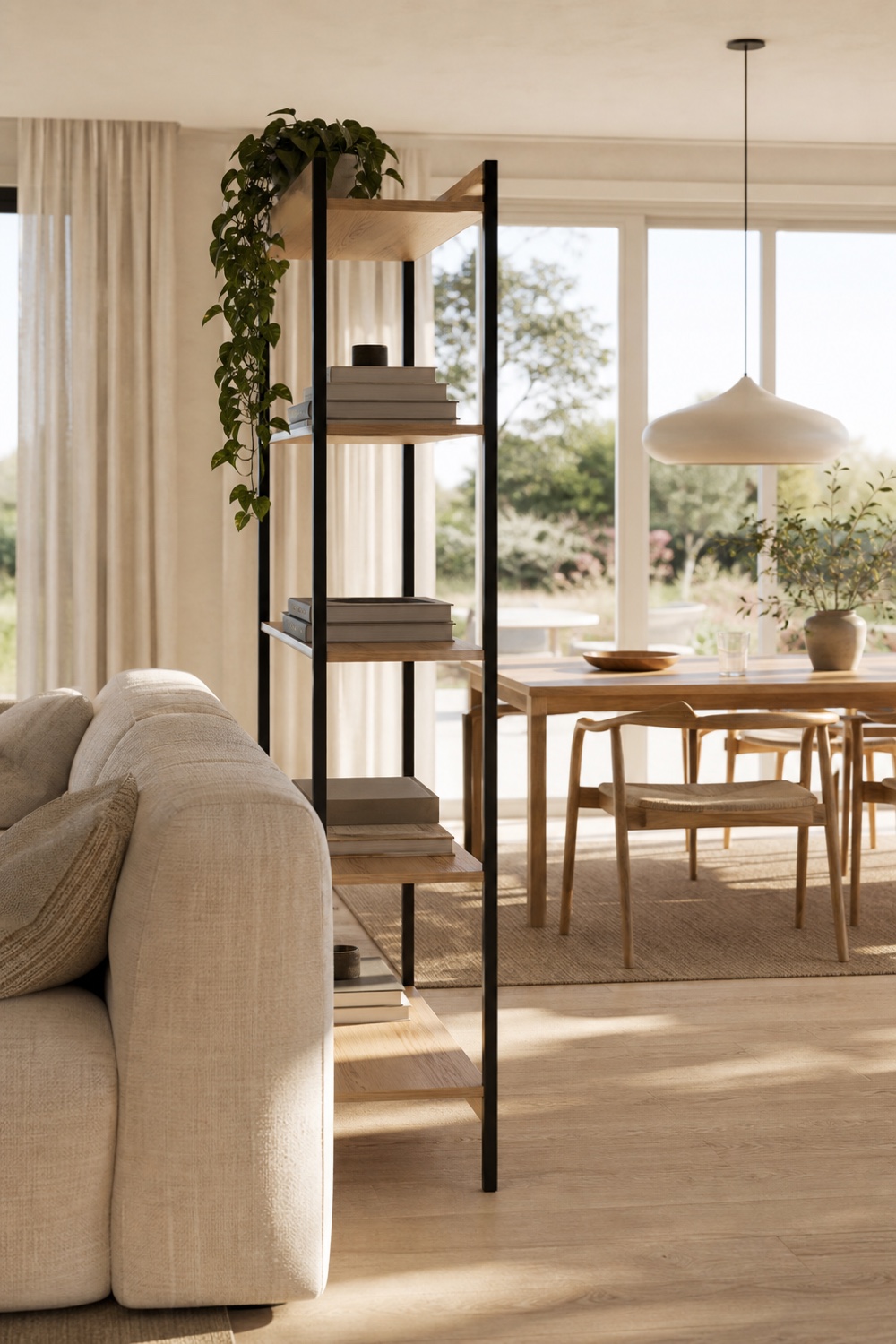
The Hegisift open room divider with storage shelf combines a warm wood finish with a darker frame and a relatively narrow footprint. It is a useful choice between a dining area and sofa, or between a desk and the rest of the room.
Leave at least one-third of the openings visually empty. A shelf divider packed with storage boxes becomes a wall—and often a messy one. Use books in small horizontal groups, repeat two or three materials and place anything visually heavy below eye level.
Open shelving provides only partial privacy. It works because the furniture orientation, rug and divider reinforce the same boundary. Turn the sofa away from the dining zone or face the desk towards the shelf so the architecture and the activity agree.
Best for: preserving daylight between living, dining and working zones.
Think twice if: you need to hide a bed or changing area completely.
8. Use an accordion divider for a boundary that disappears
Some rooms change by the hour. A home office becomes a guest room; a studio needs privacy only at night; a large room occasionally hosts two separate activities. An accordion divider is useful because its width can expand and contract without a sequence of hinged furniture panels.
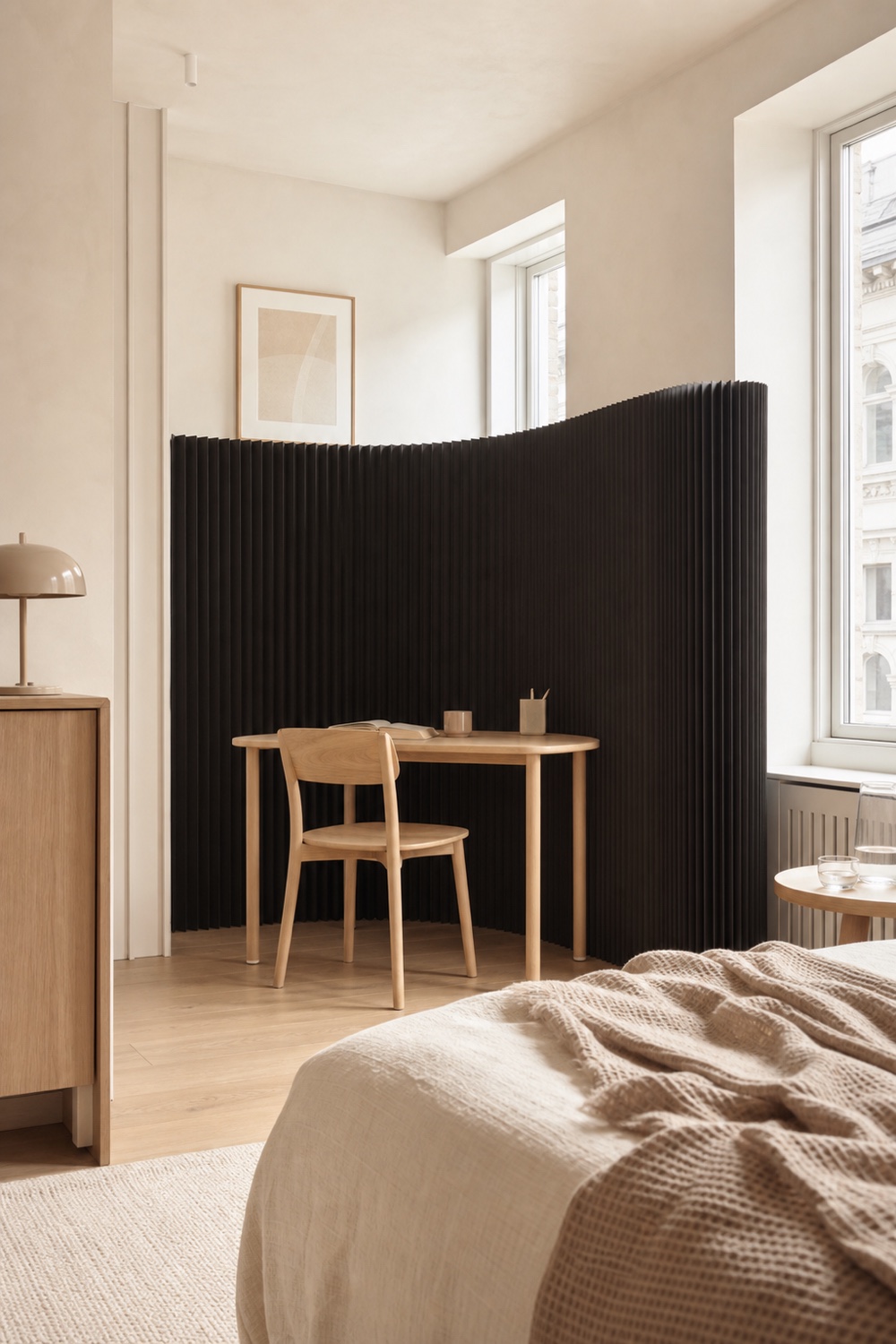
The KUZRZNH accordion paper room divider uses a honeycomb paper structure that compresses for storage and expands into a curved partition. It offers more freedom of shape than a conventional four-panel screen.
The paper construction is part of the appeal—it makes a large boundary visually and physically lighter—but it also needs respect. Keep it away from damp floors, open windows in strong weather, heaters and places where drinks are regularly carried. Black creates a graphic division; in a small room, use a shallow curve and keep the surrounding furniture pale so the partition does not dominate.
Best for: temporary layouts and rooms that need a divider only part of the day.
Think twice if: the divider will live in a humid, high-traffic or rough-use area.
9. Add a natural bamboo screen when the room needs warmth
Privacy is not the only reason to introduce a divider. Sometimes the room simply needs a softer material between two functional areas. Bamboo adds texture and warmth without the visual weight of a solid cabinet.
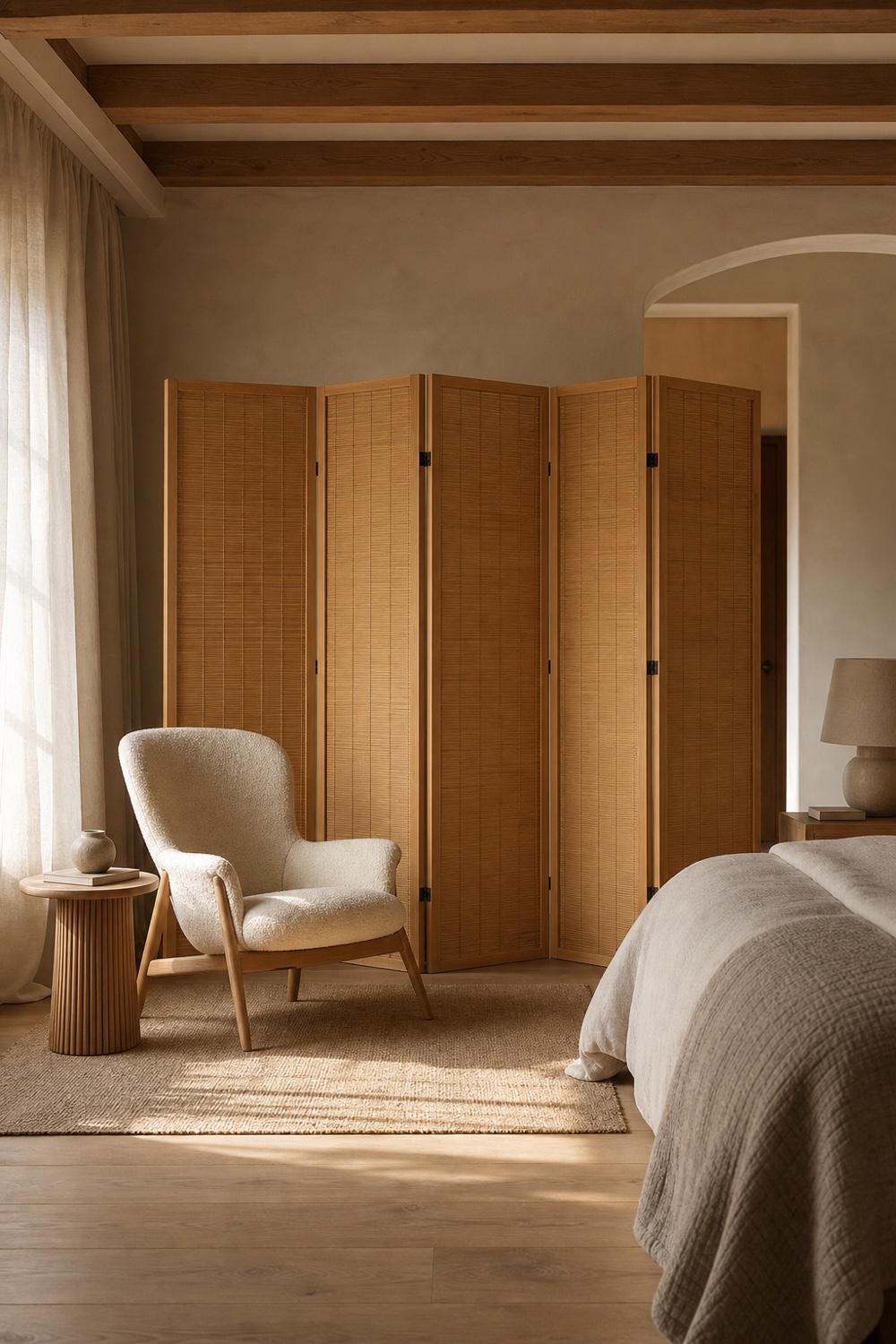
The Furnnylane six-panel bamboo folding screen is wide enough to create a substantial visual boundary, while the natural finish suits a warm minimalist room better than a black office-style partition.
Use it to define a reading corner, dressing area or calm work zone rather than automatically placing it across the center of the room. A divider often works better perpendicular to a wall, where it creates a short architectural edge, than floating across the full width of the space.
Keep the panels folded into a stable rhythm and allow breathing space on both sides. Placing tall furniture directly against a folding screen makes the screen harder to adjust and can create awkward pockets that collect clutter.
Best for: warm living rooms and bedrooms that need visual separation without more storage furniture.
Think twice if: the natural material conflicts with the existing wood tones or the room requires blackout-level privacy.
The room-divider rules that keep a small space feeling open
The product matters, but placement determines whether the room still feels generous. Before installing anything, protect three things: the path through the room, the light from the window and the longest useful sightline.
Keep the main route obvious
A divider should clarify circulation. It should not force people to turn sideways, walk around a blind corner or brush against fabric every time they cross the room. As a practical starting point, preserve roughly 30 inches of clear passage and more where the route is used frequently. Check any local accessibility or building requirements that apply to the home.
Divide activities, not windows
Place the divider between functions whenever possible—not between the window and everything else. Open shelving, pegboard and lightly scaled screens are better where borrowed daylight matters. Save blackout fabric for the sleeping or changing zone that genuinely requires it.
Match the height to the job
A divider does not always need to reach the ceiling. Sofa and dining zones may need only a clear vertical marker. Bedroom privacy benefits from more height and fewer gaps. Sit down and stand up in the room before choosing; the important sightline changes with the activity.
Treat stability as part of the design
Freestanding screens need folds. Shelf dividers need balanced loading and any recommended anti-tip hardware. Tension systems need the correct ceiling surface and periodic checks. Keep every divider away from required exits, heaters, vents and anything that must remain accessible.
Which room divider is right for your room?
For a living room, begin with the light-preserving options: open shelving, bamboo or a shoji-style screen. They create a boundary without making the room feel sealed. The VEVOR screen is the better choice when the layout changes often; the Hegisift shelf is stronger when the boundary should feel architectural and permanent.
For a bedroom, decide how much privacy is actually necessary. The AJAZZ blackout set provides the strongest visual separation, while the SUNALLY tension system lets you choose a lighter curtain and open the boundary fully. A folding screen is sufficient when the goal is to hide the bed from the entrance rather than enclose it completely.
For a workspace, the Leesinwing pegboard turns the divider into organization. If the desk already has enough storage and the room needs a calmer view, use a plain folding or accordion screen instead.
The best room divider is therefore not the one that creates the most wall. It is the one that removes a specific conflict—privacy, visual clutter, mixed activities or missing storage—while allowing the rest of the room to keep working.

Six-panel Japanese-style wood folding screen
A broad movable screen that can curve around a bed or desk and fold away when the room needs to open again.
View at Amazon
No-drill floor-to-ceiling tension curtain rod
A renter-friendly framework that creates a continuous curtain boundary without permanent wall fixings; curtain sold separately.
View at Amazon
Blackout room-divider curtain and no-drill rod set
An opaque curtain-and-frame solution for bedrooms where visual privacy and light blocking matter more than borrowed daylight.
View at Amazon
Four-panel shoji-style folding screen with display shelves
A warm wood divider whose small ledges give a visible living-room boundary the presence of furniture.
View at Amazon
Four-panel pegboard folding divider
A functional boundary for a desk or craft zone that gives small tools and accessories somewhere to live.
View at Amazon
Room divider with shelves and bench
A substantial divider that creates an arrival zone while adding a seat, shelving and a place for everyday items.
View at Amazon
Open room divider with storage shelf
A narrow open structure that creates an architectural edge between activities while preserving light and sightlines.
View at Amazon
Accordion paper room divider
A lightweight honeycomb-paper partition that compresses for storage and expands into a flexible curved boundary.
View at Amazon
Six-panel bamboo folding screen
A wide natural-material screen that brings warmth to a reading, dressing or work zone without the weight of a cabinet.
View at Amazon